


Self-Regulatory Processes, Motivation to Conserve Resources and Activity Levels in People With Chronic Pain: A Series of Digital N-of-1 Observational Studies
- PMID: 33013590
- PMCID: PMC7499816
- DOI: 10.3389/fpsyg.2020.516485
Self-Regulatory Processes, Motivation to Conserve Resources and Activity Levels in People With Chronic Pain: A Series of Digital N-of-1 Observational Studies
Abstract
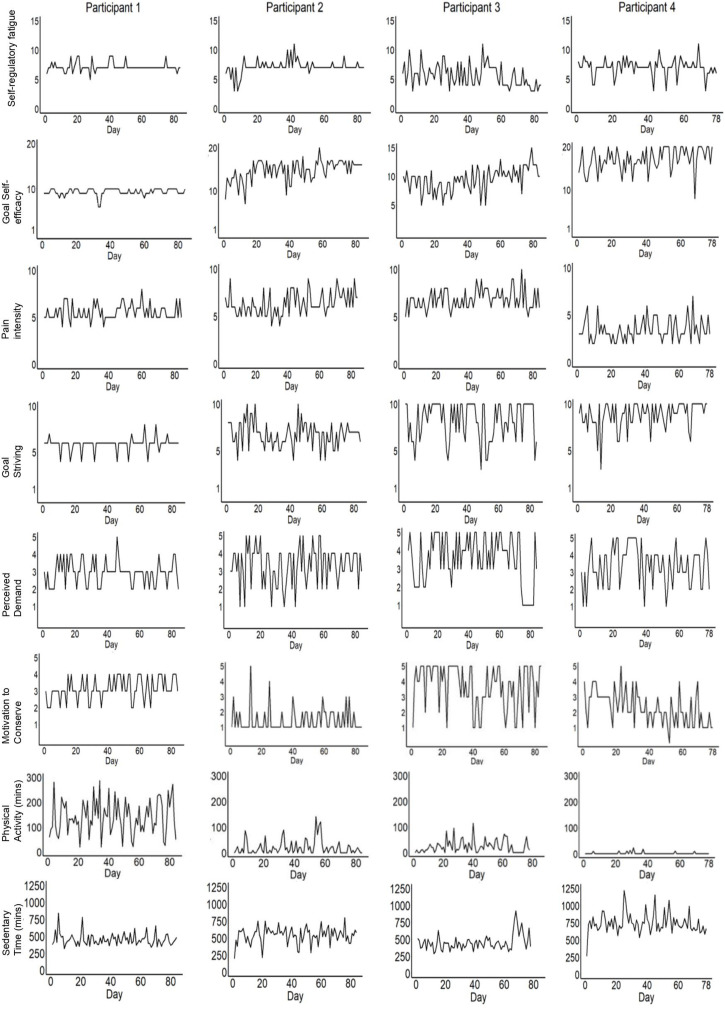
Objectives: Motivational and self-regulatory processes during goal pursuit may account for activity patterns in people with chronic pain. This article describes a series of N-of-1 observational studies designed to investigate the influence of goal-related factors on fluctuations in motivation to conserve resources and objectively measured activity levels.
Methods: Four participants with chronic pain who attended a formal pain management program (PMP; 41-59 years old; three female) were recruited and completed digital daily diaries for 11-12 weeks. The daily dairies, delivered via text message, measured self-regulatory fatigue, goal self-efficacy, goal striving, perceived demands, pain, and motivation to conserve resources. Continuously worn accelerometers measured physical activity and sedentary time. Analyses were conducted individually for each participant. The effects of self-regulatory fatigue, goal self-efficacy, goal striving, perceived demands, and pain on motivation to conserve resources, physical activity and sedentary time were assessed with dynamic regression modeling.
Results: Different patterns of associations between the predictors and outcomes were observed across participants. Most associations occurred concurrently (e.g., on the same day). Perceived demand was the only variable to predict motivation to conserve resources, physical activity, and sedentary time. Motivation to conserve resources and sedentary time were most frequently predicted by goal striving and perceived demand. Self-regulatory fatigue and pain intensity both predicted motivation to conserve resources in two participants and sedentary time in one participant. Motivation to conserve resources predicted sedentary time in two participants.
Conclusion: This study was the first to examine the impact of fluctuations in self-regulatory processes on motivation to conserve resources and objective activity levels within individuals with chronic pain. The results generally supported recent affective-motivational views of goal pursuit in chronic pain. This study demonstrated that N-of-1 observational studies can be conducted with patients during a PMP using digital technologies. The use of these approaches may facilitate the application of personalized medicine.
Keywords: N-of-1; chronic pain; digital health; motivation; self-regulation; self-regulatory fatigue.
Copyright © 2020 McMillan and Dixon.
Figures
References
-
- Azam M. A., Katz J., Mohabir V., Ritvo P. (2016). Individuals with tension and migraine headaches exhibit increased heart rate variability during post-stress mindfulness meditation practice but a decrease during a post-stress control condition – A randomized, controlled experiment. Int. J. Psychophysiol. 110 66–74. 10.1016/j.ijpsycho.2016.10.011 - DOI - PubMed
LinkOut - more resources
Full Text Sources
