Review
. 2020 Sep 22;11(38):3531-3557.
doi: 10.18632/oncotarget.27730.

Advances in epidermal growth factor receptor specific immunotherapy: lessons to be learned from armed antibodies

Affiliations
Review

Advances in epidermal growth factor receptor specific immunotherapy: lessons to be learned from armed antibodies

Fleury Augustin Nsole Biteghe et al. Oncotarget. .

Abstract

The epidermal growth factor receptor (EGFR) has been recognized as an important therapeutic target in oncology. It is commonly overexpressed in a variety of solid tumors and is critically involved in cell survival, proliferation, metastasis, and angiogenesis. This multi-dimensional role of EGFR in the progression and aggressiveness of cancer, has evolved from conventional to more targeted therapeutic approaches. With the advent of hybridoma technology and phage display techniques, the first anti-EGFR monoclonal antibodies (mAbs) (Cetuximab and Panitumumab) were developed. Due to major limitations including host immune reactions and poor tumor penetration, these antibodies were modified and used as guiding mechanisms for the specific delivery of readily available chemotherapeutic agents or plants/bacterial toxins, giving rise to antibody-drug conjugates (ADCs) and immunotoxins (ITs), respectively. Continued refinement of ITs led to deimmunization strategies based on depletion of B and T-cell epitopes or substitution of non-human toxins leading to a growing repertoire of human enzymes capable of inducing cell death. Similarly, the modification of classical ADCs has resulted in the first, fully recombinant versions. In this review, we discuss significant advancements in EGFR-targeting immunoconjugates, including ITs and recombinant photoactivable ADCs, which serve as a blueprint for further developments in the evolving domain of cancer immunotherapy.

Keywords: epidermal growth factor receptor (EGFR); recombinant antibody photoimmunoconjugates (rAPCs); recombinant antibody-drug conjugates (rADCs); recombinant immunotoxins (ITs); targeted human cytolytic fusion proteins (hCFPs).


Conflict of interest statement

CONFLICTS OF INTEREST The authors declare no conflicts of interest. Prof Barth is inventor on several patent applications describing EGFR specific PDT and hCFP. Most of these patents have been assigned to UCT.

Figures
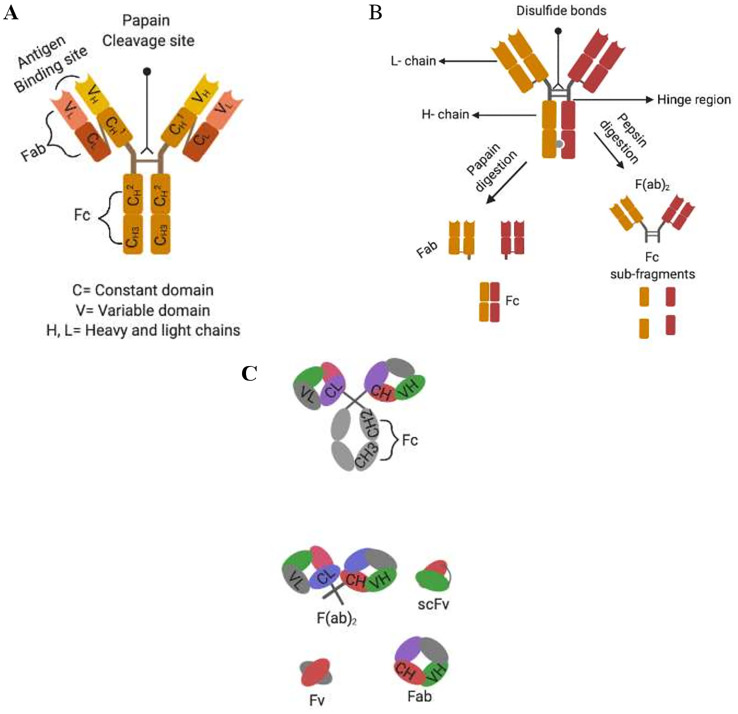
Figure 1
Figure 1. Alternative formats of engineered human antibodies.
(A) Domain organisation of an IgG molecule; (B) separation of antibody function by proteolytic cleavage; (C) schematic representation of multivalent recombinant antibody constructs.
Figure 2
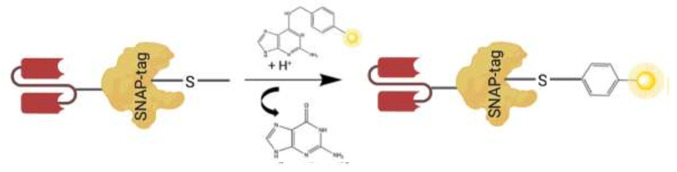
Figure 2. A schematic illustrating scFv-SNAP fusion protein conjugated to a BG modified substrate.
Autocatalytic reaction of BG modified substrate (e.g., Photosensitizer, fluorochrome, or small molecule toxin in yellow), with the thiol group of cysteine 145 within the active site of SNAP-tag genetically fused to amino acid terminus of VL chain of the scFv.
Figure 3
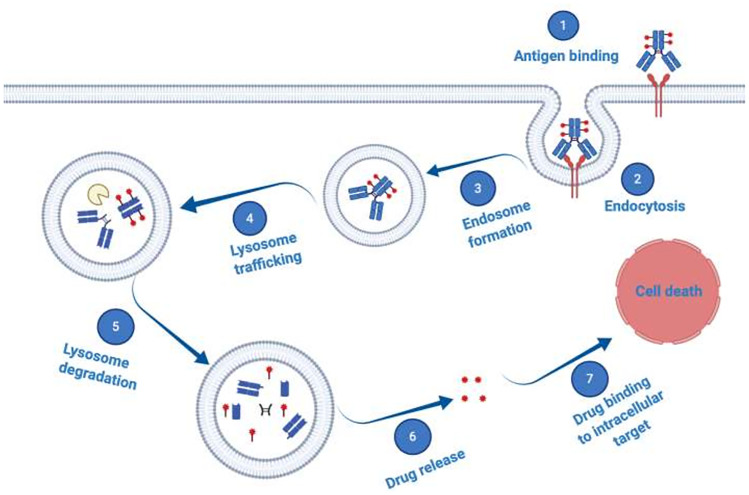
Figure 3. Schematic illustration of antibody–drug conjugate (ADC) mechanism of action.
ADCs consist of a mAb which is attached to a synthetic cytotoxic drug through a specific chemical linker. The mAb binds to a disease-specific cognate tumor associated antigen overexpressed on target cells, is internalized via endocytosis and trafficked to the lysosome, where proteases degrade the ADC. Thus, the cytotoxic cargo becomes released and diffuses into the cytoplasm to reach its intracellular targets and induce cell death.
Figure 4
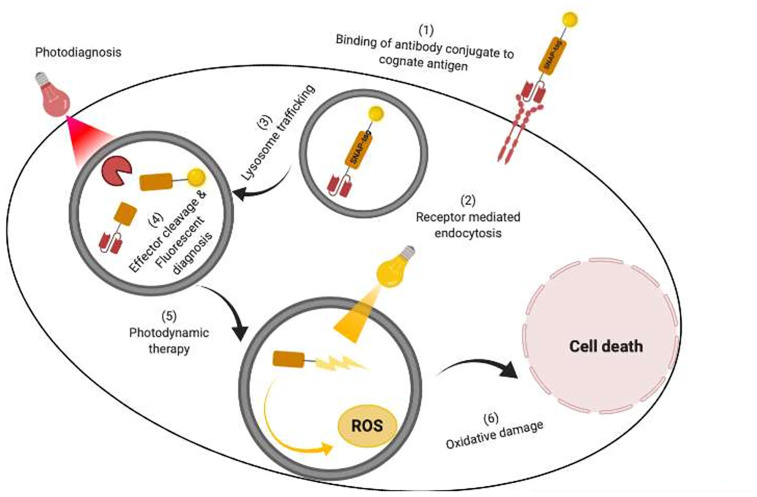
Figure 4. An illustration of targeted delivery of photoimmunotheranostic agent to specifically detect and kill cancer cells.
(1) The SNAP-tag antibody photoimmunoconjugate first binds to the cognate receptor expressed on targeted cancer cells. (2 and 3). Thereafter the APC is internalized through receptor mediated endocytosis into the cell and trafficked to the lysosome. (4) The APC is subsequently exposed to a specific wavelength of light which enables fluorescent based detection of the targeted cell. (5) Irradiation of the APC with a different therapeutic wavelength in the presence of molecular oxygen causes reactive oxygen species (ROS) production which oxidatively damage the cell and induce cell death.
Figure 5
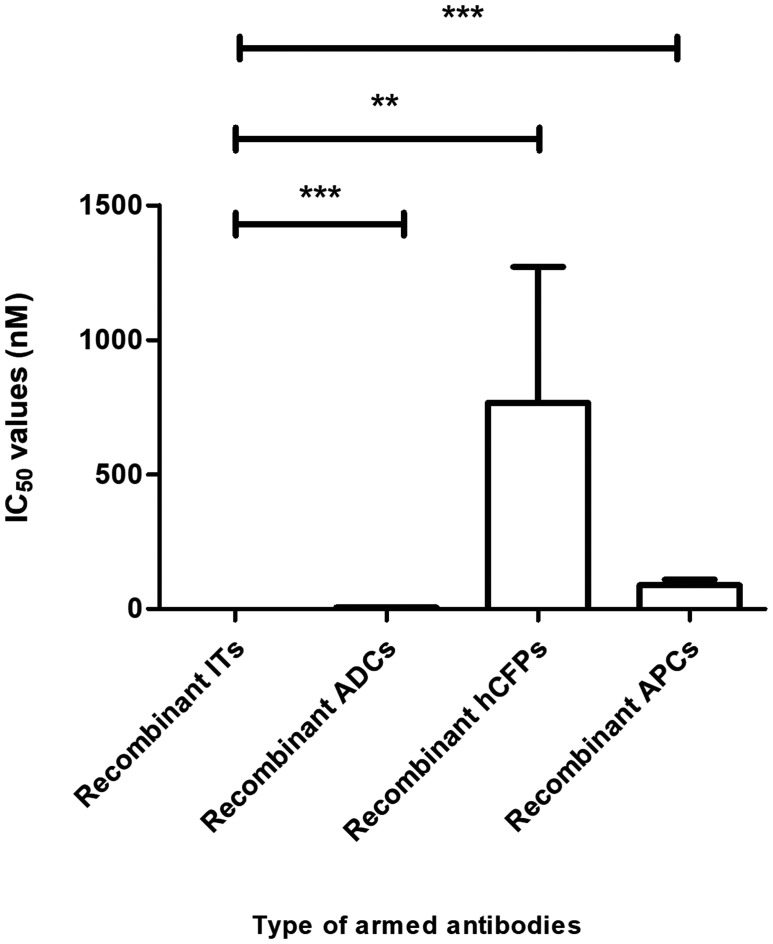
Figure 5. Comparative analysis of the efficacy of immunoconjugates currently in development.
Based on publicly sourced IC50 values, recombinant ITs are highly cytotoxic agents. Student’s t-tests were performed to determine statistical differences (p < 0.05) between recombinant ITs and the other classes of therapeutics. Results reinforced the fact that recombinant ITs display higher cytotoxicities than recombinant ADCs (p < 0.0001), recombinant hCFPs (p < 0.005) or recombinant APCs (p < 0.001).

References

    1. Li H, Yu C, Jiang J, Huang C, Yao X, Xu Q, Yu F, Lou L, Fang J. An anti-HER2 antibody conjugated with monomethyl auristatin E is highly effective in HER2-positive human gastric cancer. Cancer Biol Ther. 2016; 17:346–354. 10.1080/15384047.2016.1139248. - DOI - PMC - PubMed
    1. Weng MS, Chang JH, Hung WY, Yang YC, Chien MH. The interplay of reactive oxygen species and the epidermal growth factor receptor in tumor progression and drug resistance. J Exp Clin Cancer Res. J Exp Clin Cancer Res. 2018; 37:61. 10.1186/s13046-018-0728-0. - DOI - PMC - PubMed
    1. Dawson JP, Berger MB, Lin C, Schlessinger J, Lemmon MA, Kathryn M, Ferguson KM. Epidermal Growth Factor Receptor Dimerization and Activation Require Ligand-Induced Conformational Changes in the Dimer Interface Epidermal Growth Factor Receptor Dimerization and Activation Require Ligand-Induced Conformational Changes in the Dimer Inter. Mol Cell Biol. 2005; 25:7734–7742. 10.1128/MCB.25.17.7734-7742.2005. - DOI - PMC - PubMed
    1. Herbst RS. Review of epidermal growth factor receptor biology. Int J Radiat Oncol Biol Phys. 2004; 59:21–26. 10.1016/j.ijrobp.2003.11.041. - DOI - PubMed
    1. Jorissen RN, Walker F, Pouliot N, Garrett TPJ, Ward CW, Burgess AW. Epidermal growth factor receptor: Mechanisms of activation and signalling. Exp Cell Res. 2003; 284:31–53. 10.1016/S0014-4827(02)00098-8. - DOI - PubMed