


Impaired memory for cooperative interaction partners in borderline personality disorder
- PMID: 33014377
- PMCID: PMC7528496
- DOI: 10.1186/s40479-020-00137-3
Impaired memory for cooperative interaction partners in borderline personality disorder
Abstract
Background: Interpersonal disturbances in Borderline Personality Disorder (BPD) have been attributed to a negativity bias in social cognition. Adding to this literature, we experimentally tested whether those with BPD show altered memory for cooperative versus non-cooperative interaction partners.
Methods: In a source memory paradigm, 51 female BPD patients and 50 healthy controls (HC) played a trust game with 40 different female target characters (trustworthy vs untrustworthy). In a subsequent surprise memory test, participants had to recognize those target individuals (vs distractor pictures), and had to recall whether they had shown cooperative behavior during the trust game. We hypothesized that BPD patients have better memory for uncooperative interaction partners as compared to cooperative interaction partners, and that a-priori expectations of untrustworthiness would influence recall.
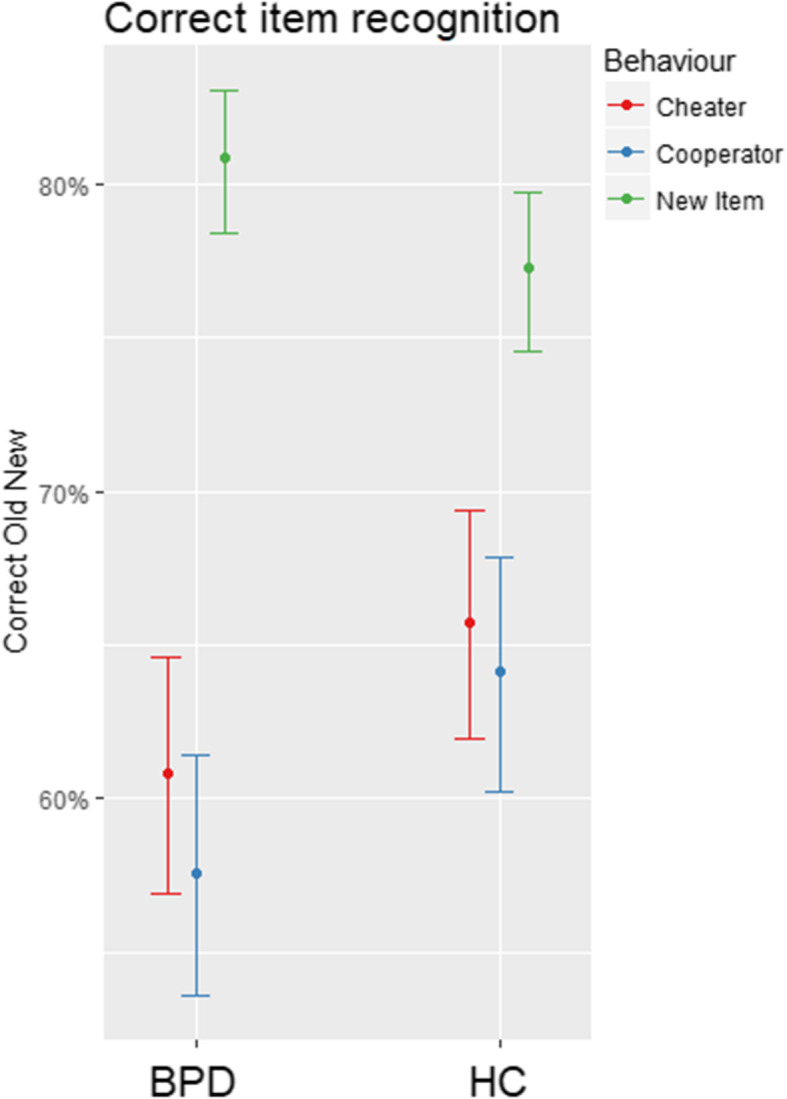
Results: During the trust game, BPD individuals invested lower amounts of money than HC for trustworthy targets, but no differences were found for untrustworthy targets. During the memory test, BPD patients had significant difficulties to remember cooperative targets, as compared to HC. More specifically, those with BPD indicated more often than HC that they had not previously interacted with cooperative targets of the previous trust game. We did not detect any differences between BPD and HC in source memory, or with regard to the effects of trustworthiness expectations.
Conclusions: The observed tendency to forget cooperative interaction partners in BPD is possibly caused by dysfunctional cognitive schemas. At the same time, it might also corroborate patients' assumptions that others are untrustworthy, thereby fuelling interpersonal disturbances in BPD.
Keywords: Borderline personality disorder; Cooperation; Social cognition; Source memory; Trust.
© The Author(s) 2020.
Conflict of interest statement
Competing interestsThe authors declare that they have no competing interests.
Figures
References
-
- Gunderson JG. Disturbed relationships as a phenotype for borderline personality disorder. Am J Psychiatry. 2007;164(11):1637–1640. - PubMed
-
- Brodsky BS, Groves SA, Oquendo MA, Mann JJ, Stanley B. Interpersonal precipitants and suicide attempts in borderline personality disorder. Suicide Life Threat Behav. 2006;36(3):313–322. - PubMed
-
- Welch SS, Linehan MM. High-risk situations associated with parasuicide and drug use in borderline personality disorder. J Personal Disord. 2002;16(6):561–569. - PubMed
-
- McMain SF, Guimond T, Streiner DL, Cardish RJ, Links PS. Dialectical behavior therapy compared with general psychiatric management for borderline personality disorder: clinical outcomes and functioning over a 2-year follow-up. Am J Psychiatry. 2012;169(6):650–661. - PubMed
LinkOut - more resources
Full Text Sources
