


Association of metabolic syndrome with glioblastoma: a retrospective cohort study and review
- PMID: 33014395
- PMCID: PMC7516096
- DOI: 10.1093/nop/npaa011
Association of metabolic syndrome with glioblastoma: a retrospective cohort study and review
Abstract
Background: Metabolic syndrome is identified as a risk factor for the development of several systemic cancers, but its frequency among patients with glioblastoma and its association with clinical outcomes have yet to be determined. The aim of this study was to investigate metabolic syndrome as a risk factor for and affecting survival in glioblastoma patients.
Methods: A retrospective cohort study, consisting of patients with diagnoses at a single institution between 2007 and 2013, was conducted. Clinical records were reviewed, and clinical and laboratory data pertaining to 5 metabolic criteria were extrapolated. Overall survival was determined by time from initial surgical diagnosis to date of death or last follow-up.
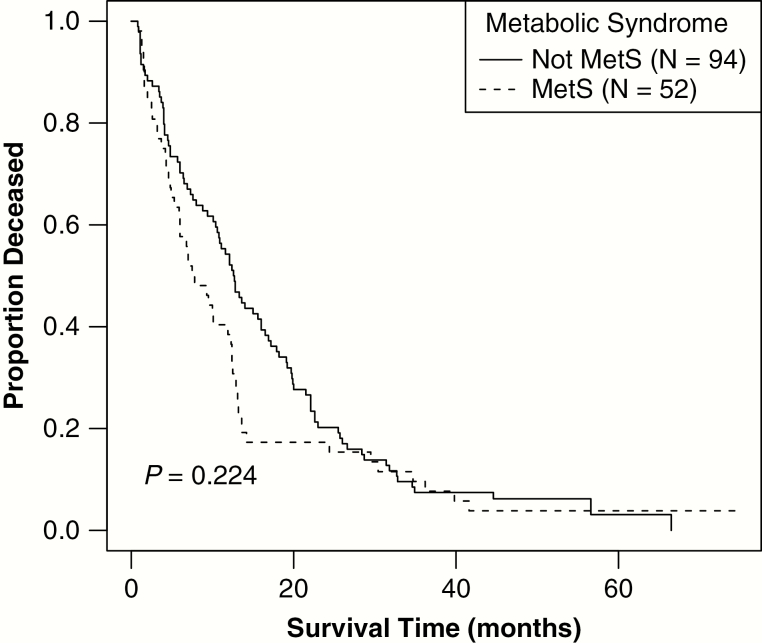
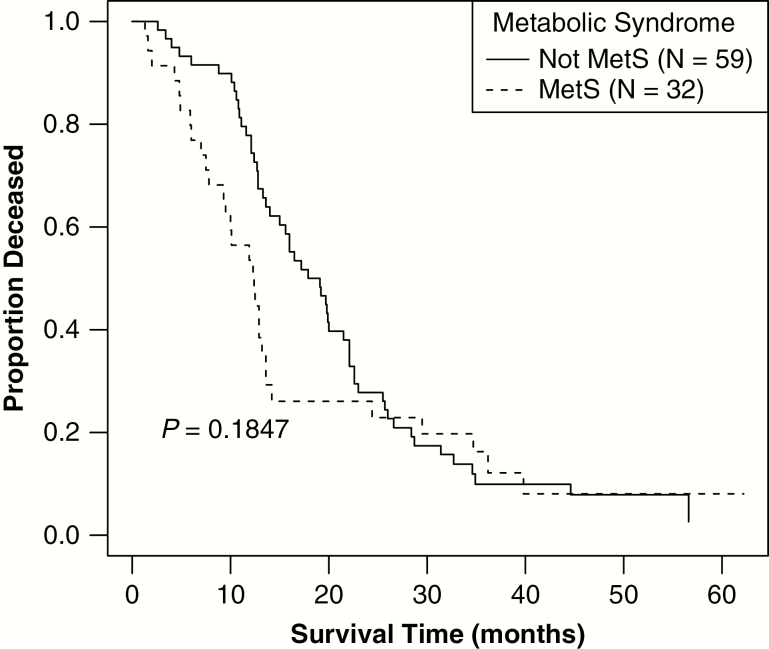
Results: The frequency of metabolic syndrome among patients diagnosed with glioblastoma was slightly greater than the frequency of metabolic syndrome among the general population. Within a subset of patients (n = 91) receiving the full schedule of concurrent radiation and temozolomide and adjuvant temozolomide, median overall survival was significantly shorter for patients with metabolic syndrome compared with those without. In addition, the presence of all 5 elements of the metabolic syndrome resulted in significantly decreased median survival in these patients.
Conclusions: We identified the metabolic syndrome at a slightly higher frequency in patients with diagnosed glioblastoma compared with the general population. In addition, metabolic syndrome with each of its individual components is associated with an overall worse prognosis in patients receiving the standard schedule of radiation and temozolomide after adjustment for age.
Keywords: glioblastoma; hyperglycemia; metabolic syndrome; obesity; survival.
© The Author(s) 2020. Published by Oxford University Press on behalf of the Society for Neuro-Oncology and the European Association of Neuro-Oncology. All rights reserved. For permissions, please e-mail: journals.permissions@oup.com.
Figures
References
-
- Alberti KG, Eckel RH, Grundy SM, et al. ; International Diabetes Federation Task Force on Epidemiology and Prevention; National Heart, Lung, and Blood Institute; American Heart Association; World Heart Federation; International Atherosclerosis Society; International Association for the Study of Obesity Harmonizing the metabolic syndrome: a joint interim statement of the International Diabetes Federation Task Force on Epidemiology and Prevention; National Heart, Lung, and Blood Institute; American Heart Association; World Heart Federation; International Atherosclerosis Society; and International Association for the Study of Obesity. Circulation. 2009;120(16):1640–1645. - PubMed
-
- Healy LA, Ryan AM, Carroll P, et al. . Metabolic syndrome, central obesity and insulin resistance are associated with adverse pathological features in postmenopausal breast cancer. Clin Oncol (R Coll Radiol). 2010;22(4):281–288. - PubMed
-
- Bhindi B, Locke J, Alibhai SMH, et al. . Dissecting the association between metabolic syndrome and prostate cancer risk: analysis of a large clinical cohort. Eur Urol. 2015;67(1):64–70. - PubMed
-
- Berrino F, Villarini A, Traina A, et al. . Metabolic syndrome and breast cancer prognosis. Breast Cancer Res Treat. 2014;147(1):159–165. - PubMed
