


The Effect of Sex Differences on Endothelial Function and Circulating Endothelial Progenitor Cells in Hypertriglyceridemia
- PMID: 33014455
- PMCID: PMC7526329
- DOI: 10.1155/2020/2132918
The Effect of Sex Differences on Endothelial Function and Circulating Endothelial Progenitor Cells in Hypertriglyceridemia
Abstract
Background: Men have a higher risk and earlier onset of cardiovascular diseases compared with premenopausal women. Hypertriglyceridemia is an independent risk factor for the occurrence of ischemic heart disease. Endothelial dysfunction is related to the development of ischemic heart disease. Whether sex differences will affect the circulating endothelial progenitor cells (EPCs) and endothelial function in hypertriglyceridemia patients or not is not clear.
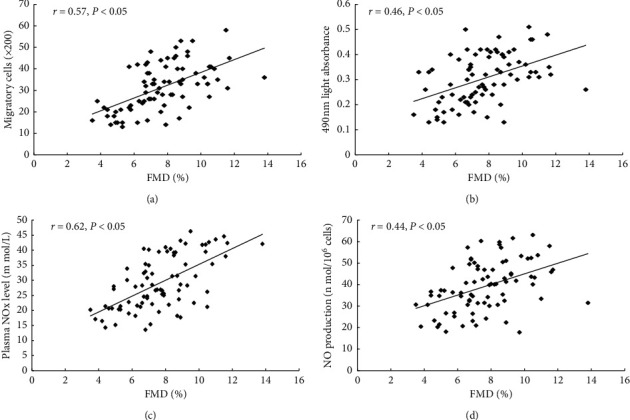
Methods: Forty premenopausal women and forty age- and body mass index (BMI)-matched men without cardiovascular and metabolic disease were recruited and then divided into four groups: normotriglyceridemic women (women with serum triglycerides level <150 mg/dl), hypertriglyceridemic women (women with serum triglycerides level ≥150 mg/dl), normotriglyceridemic men (men with serum triglycerides level <150 mg/dl), and hypertriglyceridemic men (men with serum triglycerides level ≥150 mg/dl). Peripheral blood was obtained and evaluated. Flow-mediated dilatation (FMD), the number and activity of circulating EPCs, and the levels of nitric oxide (NO), vascular endothelial growth factor (VEGF), and granulocyte-macrophage colony-stimulating factor (GM-CSF) in plasma and culture medium were measured.
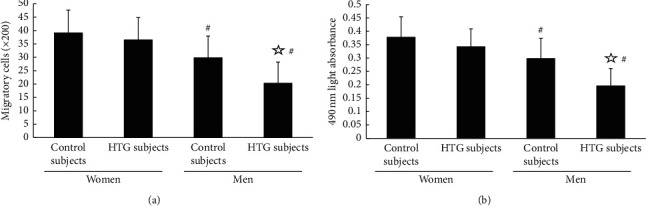
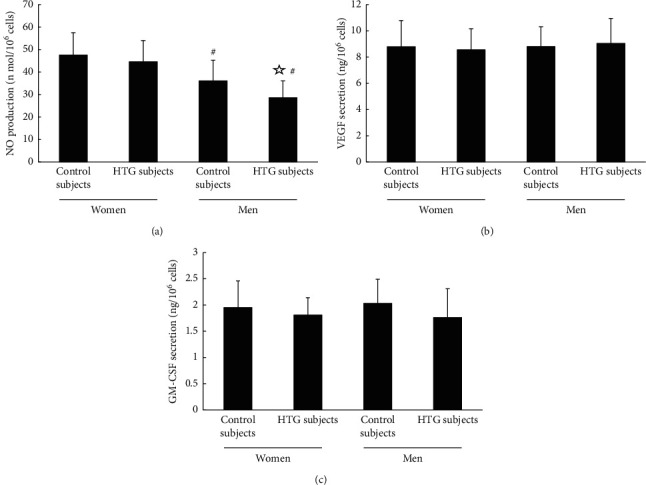
Results: The number and activity of circulating EPCs, as well as the level of NO in plasma or culture medium, were remarkably increased in premenopausal females compared with those in males both in the hypertriglyceridemic group and the normotriglyceridemic group. The EPC counts and activity, as well as the production of NO, were restored in hypertriglyceridemic premenopausal women compared with those in normal women. However, in hypertriglyceridemic men, the EPC counts and activity, as well as levels of NO, were significantly reduced. The values of VEGF and GM-CSF were without statistical change.
Conclusions: The present study firstly demonstrated that there were sex differences in the number and activity of circulating EPCs in hyperglyceridemia patients. Hypertriglyceridemic premenopausal women displayed restored endothelial functions, with elevated NO production, probably mediated by estradiol. We provided a new insight to explore the clinical biomarkers and therapeutic strategies for hypertriglyceridemia-related vascular damage.
Copyright © 2020 Zi Ren et al.
Conflict of interest statement
The authors declare no conflicts of interest.
Figures


References
-
- Duvall W. L. Cardiovascular disease in women. Mount Sinai Journal of Medicine. 2003;70(5):293–305. - PubMed
-
- Expert Panel on Detection, Evaluation, and Treatment of High Blood Cholesterol in Adults. Executive summary of the third report of the national cholesterol education program (ncep) expert Panel on detection, evaluation, and treatment of high blood cholesterol in adults (Adult treatment Panel iii) JAMA: The Journal of the American Medical Association. 2001;285(19):2486–2497. doi: 10.1001/jama.285.19.2486. - DOI - PubMed
LinkOut - more resources
Full Text Sources