


Trends in Incidence and Mortality of Waldenström Macroglobulinemia: A Population-Based Study
- PMID: 33014849
- PMCID: PMC7511580
- DOI: 10.3389/fonc.2020.01712
Trends in Incidence and Mortality of Waldenström Macroglobulinemia: A Population-Based Study
Erratum in
-
Corrigendum: Trends in Incidence and Mortality of Waldenström Macroglobulinemia: A Population-Based Study.Front Oncol. 2021 Feb 18;11:657016. doi: 10.3389/fonc.2021.657016. eCollection 2021. Front Oncol. 2021. PMID: 33680976 Free PMC article.
Abstract
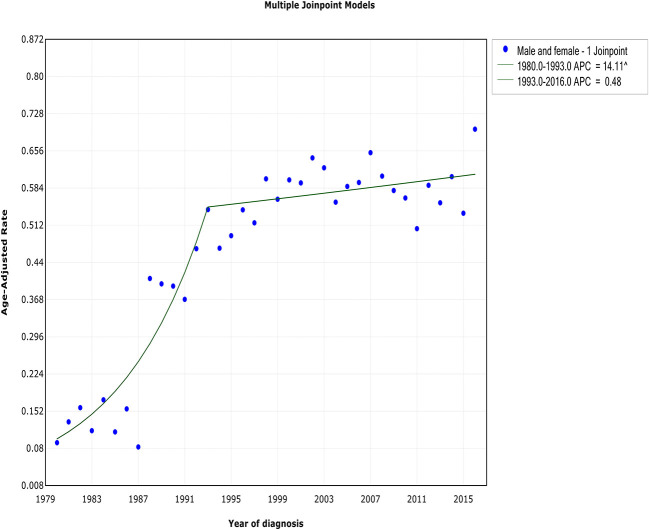
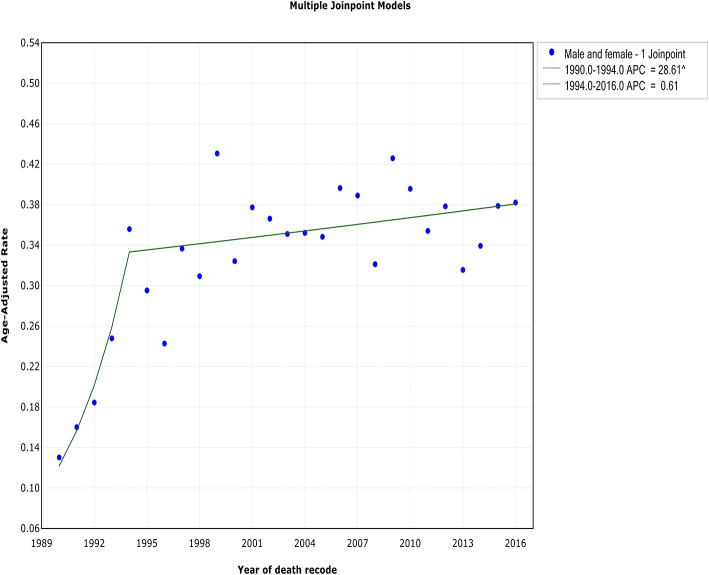
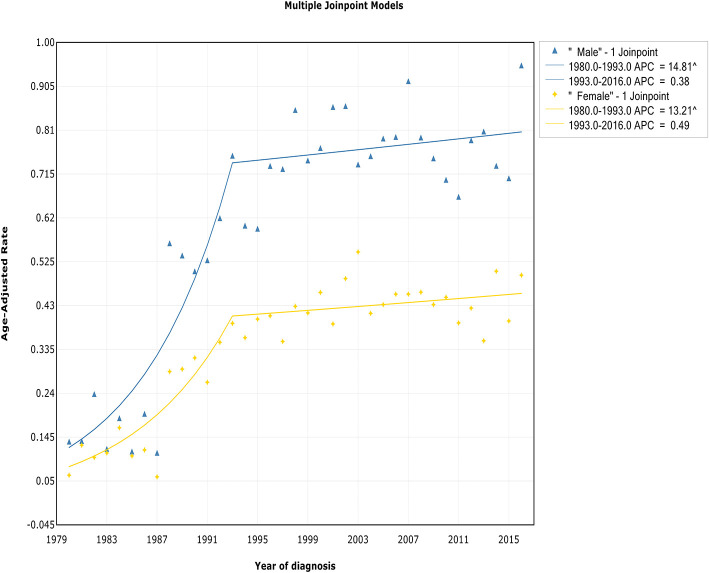
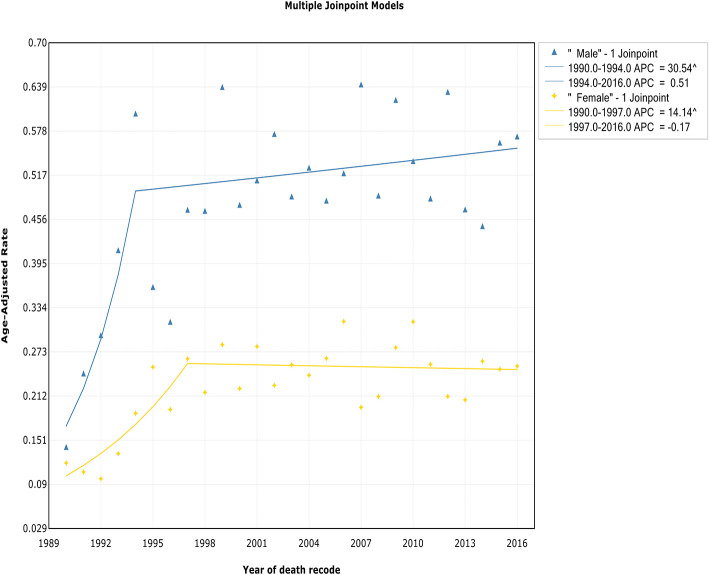
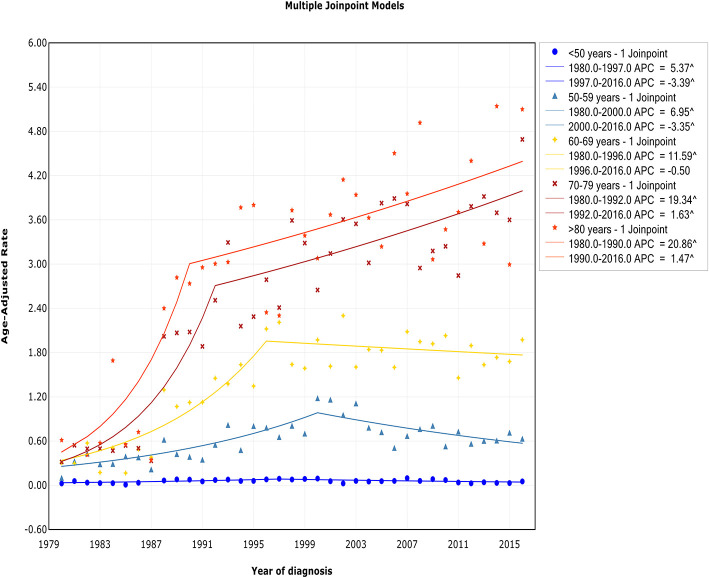
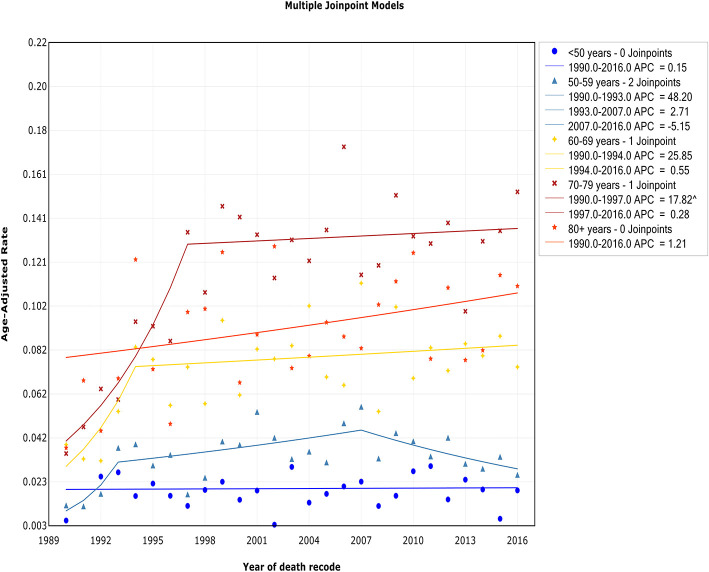
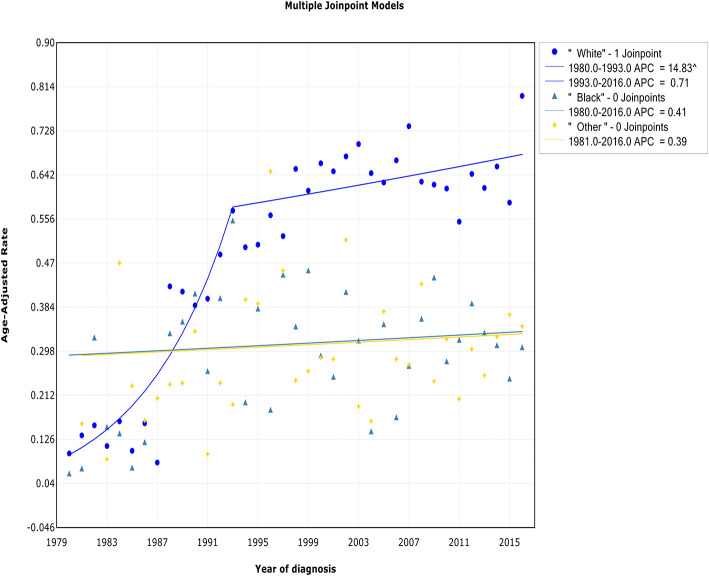
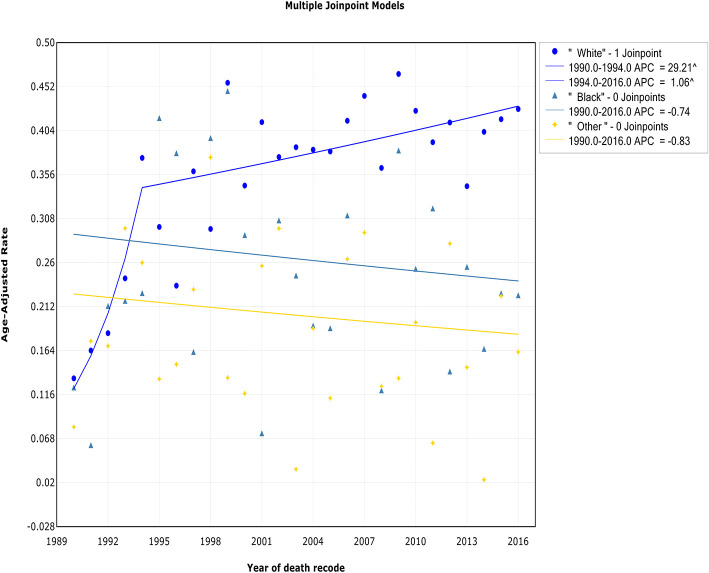
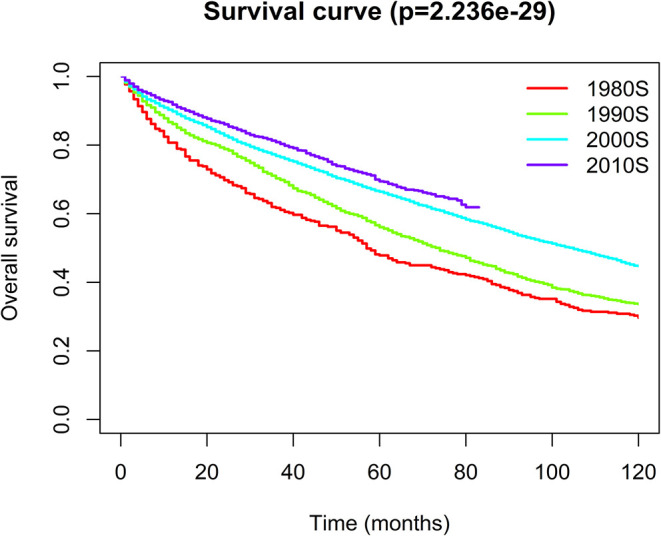
Background: The incidence of Waldenström macroglobulinemia (WM) has increased in certain groups over several decades in the United States. It is unclear whether the increasing incidence is associated with mortality trends. Methods: The incidence and incidence-based mortality (IBM) rates were obtained from the Surveillance, Epidemiology, and End Results (SEER) database (1980-2016) with SEER*Stat software. The secular trends stratified by demographic characteristics were analyzed by joinpoint regression. Results: The incidence of WM showed an initial rapid increase from 1980 to 1993 {annual percentage change (APC), 14.1% [95% confidence interval (CI), 10 to 18.4%]}, whereas it began to stabilize from 1993 to 2016 [APC, 0.5% (95% CI, -0.3 to 1.3%)]. The WM IBM trend followed a similar pattern, with a decrease occurring around 1994. The trends in the incidence and mortality significantly differed according to geographic location, race, age, sex, primary site of involvement and subtype, which could help in further investigations into the specific etiology. Moreover, a dramatic increase in the 5-year survival rate from the 1980s to 2010s was observed (47.84 vs. 69.41%). Conclusions: Although both the incidence and IBM of WM continued to increase during the study period, a reduction in the rate of increase occurred around 1993. We believe that further advances in healthcare delivery and research can ensure a low mortality rate. Future studies can use the findings of this paper to monitor the results of WM therapy.
Keywords: and end results (SEER); epidemiology; incidence; incidence-based mortality; surveillance; survival; waldenström macroglobulinemia.
Copyright © 2020 Yin, Chen, Fan, Yan, Zhang, Huang, Sun and Hu.
Figures
References
-
- Sabattini E, Bacci F, Sagramoso C, Pileri SA. WHO classification of tumours of haematopoietic and lymphoid tissues in 2008: an overview. Pathologica. (2010) 102:83–7. Available online at: https://www.crossref.org/guestquery/ - PubMed
-
- Kristinsson SY, Eloranta S, Dickman PW, Andersson TM, Turesson I, Landgren O, et al. Patterns of survival in lymphoplasmacytic lymphoma/Waldenstrom macroglobulinemia: a population-based study of 1,555 patients diagnosed in Sweden from 1980 to 2005. Am J Hematol. (2013) 88:60–5. 10.1002/ajh.23351 - DOI - PMC - PubMed
LinkOut - more resources
Full Text Sources
