


Clinical Significance of CD147 in Children with Inflammatory Bowel Disease
- PMID: 33015178
- PMCID: PMC7516708
- DOI: 10.1155/2020/7647181
Clinical Significance of CD147 in Children with Inflammatory Bowel Disease
Abstract
Background: CD147/basigin (Bsg), a transmembrane glycoprotein, activates matrix metalloproteinases and promotes inflammation.
Objective: The aim of this study is to explore the clinical significance of CD147 in the pathogenesis of inflammatory bowel disease (IBD).
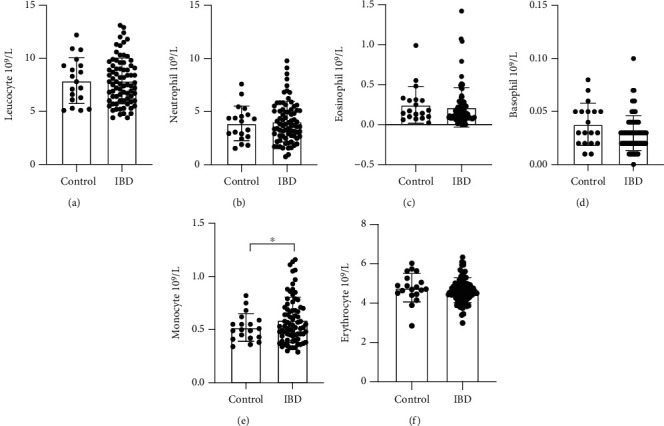
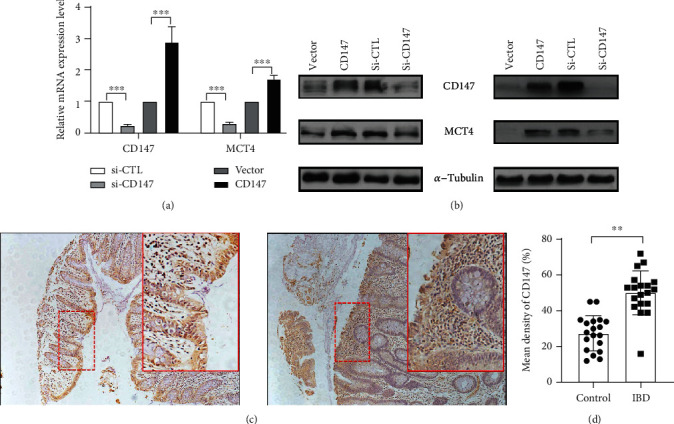
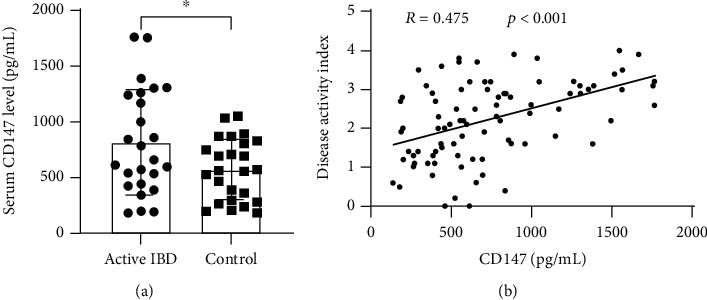
Results: In addition to monocytes, the clinical analysis showed that there is no significance obtained in leucocyte, neutrophil, eosinophil, basophil, and erythrocyte between IBD and controls. Immunohistochemistry analysis showed that CD147 was increased in intestinal tissue of patients with active IBD compared to that in the control group. What is more, CD147 is involved in intestinal barrier function and intestinal inflammation, which was attributed to the fact that it has an influence on MCT4 expression, a regulator of intestinal barrier function and intestinal inflammation, in HT-29 and CaCO2 cells. Most importantly, serum level of CD147 content is higher in active IBD than that in inactive IBD or healthy control, which could be a biomarker of IBD.
Conclusion: The data suggested that increased CD147 level could be a biomarker of IBD in children.
Copyright © 2020 Hongli Wang et al.
Conflict of interest statement
The authors declared that they have no competing interests.
Figures
References
-
- Holmberg F. E. O., Pedersen J., Jørgensen P., Soendergaard C., Jensen K. B., Nielsen O. H. Intestinal barrier integrity and inflammatory bowel disease: stem cell-based approaches to regenerate the barrier. Journal of Tissue Engineering and Regenerative Medicine. 2018;12(4):923–935. doi: 10.1002/term.2506. - DOI - PubMed
MeSH terms
Substances
LinkOut - more resources
Full Text Sources
Miscellaneous
