


A multi-scalar climatological analysis in preparation for extreme heat at the Tokyo 2020 Olympic and Paralympic Games
- PMID: 33015246
- PMCID: PMC7518767
- DOI: 10.1080/23328940.2020.1737479
A multi-scalar climatological analysis in preparation for extreme heat at the Tokyo 2020 Olympic and Paralympic Games
Abstract
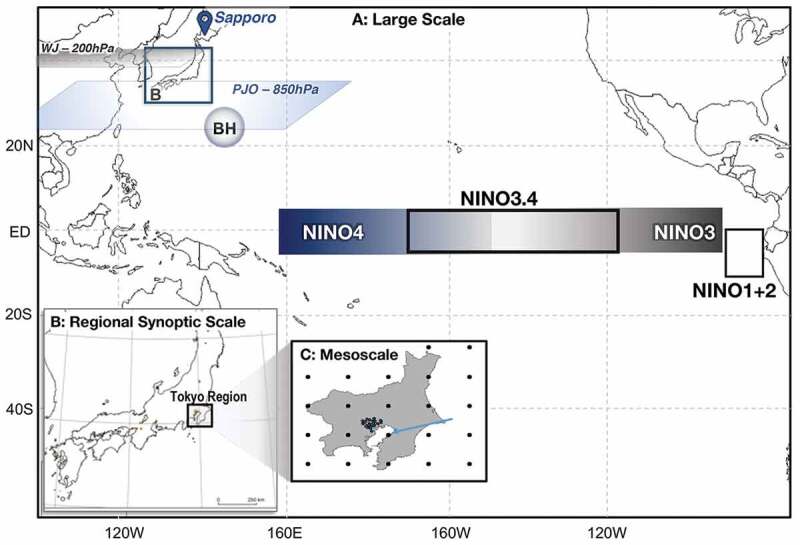
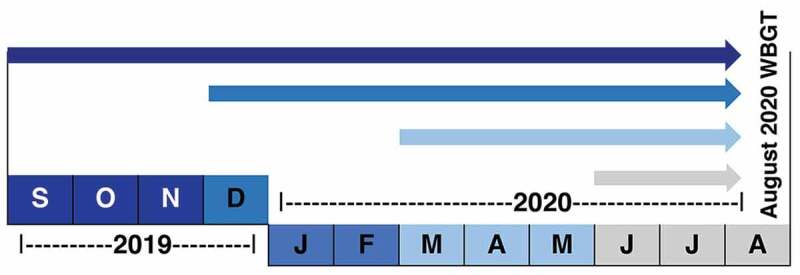
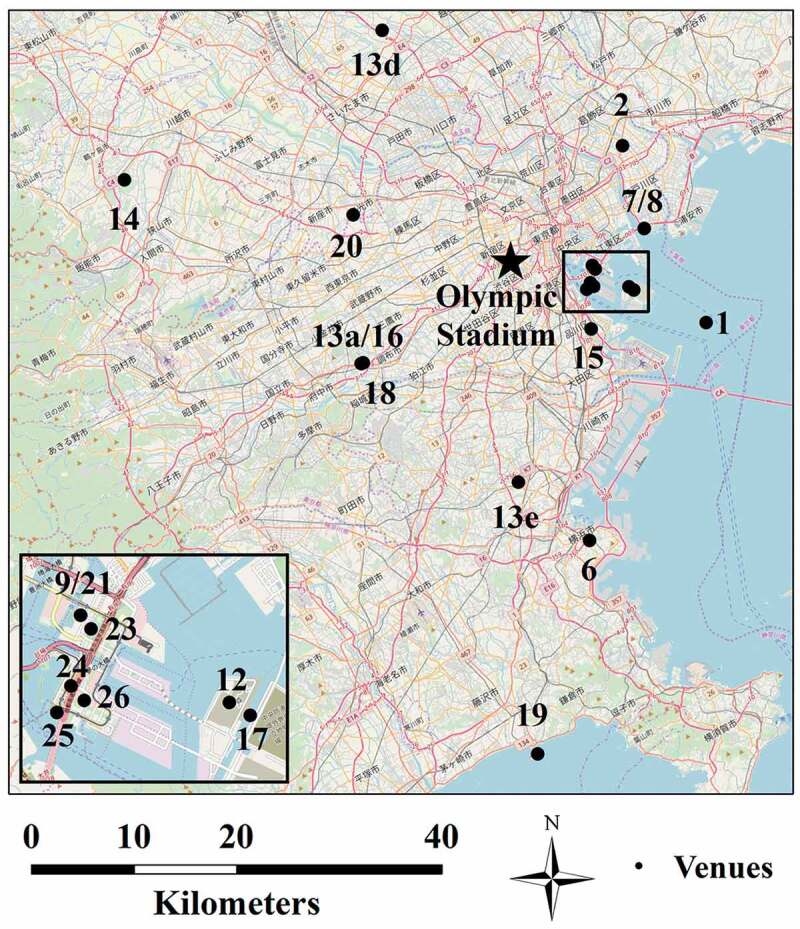
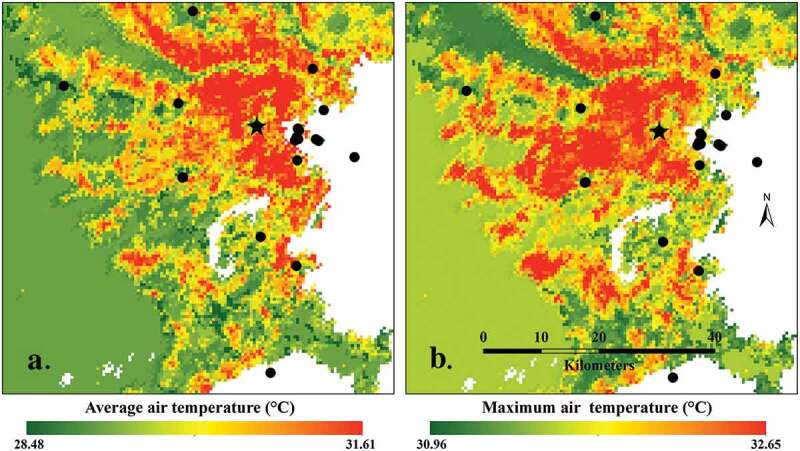
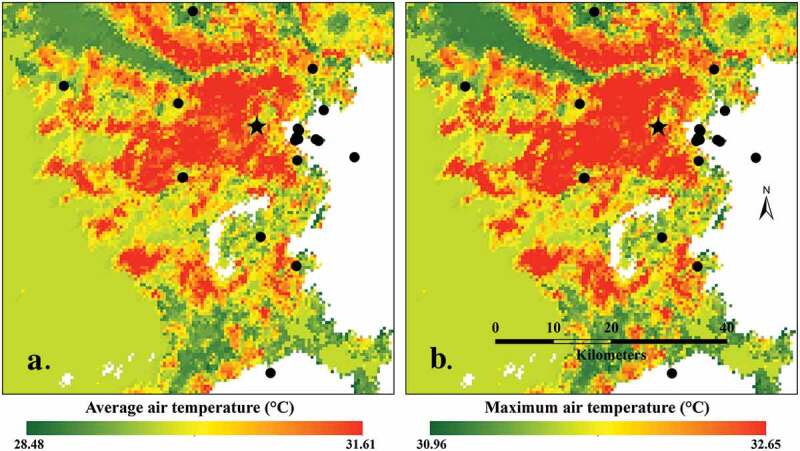
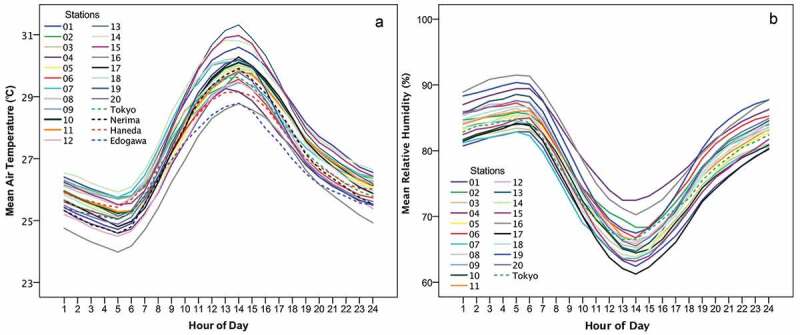
Extreme heat can be harmful to human health and negatively affect athletic performance. The Tokyo Olympic and Paralympic Games are predicted to be the most oppressively hot Olympics on record. An interdisciplinary multi-scale perspective is provided concerning extreme heat in Tokyo-from planetary atmospheric dynamics, including El Niño Southern Oscillation (ENSO), to fine-scale urban temperatures-as relevant for heat preparedness efforts by sport, time of day, and venue. We utilize stochastic methods to link daytime average wet bulb globe temperature (WBGT) levels in Tokyo in August (from meteorological reanalysis data) with large-scale atmospheric dynamics and regional flows from 1981 to 2016. Further, we employ a mesonet of Tokyo weather stations (2009-2018) to interpolate the spatiotemporal variability in near-surface air temperatures at outdoor venues. Using principal component analysis, two planetary (ENSO) regions in the Pacific Ocean explain 70% of the variance in Tokyo's August daytime WBGT across 35 years, varying by 3.95°C WGBT from the coolest to warmest quartile. The 10-year average daytime and maximum intra-urban air temperatures vary minimally across Tokyo (<1.2°C and 1.7°C, respectively), and less between venues (0.6-0.7°C), with numerous events planned for the hottest daytime period (1200-1500 hr). For instance, 45% and 38% of the Olympic and Paralympic road cycling events (long duration and intense) occur midday. Climatologically, Tokyo will present oppressive weather conditions, and March-May 2020 is the critical observation period to predict potential anomalous late-summer WBGT in Tokyo. Proactive climate assessment of expected conditions can be leveraged for heat preparedness across the Game's period.
Keywords: ENSO; Tokyo; athletes; extreme heat; wet bulb globe temperature.
© 2020 Informa UK Limited, trading as Taylor & Francis Group.
Conflict of interest statement
In accordance with Taylor & Francis policy and my ethical obligation as researchers, the following are potential COIs: DJC, AJG, YH: ● Have a potential COI as members of the IOC Adverse Weather Impact expert working Group for the Olympic Games Tokyo 2020; not receiving honorarium. WMT: ● Consultant interest that may arise from the research reported in the enclosed paper. Those interests are fully to Taylor & Francis with an approved plan for managing any potential conflicts arising from this reporting, such as publicly disclosing errors or corrections for the benefit of evolving the science and protecting it from error.
Figures
Comment in
-
Bracing for heat and humidity amidst new challenges in Tokyo: Comment on: Vanos JK, Thomas WM, Grundstein AJ, Hosokawa Y, Liu Y, Casa DJ. A multi-scalar climatological analysis in preparation for extreme heat at the Tokyo 2020 Olympic and Paralympic Games. Temperature 2020;7(2):191-214, DOI: 10.1080/23328940.2020.1737479.Temperature (Austin). 2021 Aug 17;8(3):206-208. doi: 10.1080/23328940.2021.1960104. eCollection 2021. Temperature (Austin). 2021. PMID: 34595324 Free PMC article. No abstract available.
References
-
- Ashie Y, Kono T.. Urban-scale CFD analysis in support of a climate-sensitive design for the Tokyo Bay area. Int J Climatol. 2011;31(2):174–188.
-
- Adachi SA, Kimura F, Kusaka H, et al. Comparison of the impact of global climate changes and urbanization on summertime future climate in the Tokyo metropolitan area. J Appl Meteorol Climatol. 2012;51(8):1441–1454.
-
- Enomoto T, Hoskins BJ, Matsuda Y. The formation mechanism of the Bonin high in August. Q J R Meteorol Soc. 2003;129(587):157–178.
-
- Mulcahy K. Public culture, cultural identity, cultural policy: comparative perspectives. In Galligan A editor. Patronizing mega-events to globalize identity: the Olympic opening ceremony as a cultural policy. New York (NY): Palgrave Macmillian; 2017. p. 65–92.
-
- de Freitas CR, Scott D, McBoyle G. A second generation climate index for tourism (CIT): specification and verification. Int J Biometeorol. 2008;52(5):399–407. - PubMed
LinkOut - more resources
Full Text Sources
Other Literature Sources
