


Evaluation of the efficacy and safety of cow placenta extract lotion versus minoxidil 2% in the treatment of female pattern androgenetic alopecia
- PMID: 33015294
- PMCID: PMC7522890
- DOI: 10.1016/j.ijwd.2020.04.012
Evaluation of the efficacy and safety of cow placenta extract lotion versus minoxidil 2% in the treatment of female pattern androgenetic alopecia
Abstract
Background: Placenta extract has been shown to improve androgenetic alopecia (AGA) by inducing the anagen phase and increasing hair follicle density and size.
Objective: This study aimed to evaluate the safety and efficacy of cow placenta extract lotion compared with topical minoxidil 2% as a gold standard treatment for female pattern AGA.
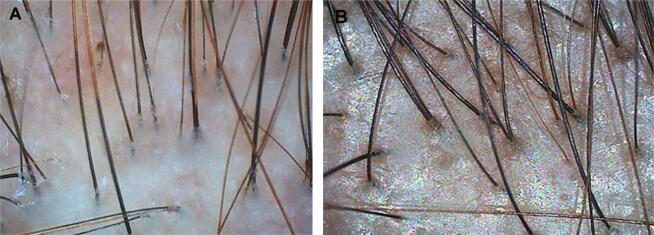
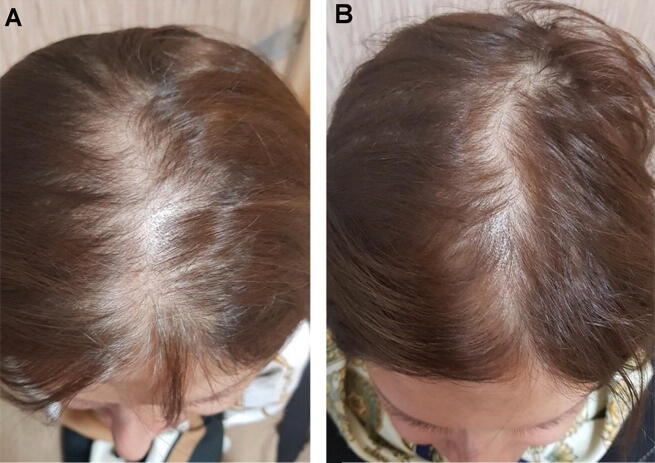
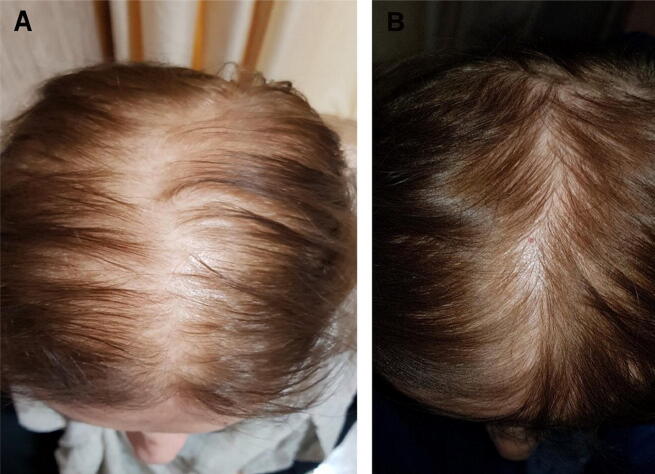
Methods: In this double-blind, randomized controlled trial, a total of 90 women with AGA were enrolled and randomly assigned to receive either topical minoxidil 2% or cow placenta solutions. At the end of the sixth month, the number of hair follicles was evaluated using a trichoscope and compared with the baseline. Global photographic review was also conducted by a blinded dermatologist.
Results: By the end of the sixth month, there was an increase in total hair count in the specified area in both groups. The mean increase in hair count was 10.9 ± 5.74 and 10.2 ± 6.5 for minoxidil and cow placenta groups, respectively (p = .63). The percentage of patients who were rated as having moderate or marked growth was 44.2% and 32.2% in the cow placenta and minoxidil groups, respectively (p = .90).
Limitations: The study limitations were the limited number of cases, short duration of treatment, and the fact that none of our participants volunteered to undergo a biopsy to evaluate microscopic changes.
Conclusions: Cow placenta hair-tonic lotion can be as effective as minoxidil 2% for female pattern AGA.
Keywords: Androgenetic alopecia; Cow placenta; Hair growth; Minoxidil.
© 2020 Published by Elsevier Inc. on behalf of Women's Dermatologic Society.
Figures
References
-
- Ahluwalia J., Fabi S.G. The psychological and aesthetic impact of age-related hair changes in females. J Cosmet Dermatol. 2019;18(4):1161–1169. - PubMed
-
- Ellis J.A., Sinclair R., Harrap S.B. Androgenetic alopecia: Pathogenesis and potential for therapy. Expert Rev Mol Med. 2002;4(22):1–11. - PubMed
-
- Hong J.W., Lee W.J., Hahn S.B., Kim B.J., Lew D.H. The effect of human placenta extract in a wound healing model. Ann Plast Surg. 2010;65(1):96–100. - PubMed
-
- Joshi M., Fuller L.R., Batchelor G.C. L-arginine metabolites regulate DNA synthesis and nitric oxide synthase activity in cultured human dermal microvascular endothelial cells—Potential positive and negative regulators of angiogenesis derived from L-arginine. Cancer Invest. 1999;17(4):235–244. - PubMed
-
- Kwon T.R., Oh C., Park H., Han H., Ji H., Kim B. Potential synergistic effects of human placental extract and minoxidil on hair growth-promoting activity in C 57 BL/6 J mice. Clin Exp Dermatol. 2015;40(6):672–681. - PubMed
LinkOut - more resources
Full Text Sources
Miscellaneous
