


COVID-19 and food security in Sub-Saharan Africa: implications of lockdown during agricultural planting seasons
- PMID: 33015370
- PMCID: PMC7490708
- DOI: 10.1038/s41538-020-00073-0
COVID-19 and food security in Sub-Saharan Africa: implications of lockdown during agricultural planting seasons
Abstract
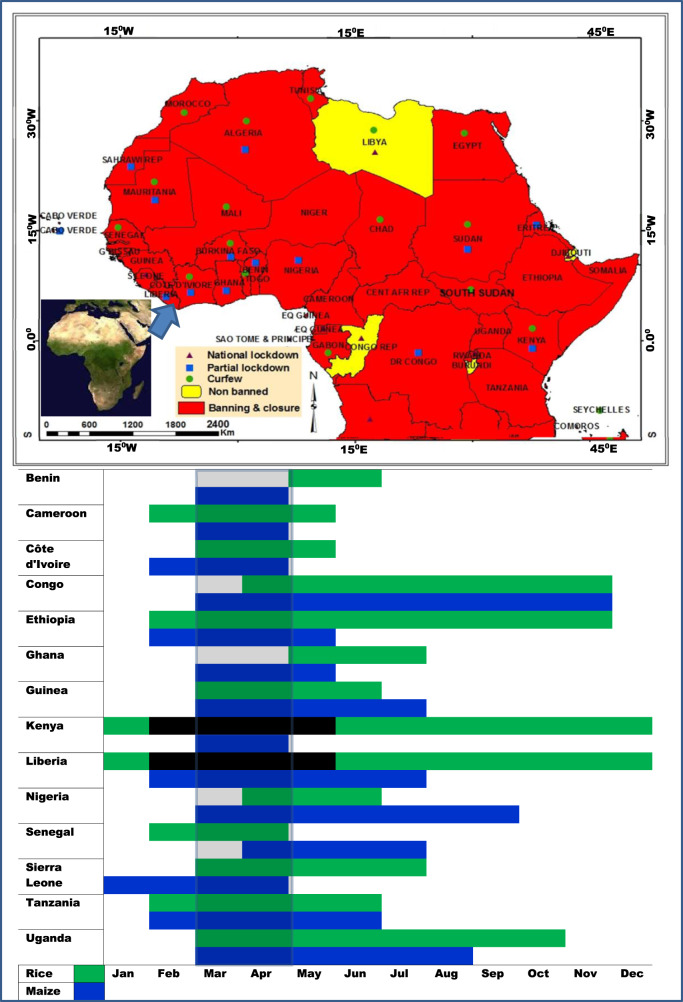
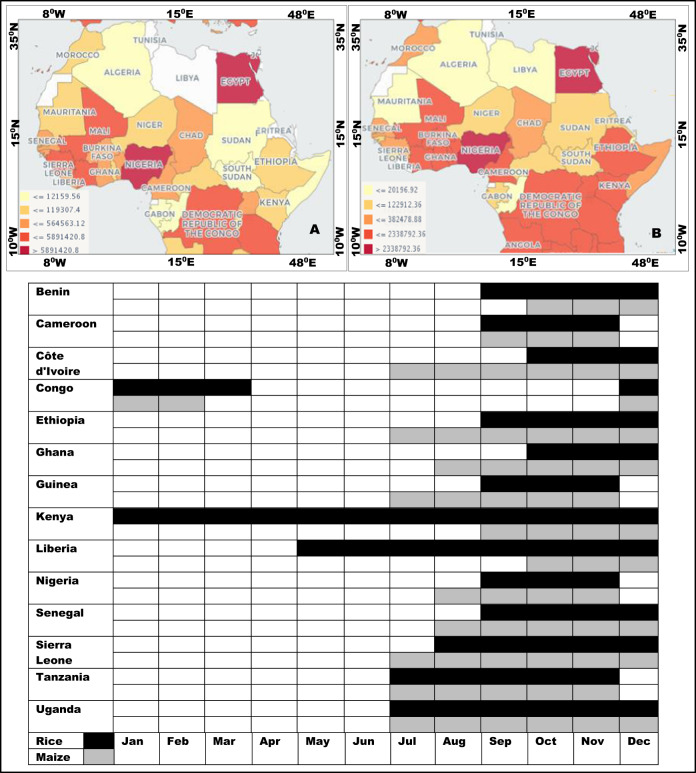
COVID-19 pandemic movement restrictions as part of the control measures put in place by countries in Sub-Saharan Africa (SSA) has implications on food security, as movement restrictions coincided with planting periods for most of the staple crops. The measures are affecting important staple crops in SSA, and are likely to exacerbate food security challenges in many countries. Achieving adequate food supply in SSA requires developing better policies and packages to confronting the challenge of reducing hunger post COVID-19 pandemic. The lessons learned after COVID-19 crisis will be very important for African countries to rethink their strategies and policies for sustainable economic growth, as COVID-19 many have significant impacts on all sectors of their economies.
Keywords: Agriculture; Environmental impact.
© The Author(s) 2020.
Conflict of interest statement
Competing interestsThe authors declare no competing interests.
Figures
References
-
- Anoba, I. B. How a population of 4.2 billion could impact Africa by 2100: the possible economic. The SAIS Review of International Affairs (Johns Hopkins University, 2019).
-
- United Nations, P. D. World Population Prospects 2019 (United Nations, 2019).
-
- Shimeles, A., Verdier-Chouchane, A. & Boly, A. Building a Resilient and Sustainable Agriculture in Sub-Saharan Africa 1–12 (Springer, 2018).
-
- Rippke U, et al. Timescales of transformational climate change adaptation in sub-Saharan African agriculture. Nat. Clim. Change. 2016;6:605–609. doi: 10.1038/nclimate2947. - DOI
LinkOut - more resources
Full Text Sources
Research Materials
