


Recent insights into Histone Acetyltransferase-1: biological function and involvement in pathogenesis
- PMID: 33016232
- PMCID: PMC8330999
- DOI: 10.1080/15592294.2020.1827723
Recent insights into Histone Acetyltransferase-1: biological function and involvement in pathogenesis
Abstract
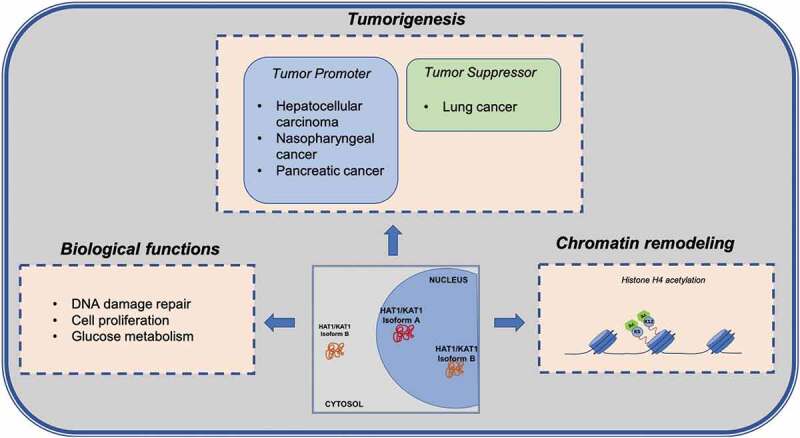
Acetylation of histone and non-histone proteins is a post-translational modification mostly associated with activation of gene transcription. The first histone acetyltransferase (HAT) identified as modifying newly synthesized histone H4 in yeast was a type B HAT named HAT1. Although it was the first HAT to be discovered, HAT1 remains one of the most poorly studied enzymes in its class. In addition to its well-established role in the cytoplasm, recent findings have revealed new and intriguing aspects of the function of HAT1 in the nucleus. Several studies have described its involvement in regulating different pathways associated with a wide range of diseases, including cancer. This review focuses on our current understanding of HAT1, highlighting its importance in regulating chromatin replication and gene expression. This previously unknown role for HAT1 opens up novel scenarios in which further studies will be required to better understand its function.
Keywords: HAT1 inhibitors; Histone Acetyltransferase-1; acetylation; epigenetics; histones H3-H4.
Conflict of interest statement
No potential conflict of interest was reported by the authors.
Figures

References
-
- Brownell JE, Allis CD.. Special HATs for special occasions: linking histone acetylation to chromatin assembly and gene activation. Curr Opin Genet Dev. 1996;6:176–184. - PubMed
-
- Biswas S, Rao CM. Epigenetic tools (The writers, the readers and the erasers) and their implications in cancer therapy. Eur J Pharmacol. 2018;837:8–24. - PubMed
Publication types
MeSH terms
Substances
LinkOut - more resources
Full Text Sources
Molecular Biology Databases
