


Therapeutic Potential of TNF-α Inhibition for Alzheimer's Disease Prevention
- PMID: 33016914
- PMCID: PMC7739965
- DOI: 10.3233/JAD-200711
Therapeutic Potential of TNF-α Inhibition for Alzheimer's Disease Prevention
Abstract
Background: Alzheimer's disease (AD) is increasingly prevalent and over 99% of drugs developed for AD have failed in clinical trials. A growing body of literature suggests that potent inhibitors of tumor necrosis factor-α (TNF-α) have potential to improve cognitive performance.
Objective: In this review, we summarize the evidence regarding the potential for TNF-α inhibition to prevent AD and improve cognitive function in people at risk for dementia.
Methods: We conducted a literature review in PubMed, screening all articles published before July 7, 2019 related to TNF blocking agents and curcumin (another TNF-α inhibitor) in the context of AD pathology. The keywords in the search included: AD, dementia, memory, cognition, TNF-α, TNF inhibitors, etanercept, infliximab, adalimumab, golimumab, and curcumin.
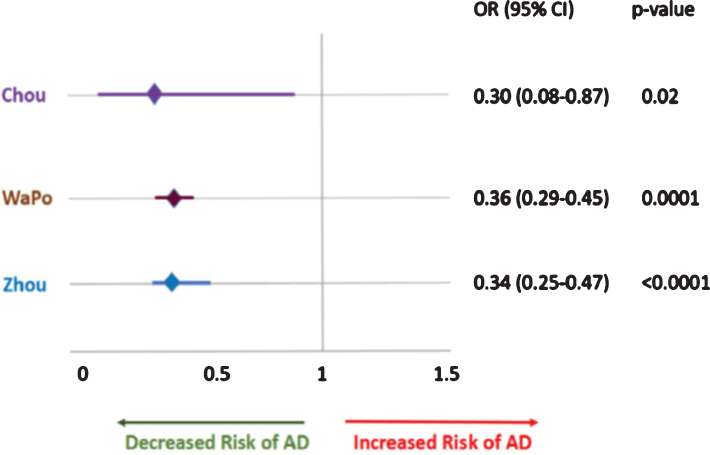
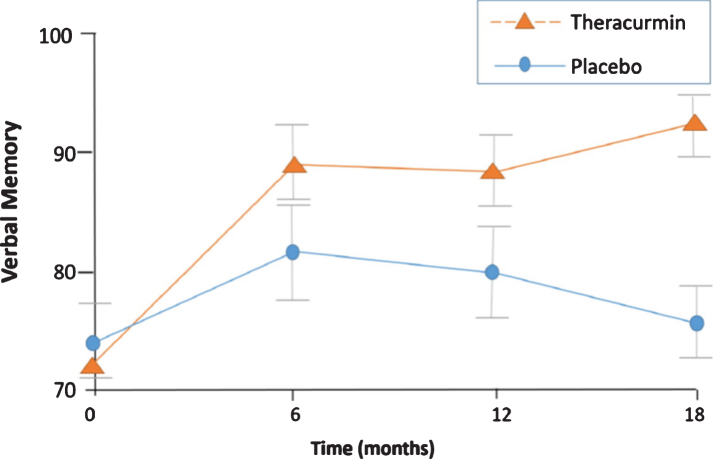
Results: Three large epidemiology studies reported etanercept treated patients had 60 to 70% lower odds ratio (OR) of developing AD. Two small-randomized control trials (RCTs) demonstrated an improvement in cognitive performance for AD patients treated with etanercept. Studies using animal models of dementia also reported similar findings with TNF blocking agents (etanercept, infliximab, adalimumab, Theracurmin), which appeared to improve cognition. A small human RCT using Theracurmin, a well-absorbed form of curcumin that lowers TNF-α, showed enhanced cognitive performance and decreased brain levels of amyloid-β plaque and tau tangles.
Conclusion: TNF-α targeted therapy is a biologically plausible approach to the preservation of cognition, and warrants larger prospective RCTs to further investigate potential benefits in populations at risk of developing AD.
Keywords: Alzheimer’s disease; TNF-α; dementia; inflammation; mild cognitive impairment; tissue necrosis factor-alpha.
Conflict of interest statement
Authors’ disclosures available online (
Figures
References
-
- Hodes JF, Oakley CI, O’Keefe JH, Lu P, Galvin JE, Saif N, Bellara S, Rahman A, Kaufman Y, Hristov H, Rajji TK, Fosnacht Morgan AM, Patel S, Merrill DA, Kaiser S, Melendez-Cabrero J, Melendez JA, Krikorian R, Isaacson RS (2018) Alzheimer’s “prevention” vs. “risk reduction”: Transcending semantics for clinical practice. Front Neurol 9, 1179. - PMC - PubMed
-
- Smith AD, Yaffe K (2014) Dementia (including Alzheimer’s disease) can be prevented: Statement supported by international experts. J Alzheimers Dis 38, 699–703. - PubMed
-
- Livingston G, Sommerlad A, Orgeta V, Costafreda SG, Huntley J, Ames D, Ballard C, Banerjee S, Burns A, Cohen-Mansfield J, Cooper C, Fox N, Gitlin LN, Howard R, Kales HC, Larson EB, Ritchie K, Rockwood K, Sampson EL, Samus Q, Schneider LS, Selbaek G, Teri L, Mukadam N (2017) Dementia prevention, intervention, and care. Lancet 390, 2673–2734. - PubMed
Publication types
MeSH terms
Substances
LinkOut - more resources
Full Text Sources
Medical
