. 2020 Oct 20;53(10):2094-2105.
doi: 10.1021/acs.accounts.0c00456. Epub 2020 Oct 5.

Engineered Nanoparticles for Cancer Vaccination and Immunotherapy

Affiliations

Engineered Nanoparticles for Cancer Vaccination and Immunotherapy

Marisa E Aikins et al. Acc Chem Res. .

Abstract

The immune system has evolved over time to protect the host from foreign microorganisms. Activation of the immune system is predicated on a distinction between self and nonself. Unfortunately, cancer is characterized by genetic alterations in the host's cells, leading to uncontrolled cellular proliferation and evasion of immune surveillance. Cancer immunotherapy aims to educate the host's immune system to not only recognize but also attack and kill mutated cancer cells. While immune checkpoint blockers have been proven to be effective against multiple types of advanced cancer, the overall patient response rate still remains below 30%. Therefore, there is an urgent need to improve current cancer immunotherapies. In this Account, we present an overview of our recent progress on nanoparticle-based strategies for improving cancer vaccines and immunotherapies. We also present other complementary strategies to give a well-rounded snapshot of the field of combination cancer immunotherapy. The versatility and tunability of nanoparticles make them promising platforms for addressing individual challenges posed by various cancers. For example, nanoparticles can deliver cargo materials to specific cells, such as vaccines delivered to antigen-presenting cells for strong immune activation. Nanoparticles also allow for stimuli-responsive delivery of various therapeutics to cancer cells, thus forming the basis for combination cancer immunotherapy. Here, we focus on nanoparticle platforms engineered to deliver tumor antigens, whole tumor cells, and chemotherapeutic or phototherapeutic agents in a manner to effectively and safely trigger the host's immune system against tumor cells. For each work, we discuss the nanoparticle platform developed, synthesis chemistry, and in vivo applications. Nanovaccines offer a unique platform for codelivery of personalized tumor neoantigens and adjuvants and elicitation of robust immune responses against aggressive tumors. Nanovaccines either delivering whole tumor cell lysate or formed from tumor cell lysate may increase the repertoire of tumor antigens as immune targets while exploiting immunogenic cell death to prime antitumor immune responses. We also discuss how antigen- and whole tumor cell-based approaches may open the door for personalized cancer vaccination and immunotherapy. On the other hand, chemotherapy, phototherapy, and radiotherapy are more standardized cancer therapies, and nanoparticle-based approaches may promote their ability to initiate T cell activation against tumor cells and improve antitumor efficacy with minimal toxicity. Finally, building on the recent progress in nanoparticle-based cancer immunotherapy, the field should set the ultimate goal to be clinical translation and clinical efficacy. We will discuss regulatory, analytical, and manufacturing hurdles that should be addressed to expedite the clinical translation of nanomedicine-based cancer immunotherapy.


Conflict of interest statement

The authors declare the following competing financial interest(s): Patent applications for the nanodisc technology have been filed. J.J.M. is a co-founder of EVOQ Therapeutics, LLC., that developed the nanodisc technology for applications in vaccines and immunotherapies.

Figures
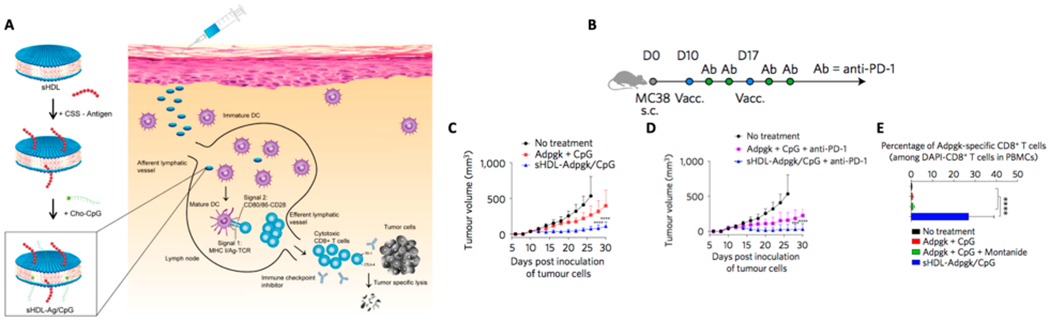
Figure 1.
Figure 1.
(A) sHDL nanodiscs, composed of phospholipids and apolipoprotein-1 mimetic peptides (22A), are coloaded with cysteine-modified tumor-specific mutated neoantigen peptides and CpG, an immunostimulatory adjuvant. (B) Immunization scheme of MC-38 study with nanodiscs. (C and D) Tumor growth curves of mice vaccinated with sHDL nanodiscs with or without anti-PD-1 IgG therapy. (E) Frequency of neoantigen-specific CD8+ T cells among PBMCs. Reproduced with permission from ref . Copyright 2017 Nature Publishing Group.
Figure 2.
Figure 2.
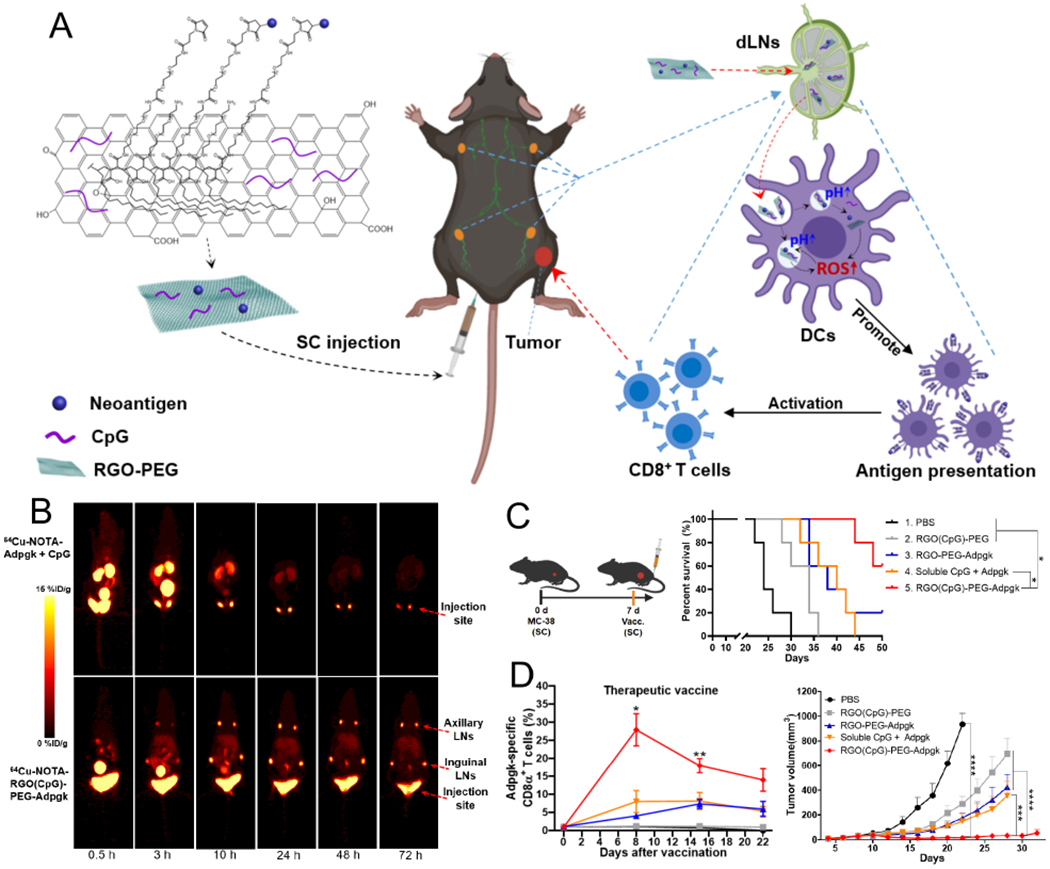
(A) Schematic illustration of RGO-based cancer nanovaccine. Shown are the structure of RGO(CpG)-PEG-neoantigen and its proposed mechanism of LN draining and ROS-enhanced antigen presentation. (B) PET imaging of 64Cu-NOTA-Adpgk + CpG and 64Cu-NOTA-RGO(CpG)-PEG-Adpgk after SC injection. (C) Treatment regimen and overall survival curve for MC-38 tumor therapeutic vaccine study. (D) Frequencies of Adpgk-specific CD8α+ T cells and the average tumor growth curves in the MC-38 tumor model. Reproduced with permission from ref . Copyright 2020 American Chemical Society.
Figure 3.
Figure 3.
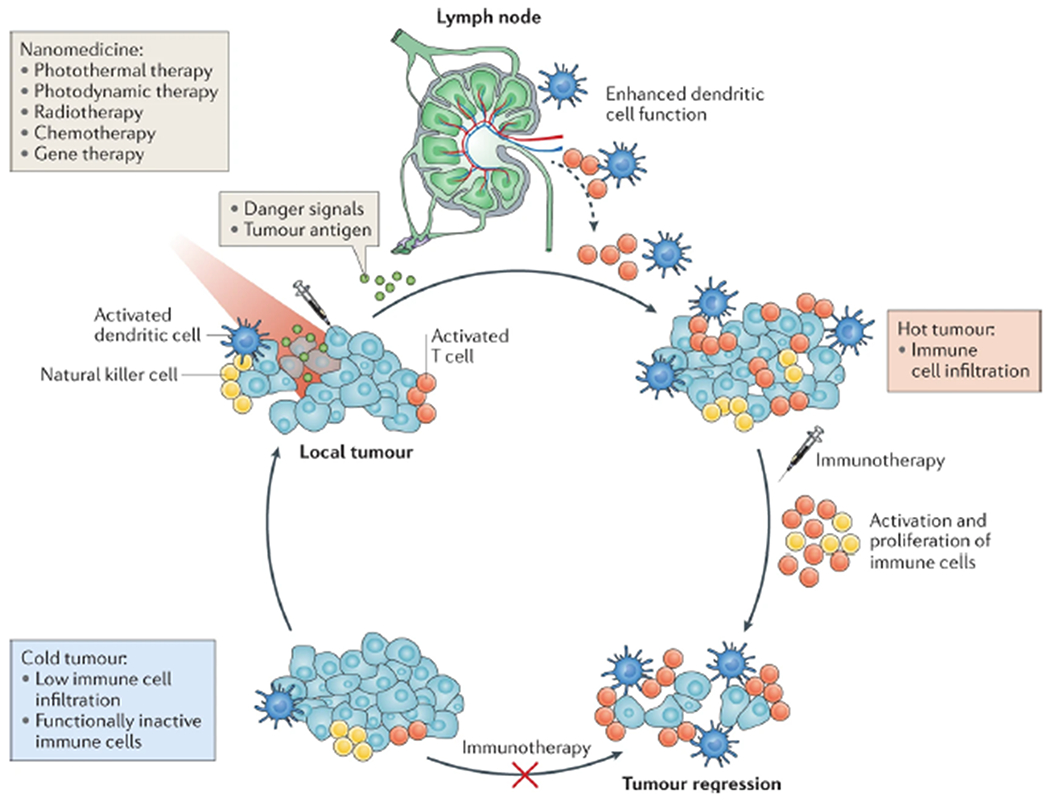
Nanomedicine for combination cancer immunotherapy. Nonimmunogenic, “cold” tumors are resistant to immunotherapies as they have various immune evasion mechanisms, including poor T cell infiltration and immunosuppressive pathways. Nanomedicines designed for photothermal therapy, photodynamic therapy, radiotherapy, chemotherapy, or gene therapy can be used to convert “cold” tumors into immunogenic, “hot” tumors. Nanomedicines can exert cytotoxic effects against tumor cells in the immunosuppressive tumor microenvironment, leading to debulking of the tumor mass, releasing of tumor antigens and danger signals, and dendritic cell-mediated antitumor immunity. Reproduced with permission from ref . Copyright 2019 Nature Publishing Group.
Figure 4.
Figure 4.
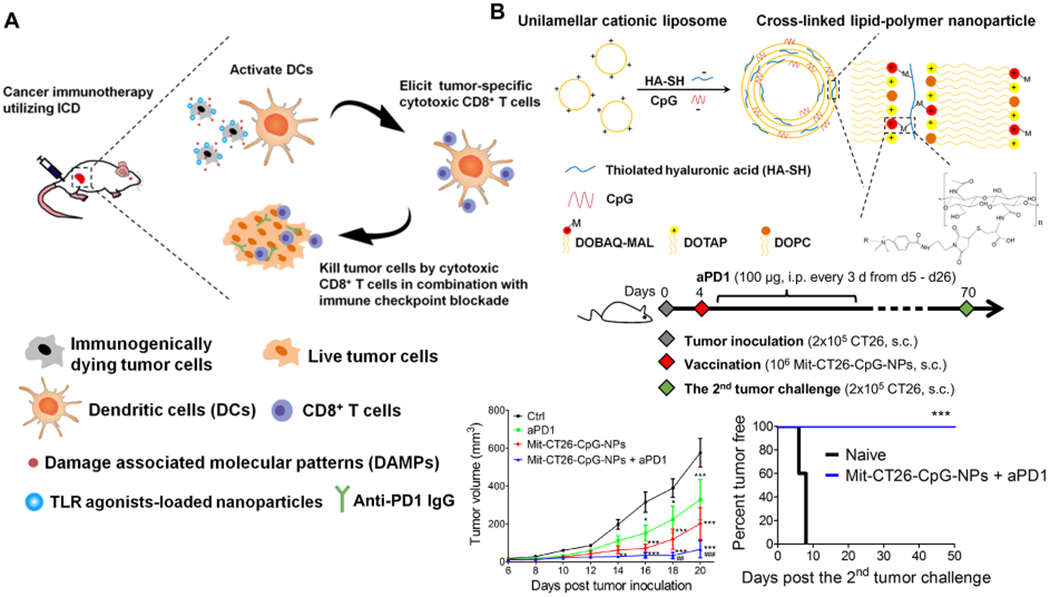
(A) Immunogenically dying tumor cells surface-decorated with TLR agonist-loaded NPs release tumor antigens and damage-associated molecular patterns, triggering activation of DCs, and induction of tumor-specific CD8α+ T cells that can kill tumor cells. (B) We synthesized the lipid-polymer hybrid NP encapsulating CpG by complexing cationic liposomes with thiolated HA-SH, an anionic biopolymer, followed by cross-link-mediated stabilization. (C) CT26 tumor study: tumor growth and survival curves. Reproduced with permission from ref . Copyright 2017 American Chemical Society.
Figure 5.
Figure 5.
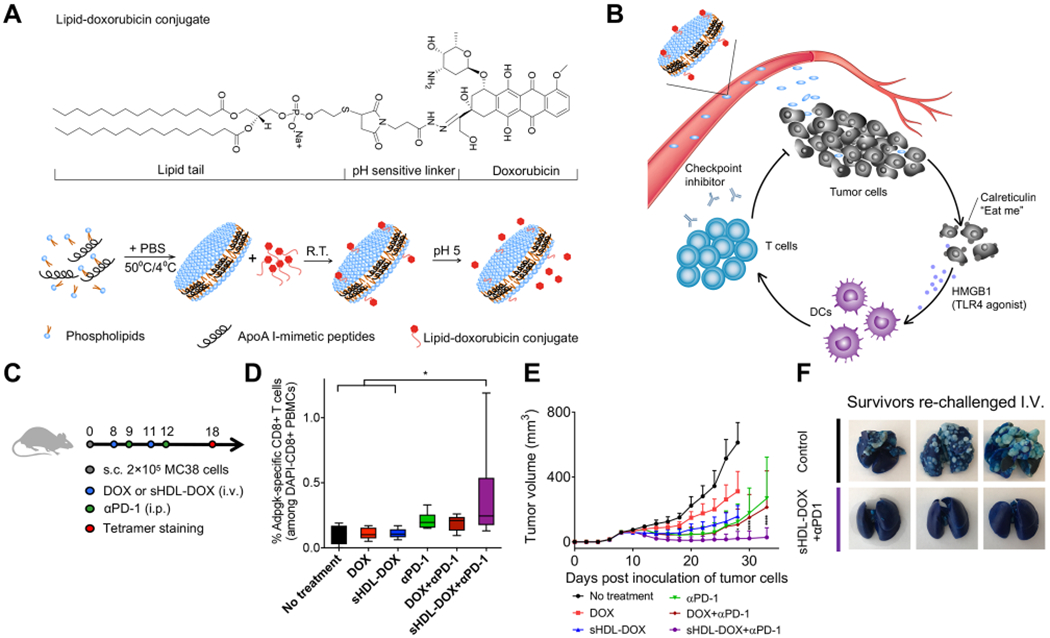
(A) sHDL-DOX is formed by incubation of lipid-DOX with preformed sHDL. (B) Ultrasmall size and prolonged circulation of sHDL enable intratumoral delivery of DOX. Released DOX kills tumor cells and triggers ICD, promoting the recruitment of DCs and antigen-specific T cells. Antitumor immunity primed with sHDL-DOX synergizes with immune checkpoint blockade, leading to efficient elimination of established tumors and prevention of tumor relapse. (C) Immunization scheme of MC38 study with sHDL-DOX. (D) Frequency of neoantigen-specific CD8+ T cells among PBMCs. (E) Tumor growth curves of mice treated with indicated formulations. (F) Lung metastasis of MC38 cells after IV tumor rechallenge. Reproduced with permission from ref . Copyright 2018 American Association for the Advancement of Science.
Figure 6.
Figure 6.
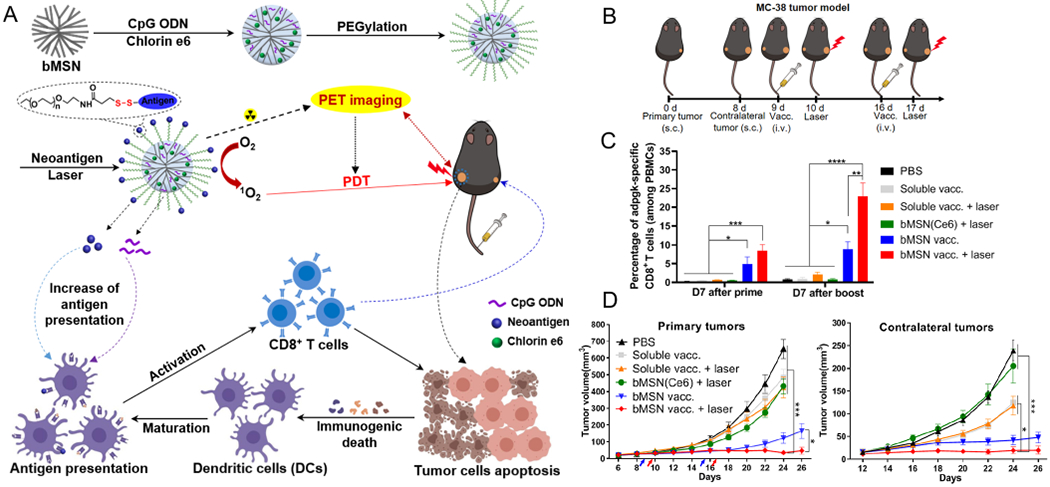
(A) Schematic illustration of neoantigen-based cancer nanovaccine: bMSN(CpG/Ce6)-neoantigen and its proposed mechanism of action for the combination PDT-immunotherapy. CpG and Ce6 were loaded into bMSN by electrostatic and hydrophobic interactions, respectively. Neoantigen peptides were conjugated to bMSN via the formation of disulfide bonds. PDT with laser irradiation (660 nm) generated cytotoxic ROS and eliminated tumor cells while triggering local immune activation for antitumor immunity. (B) Antitumor therapy study in MC-38 tumor-bearing mice. (C) Percentage neoantigen-specific CD8α+ T-cells in PBMCs. (D) Average tumor growth curves for the treated, primary tumors and untreated contralateral tumors. Reproduced with permission from ref . Copyright 2019 American Chemical Society.

References

    1. Kuai R; Ochyl LJ; Bahjat KS; Schwendeman A; Moon JJ Designer vaccine nanodiscs for personalized cancer immunotherapy. Nat. Mater 2017, 16, 489–496. - PMC - PubMed
    1. Xu C; Hong H; Lee Y; Park KS; Sun M; Wang T; Aikins ME; Xu Y; Moon JJ Efficient Lymph Node-Targeted Delivery of Personalized Cancer Vaccines with Reactive Oxygen Species-Inducing Reduced Graphene Oxide Nanosheets. ACS Nano 2020, DOI: 10.1021/acsnano.0c05062. - DOI - PMC - PubMed
    1. Nam J; Son S; Ochyl LJ; Kuai R; Schwendeman A; Moon JJ Chemo-photothermal therapy combination elicits anti-tumor immunity against advanced metastatic cancer. Nat. Commun 2018, 9, 1074. - PMC - PubMed
    1. Xu C; Nam J; Hong H; Xu Y; Moon JJ Positron Emission Tomography-Guided Photodynamic Therapy with Biodegradable Mesoporous Silica Nanoparticles for Personalized Cancer Immunotherapy. ACS Nano 2019, 13, 12148–12161. - PMC - PubMed
    1. Kuai R; Yuan W; Son S; Nam J; Xu Y; Fan Y; Schwendeman A; Moon JJ Elimination of established tumors with nanodisc-based combination chemoimmunotherapy. Sci. Adv 2018, 4, eaao1736. - PMC - PubMed

Publication types