


The prevalence and determinants of vitamin D deficiency in Indonesian infants at birth and six months of age
- PMID: 33017838
- PMCID: PMC7535980
- DOI: 10.1371/journal.pone.0239603
The prevalence and determinants of vitamin D deficiency in Indonesian infants at birth and six months of age
Abstract
Background: Vitamin D deficiency in infants has been associated with an increased risk of a number of diseases but there are limited data on the prevalence and determinants of vitamin D deficiency from tropical settings with high infant morbidity and mortality.
Objective: To determine the prevalence and determinants of vitamin D deficiency in infants at birth and at six months of age in Yogyakarta province, Indonesia.
Design: Serum vitamin D of eligible infants was measured in cord blood at birth and at six months of age. Factors associated with vitamin D deficiency (serum 25-hydroxyvitamin D <50 nmol/L) were collected prospectively monthly from birth and concentrations measured by liquid chromatography-tandem mass spectrometry. Independent risk factors were identified by multiple logistic regression.
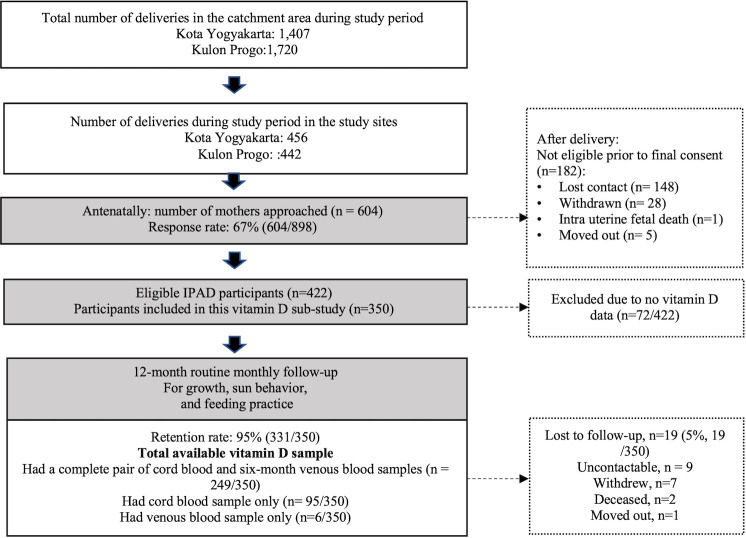
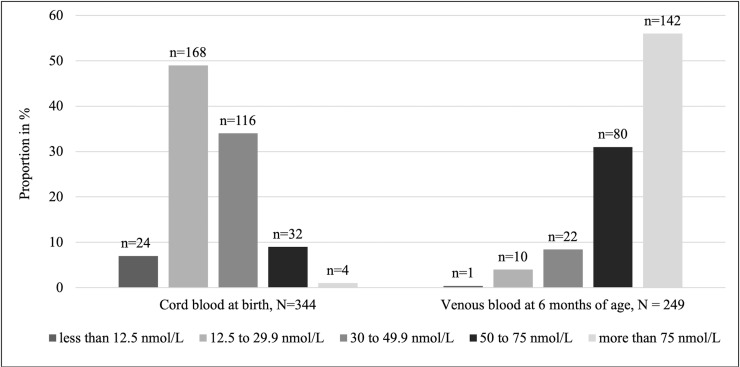
Results: Between December 2015 to December 2017, 350 maternal-newborn participants were recruited and followed up. Vitamin D deficiency was detected in 90% (308/344) of cord blood samples and 13% (33/255) of venous blood samples at six months. Longer time outdoors (≥2 hours per day) and maternal multivitamin intake containing vitamin D during pregnancy were protective against vitamin D deficiency at birth (AOR: 0.10, 95% CI: 0.01-0.90 and AOR: 0.21, 95% CI: 0.06-0.68, respectively). Risk factors for vitamin D deficiency at six months included lower cumulative skin-sun exposure score (AOR: 1.12, 95% CI: 1.04-1.20), severe vitamin D deficiency at birth (AOR: 7.73, 95% CI: 1.20-49.60) and exclusive breastfeeding (AOR: 2.64, 95% CI: 1.07-6.49) until six months. Among exclusively breast fed (EBF) infants, a higher skin-sun exposure score was associated with reduced vitamin D deficiency risk.
Conclusion: In equatorial regions, the role of 'safe' morning sun exposure in infants and mothers in populations with medium to dark brown skin pigmentation and effective interventions to prevent vitamin D deficiency in newborns and EBF infants, need further consideration and evaluation.
Conflict of interest statement
The authors have declared that no competing interests exist.
Figures
References
Publication types
MeSH terms
Substances
Associated data
LinkOut - more resources
Full Text Sources
Medical
