


Artefact-free recording of local field potentials with simultaneous stimulation for closed-loop Deep-Brain Stimulation
- PMID: 33018726
- PMCID: PMC7116199
- DOI: 10.1109/EMBC44109.2020.9176665
Artefact-free recording of local field potentials with simultaneous stimulation for closed-loop Deep-Brain Stimulation
Abstract
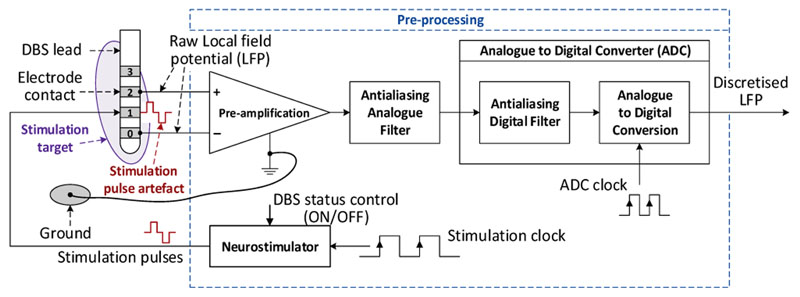
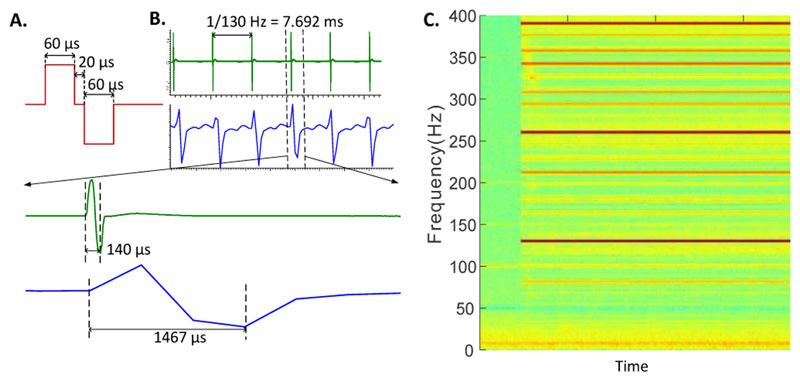
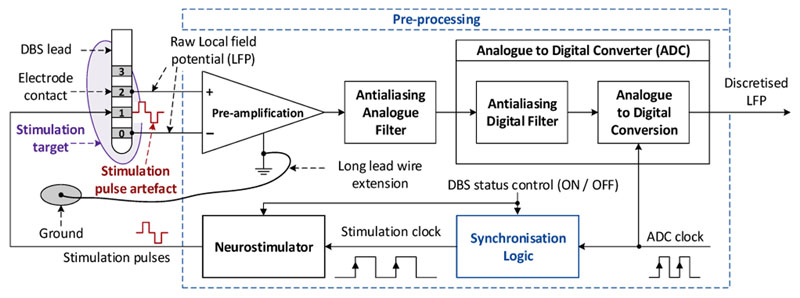
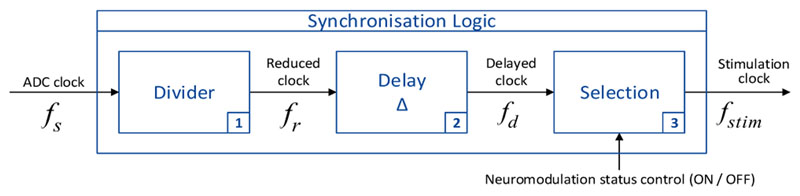
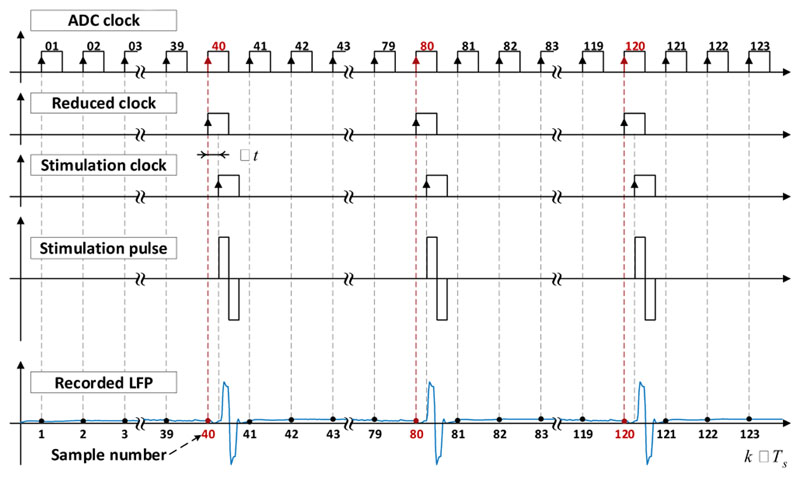
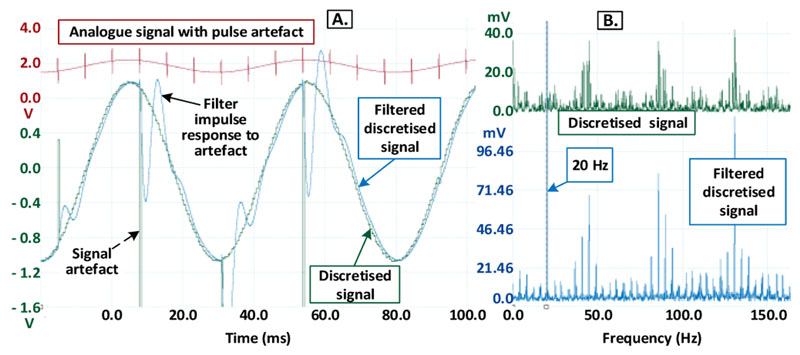
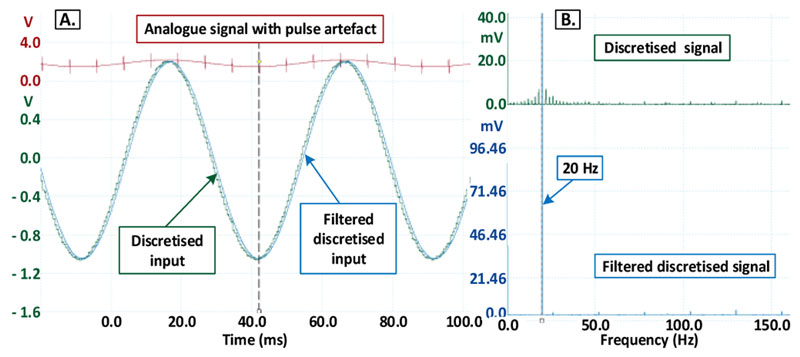
Continuous high frequency Deep Brain Stimulation (DBS) is a standard therapy for several neurological disorders. Closed-loop DBS is expected to further improve treatment by providing adaptive, on-demand therapy. Local field potentials (LFPs) recorded from the stimulation electrodes are the most often used feedback signal in closed-loop DBS. However, closed-loop DBS based on LFPs requires simultaneous recording and stimulating, which remains a challenge due to persistent stimulation artefacts that distort underlying LFP biomarkers. Here we first investigate the nature of the stimulation-induced artefacts and review several techniques that have been proposed to deal with them. Then we propose a new method to synchronize the sampling clock with the stimulation pulse so that the stimulation artefacts are never sampled, while at the same time the Nyquist-Shannon theorem is satisfied for uninterrupted LFP recording. Test results show that this method achieves true uninterrupted artefact-free LFP recording over a wide frequency band and for a wide range of stimulation frequencies.Clinical relevance-The method proposed here provides continuous and artefact-free recording of LFPs close to the stimulation target, and thereby facilitates the implementation of more advanced closed-loop DBS using LFPs as feedback.
Figures
References
-
- Zhou A, Johnson BC, Muller R. Toward true closed-loop neuromodulation: artifact-free recording during stimulation. Curr Opin Neurobiol. 2018 Jun;50:119–127. - PubMed
MeSH terms
Grants and funding
LinkOut - more resources
Full Text Sources