


The Glyoxalase System-New Insights into an Ancient Metabolism
- PMID: 33019494
- PMCID: PMC7600140
- DOI: 10.3390/antiox9100939
The Glyoxalase System-New Insights into an Ancient Metabolism
Abstract
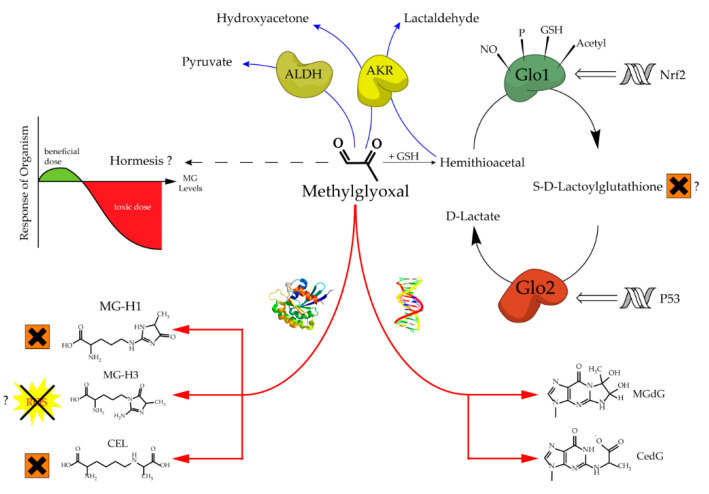
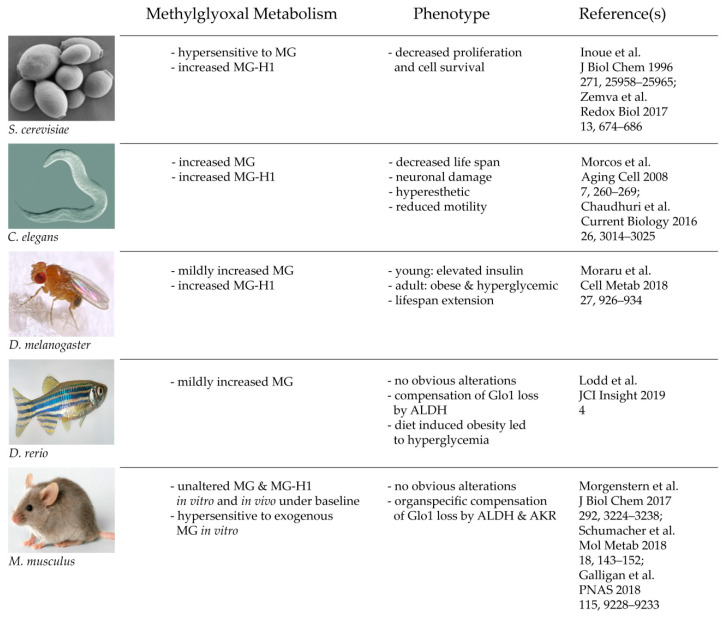
The glyoxalase system was discovered over a hundred years ago and since then it has been claimed to provide the role of an indispensable enzyme system in order to protect cells from a toxic byproduct of glycolysis. This review gives a broad overview of what has been postulated in the last 30 years of glyoxalase research, but within this context it also challenges the concept that the glyoxalase system is an exclusive tool of detoxification and that its substrate, methylglyoxal, is solely a detrimental burden for every living cell due to its toxicity. An overview of consequences of a complete loss of the glyoxalase system in various model organisms is presented with an emphasis on the role of alternative detoxification pathways of methylglyoxal. Furthermore, this review focuses on the overlooked posttranslational modification of Glyoxalase 1 and its possible implications for cellular maintenance under various (patho-)physiological conditions. As a final note, an intriguing point of view for the substrate methylglyoxal is offered, the concept of methylglyoxal (MG)-mediated hormesis.
Keywords: Glyoxalase 1; glycation; methylglyoxal.
Conflict of interest statement
The authors declare no conflict of interest.
Figures
References
-
- Dakin H.D., Dudley H.W. An enzyme concerned with the formation OF hydroxy acids from ketonic aldehydes. J. Biol. Chem. 1913;14:155–157.
-
- Jain M., Batth R., Kumari S., Mustafiz A. Arabidopsis thaliana contains both Ni2+ and Zn2+ dependent glyoxalase I enzymes and ectopic expression of the latter contributes more towards abiotic stress tolerance in E. coli. PLoS ONE. 2016;11:e0159348. doi: 10.1371/journal.pone.0159348. - DOI - PMC - PubMed
Publication types
Grants and funding
LinkOut - more resources
Full Text Sources
Research Materials
