Review
. 2020 Oct 1;13(19):4385.
doi: 10.3390/ma13194385.

Synthesis, Characterization and Use of Mesoporous Silicas of the Following Types SBA-1, SBA-2, HMM-1 and HMM-2

Affiliations
Review

Synthesis, Characterization and Use of Mesoporous Silicas of the Following Types SBA-1, SBA-2, HMM-1 and HMM-2

Sylwia Jarmolińska et al. Materials (Basel). .

Abstract

Mesoporous silicas have enjoyed great interest among scientists practically from the moment of their discovery thanks to their unique attractive properties. Many types of mesoporous silicas have been described in literature, the most thoroughly MCM-41 and SBA-15 ones. The focus of this review are the methods of syntheses, characterization and use of mesoporous silicas from SBA (Santa Barbara Amorphous) and HMM (Hybrid Mesoporous Materials) groups. The first group is represented by (i) SBA-1 of three-dimensional cubic structure and Pm3n symmetry and (ii) SBA-2 of three-dimensional combined hexagonal and cubic structures and P63/mmc symmetry. The HMM group is represented by (i) HMM-1 of two-dimensional hexagonal structure and p6mm symmetry and (ii) HMM-2 of three-dimensional structure and P63/mmc symmetry. The paper provides comprehensive information on the above-mentioned silica materials available so far, also including the data for the silicas modified with metal ions or/and organic functional groups and examples of the materials applications.

Keywords: HMM-1; HMM-2; SBA-1; SBA-2; hybrid mesoporous materials; mesoporous silica materials.


Conflict of interest statement

The authors declare no conflict of interest.

Figures
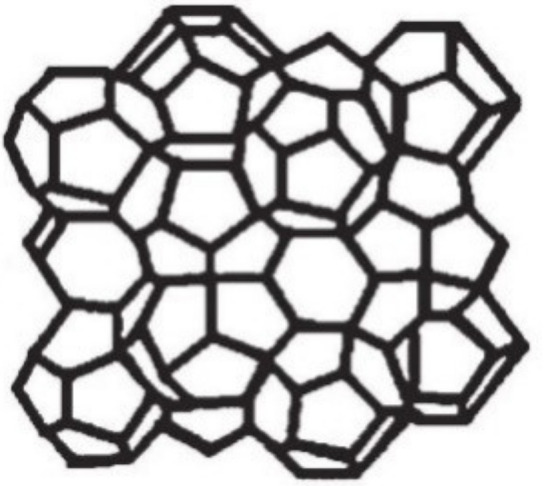
Figure 1
Figure 1
Structure of SBA-1. Reprinted from Reference [27] with permission from The Royal Society of Chemistry.
Figure 2
Figure 2
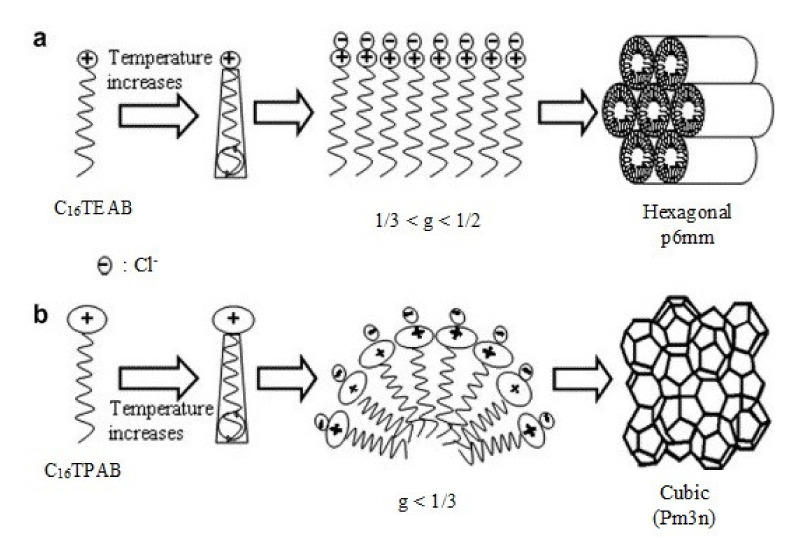
Schemes of changes in the ordering of surfactant micelles obtained with increasing temperature for (a) C16TEAB and (b) C16TPAB. Reprinted with permission from Reference [33] with minor modification.
Figure 3
Figure 3
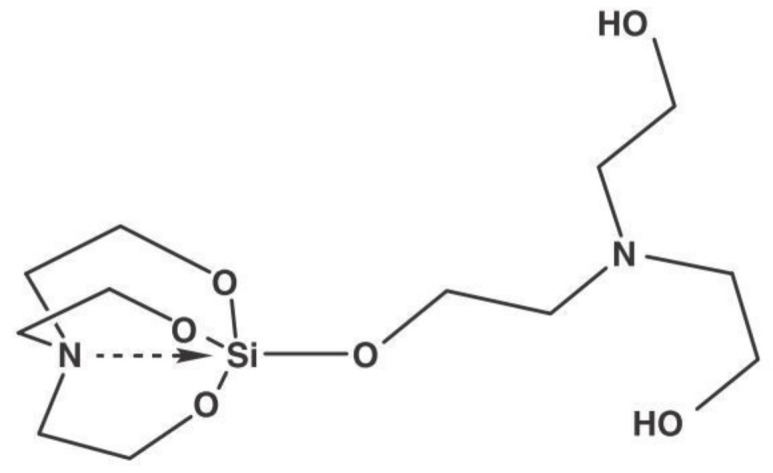
Structure of silatrane. Reprinted with permission from Reference [38]. Copyright (2007) The American Ceramic Society.
Figure 4
Figure 4
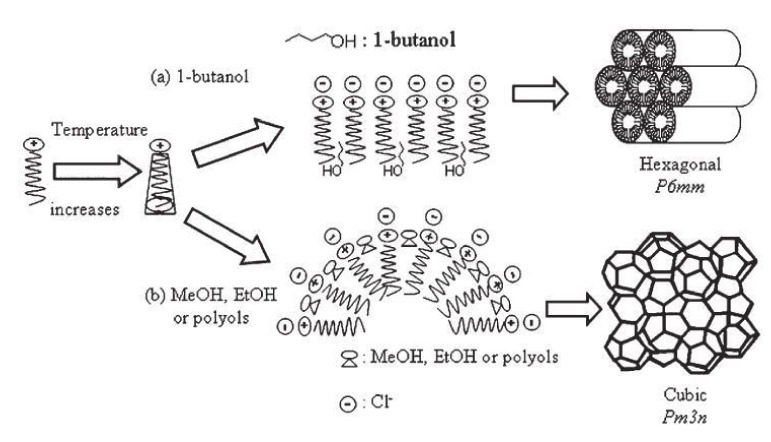
The proposed schema of changes in organization of a surfactant with increasing temperature in the presence of (a) 1-butanol and (b) ethanol, methanol or polyols. Reprinted from Reference [27] with permission from The Royal Society of Chemistry.
Figure 5
Figure 5
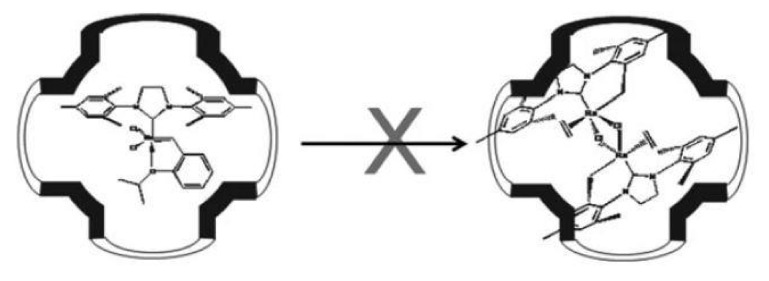
Proposed mechanism preventing dimerization of ruthenium complex in nanocages of SBA-1. Reprinted from Reference [67] with permission from The Royal Society of Chemistry.
Figure 6
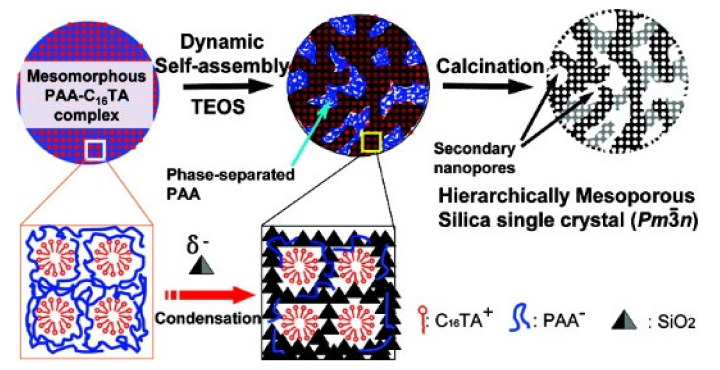
Figure 6
Schema of the synthesis of hierarchic SBA-1 silica with the use of PAA/C16TAB complex. Reprinted with permission from Reference [71]. Copyright (2010) American Chemical Society.
Figure 7
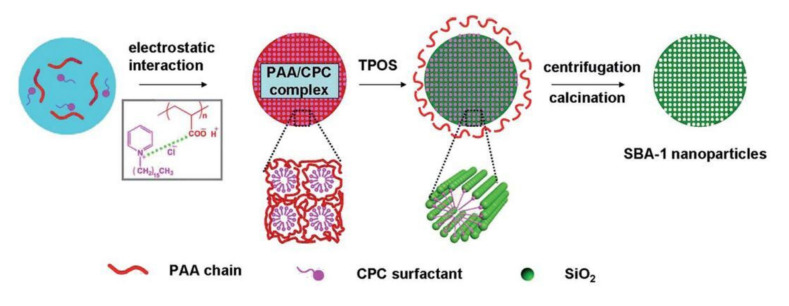
Figure 7
Schematic presentation of the procedure for obtaining SBA-1 nanoparticles using PAA/CPC complex as a template. Reprinted from Reference [75] with permission from The Royal Society of Chemistry.
Figure 8
Figure 8
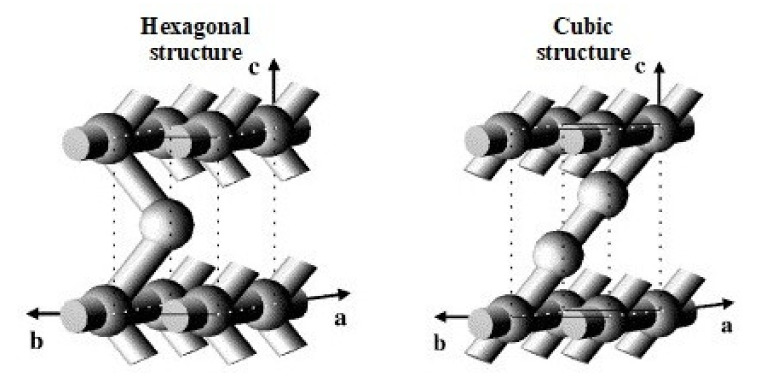
The network of pores in SBA-2. Reprinted with permission from Reference [84] with minor modification. Copyright (2003) Elsevier B.V.
Figure 9
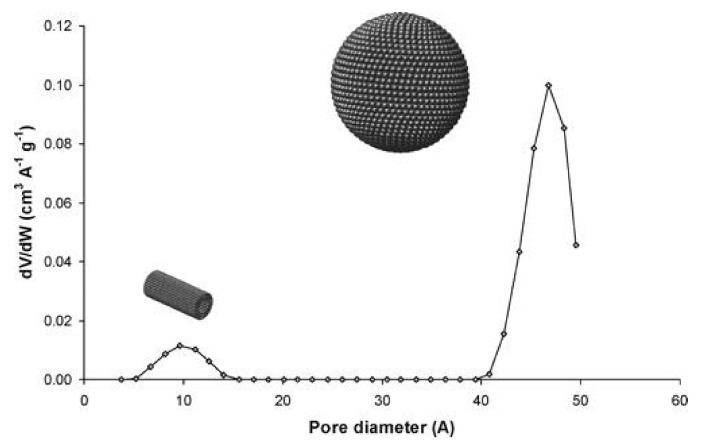
Figure 9
Pore size distribution in SBA-2 obtained by the results of Pèrez-Mendoza. Reprinted with permission from Reference [87]. Copyright (2004) American Chemical Society.
Figure 10
Figure 10
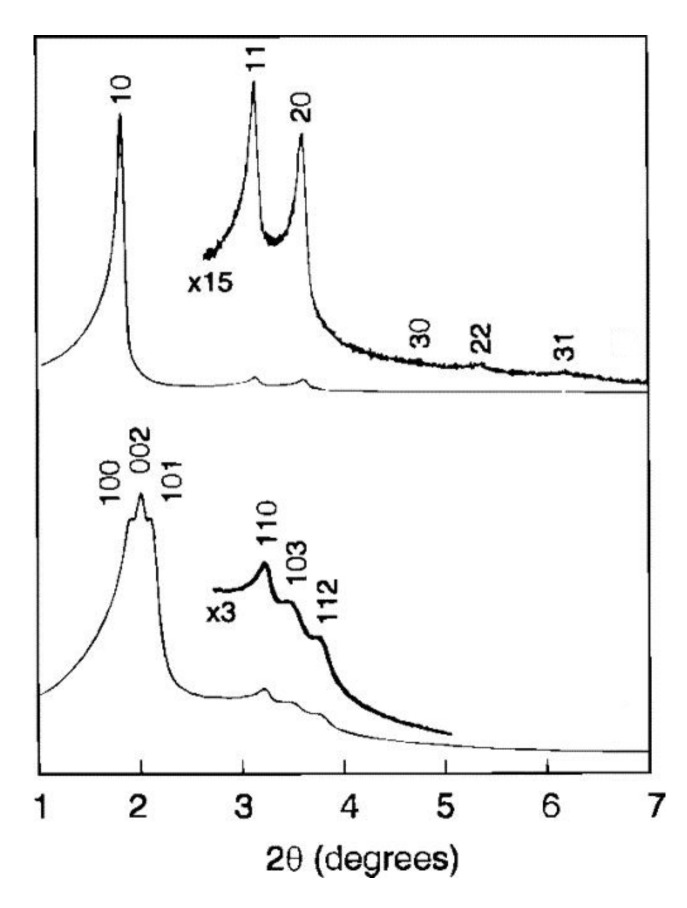
Diffractograms of HMM-1 (top) and HMM-2 (bottom). Reprinted with permission from Reference [95]. Copyright (1999) American Chemical Society.
Figure 11
Figure 11
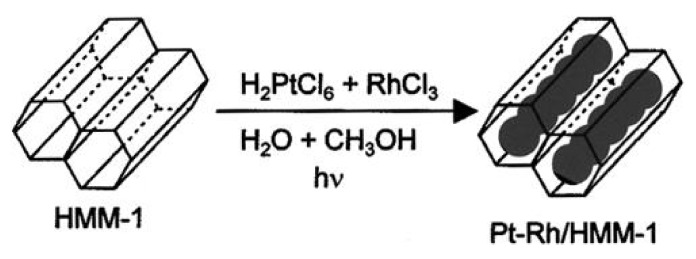
Typical synthesis of metal nanowires inside the channels of HMM-1. Reprinted with permission from Reference [104]. Copyright (2001) American Chemical Society.
Figure 12
Figure 12
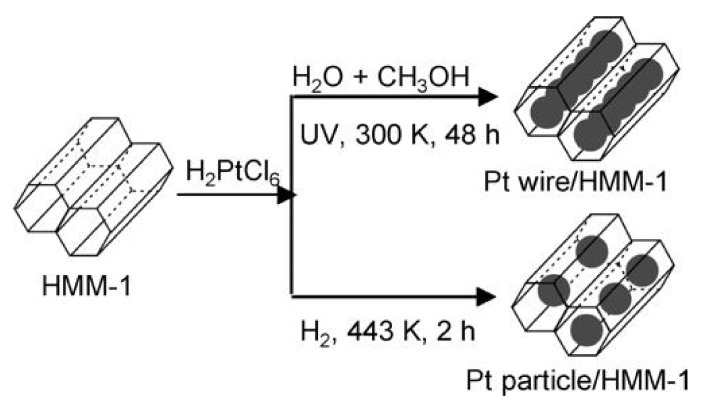
Schematic presentation of the synthesis of Pt nanowires and nanoparticles in HMM-1. Reprinted with permission from Reference [106]. Copyright (2004) American Chemical Society.
Figure 13
Figure 13
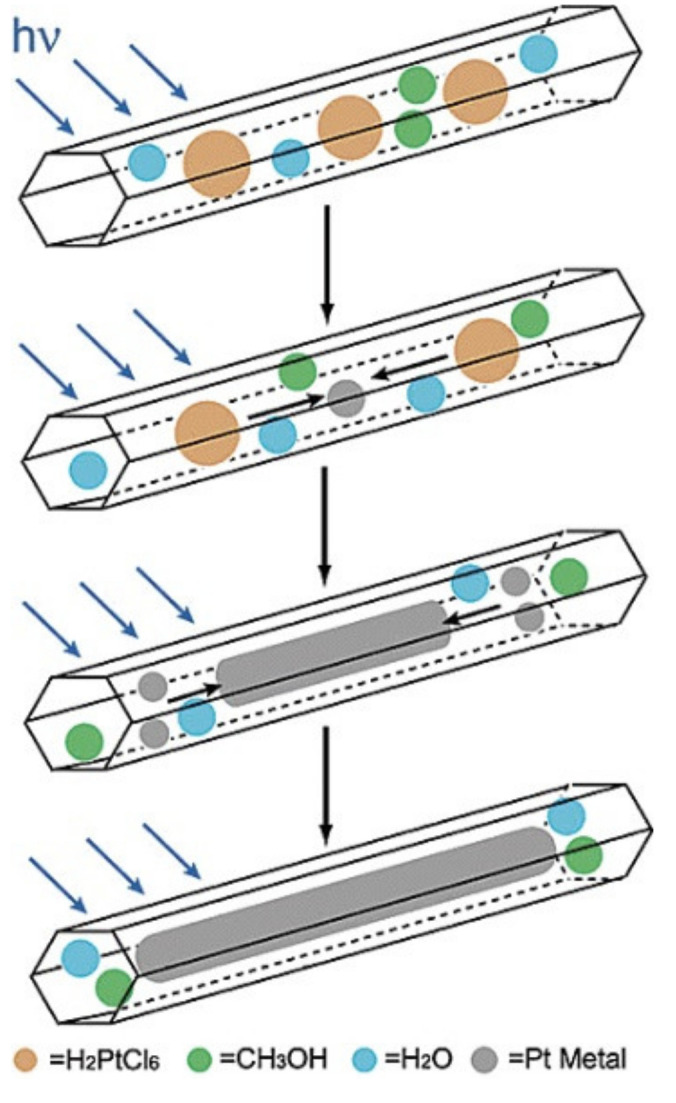
The mechanism of nanowires formation in HMM-1 channels under the effect of UV irradiation, proposed by Fukuoka et al. Reprinted with permission from Reference [106]. Copyright (2004) American Chemical Society.

References

    1. Sharma N., Ojha H., Bharadwaj A., Pathak D.P., Sharma R.K. Preparation and catalytic applications of nanomaterials: A review. RSC Adv. 2015;5:53381–53403. doi: 10.1039/C5RA06778B. - DOI
    1. Jeevanandam J., Barhoum A., Chan Y.S., Dufresne A., Danquah M.K. Review on nanoparticles and nanostructured materials: History, sources, toxicity and regulations. Beilstein J. Nanotechnol. 2018;9:1050–1074. doi: 10.3762/bjnano.9.98. - DOI - PMC - PubMed
    1. Welborn S.S., Detsi E. Small-angle X-ray scattering of nanoporous materials. Nanoscale Horiz. 2020;5:12–24. doi: 10.1039/C9NH00347A. - DOI
    1. Thommes M., Kaneko K., Neimark A.V., Olivier J.P., Rodriguez-Reinoso F., Rouquerol J., Sing K.S.W. Physisorption of gases, with special reference to the evaluation of surface area and pore size distribution (IUPAC Technical Report) Pure Appl. Chem. 2015;87:1051–1069. doi: 10.1515/pac-2014-1117. - DOI
    1. Feliczak-Guzik A. Hierarchical zeolites: Synthesis and catalytic properties. Microporous Mesoporous Mater. 2018;259:33–45. doi: 10.1016/j.micromeso.2017.09.030. - DOI