


Is extensive cardiopulmonary screening useful in athletes with previous asymptomatic or mild SARS-CoV-2 infection?
- PMID: 33020140
- PMCID: PMC7536638
- DOI: 10.1136/bjsports-2020-102789
Is extensive cardiopulmonary screening useful in athletes with previous asymptomatic or mild SARS-CoV-2 infection?
Abstract
Objective: During the COVID-19 pandemic, it is essential to understand if and how to screen SARS-CoV-2-positive athletes to safely resume training and competitions. The aim of this study is to understand which investigations are useful in a screening protocol aimed at protecting health but also avoiding inappropriate examinations.
Methods: We conducted a cohort study of a professional soccer team that is based on an extensive screening protocol for resuming training during the COVID-19 pandemic. It included personal history, antigen swabs, blood tests, spirometry, resting/stress-test ECG with oxygen saturation monitoring, echocardiogram, Holter and chest CT. We also compared the findings with prior data from the same subjects before infection and with data from SARS-CoV-2-negative players.
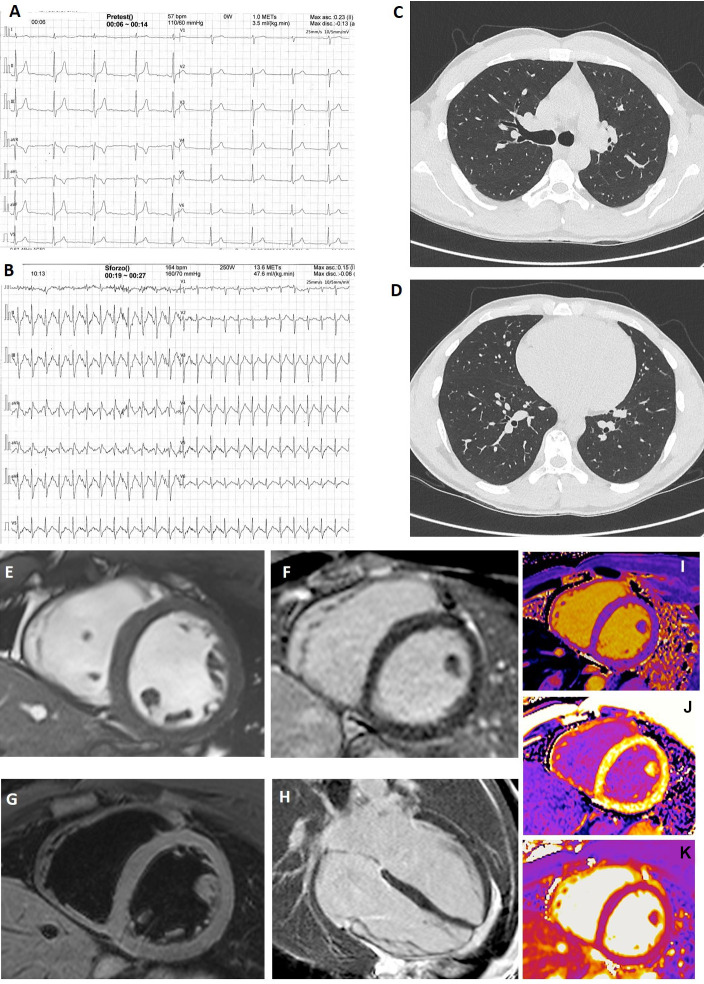
Results: None of the players had positive swab and/or anti-SARS-CoV-2 IgM class antibodies. Out of 30 players, 18 (60%) had IgG class antibodies. None had suffered severe SARS-CoV-2-related disease, 12 (66.7%) had complained of mild COVID-19-related symptoms and 6 (33.3%) were asymptomatic. None of the players we examined revealed significant cardiovascular abnormalities after clinical recovery. A mild reduction in spirometry parameters versus pre-COVID-19 values was observed in all athletes, but it was statistically significant (p<0.05) only in SARS-CoV-2-positive athletes. One SARS-CoV-2-positive player showed increased troponin I level, but extensive investigation did not show signs of myocardial damage.
Conclusion: In this small cohort of athletes with previous asymptomatic/mild SARS-CoV-2 infection, a comprehensive screening protocol including blood tests, spirometry, resting ECG, stress-test ECG with oxygen saturation monitoring and echocardiogram did not identify relevant anomalies. While larger studies are needed, extensive cardiorespiratory and haematological screening in athletes with asymptomatic/mild SARS-CoV-2 infection appears unnecessary.
Keywords: athlete; exercise testing; heart disease; prevention; soccer.
© Author(s) (or their employer(s)) 2021. Re-use permitted under CC BY-NC. No commercial re-use. See rights and permissions. Published by BMJ.
Conflict of interest statement
Competing interests: None declared.
Figures
References
MeSH terms
Substances
LinkOut - more resources
Full Text Sources
Medical
Miscellaneous
