


Enhanced asthma-related fibroblast to myofibroblast transition is the result of profibrotic TGF-β/Smad2/3 pathway intensification and antifibrotic TGF-β/Smad1/5/(8)9 pathway impairment
- PMID: 33020537
- PMCID: PMC7536388
- DOI: 10.1038/s41598-020-73473-7
Enhanced asthma-related fibroblast to myofibroblast transition is the result of profibrotic TGF-β/Smad2/3 pathway intensification and antifibrotic TGF-β/Smad1/5/(8)9 pathway impairment
Abstract
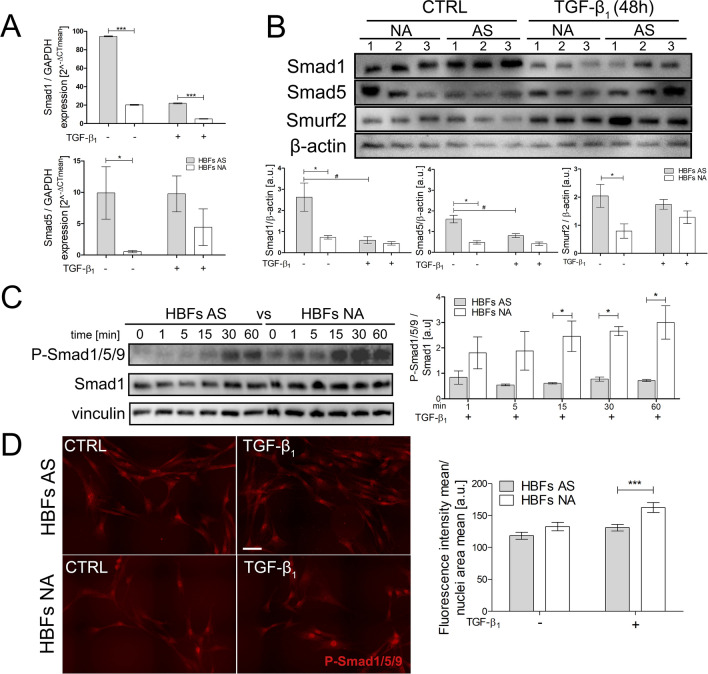
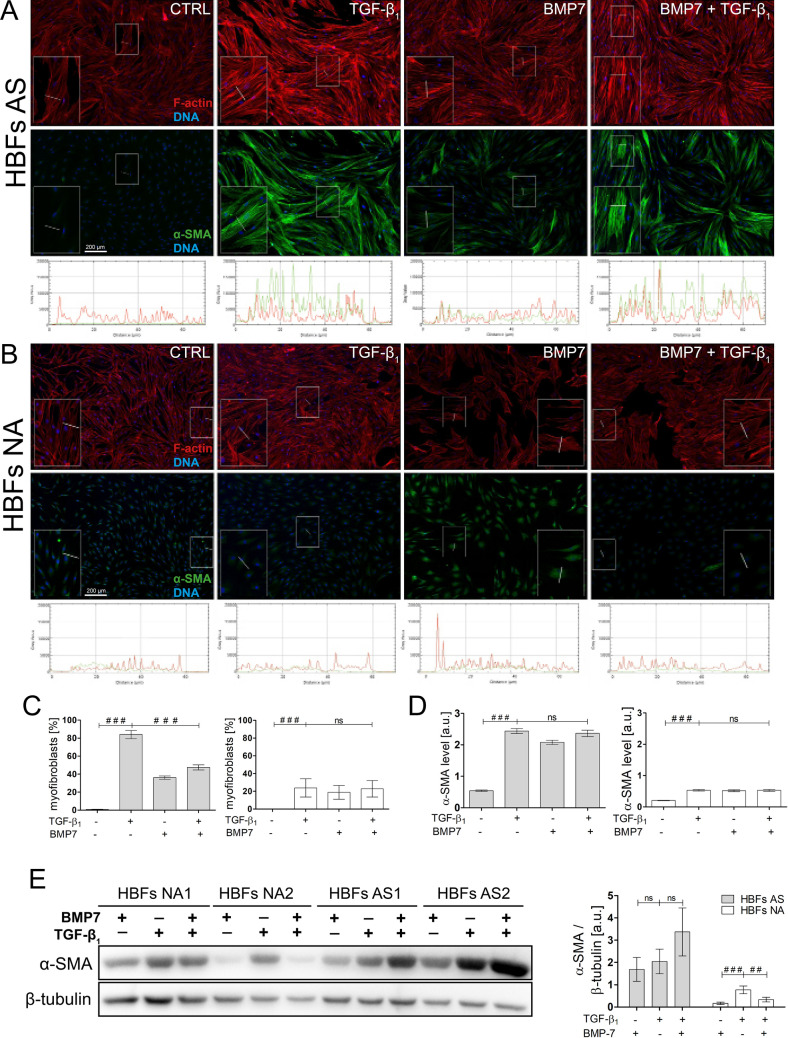
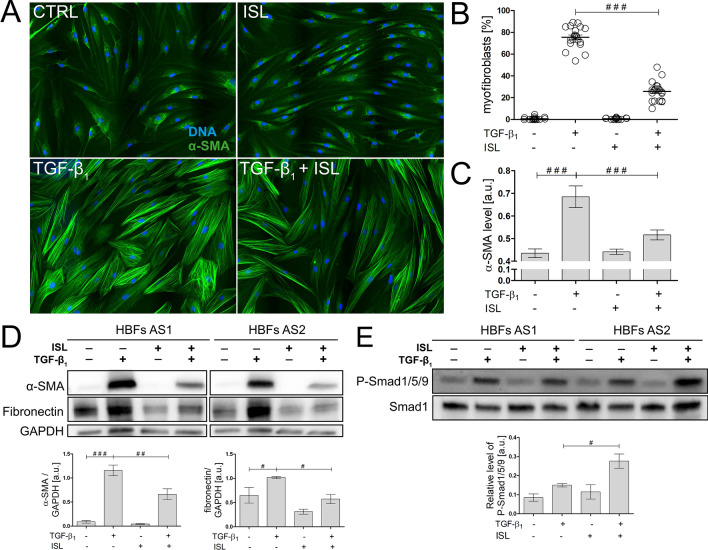
Airway remodelling with subepithelial fibrosis, which abolishes the physiological functions of the bronchial wall, is a major issue in bronchial asthma. Human bronchial fibroblasts (HBFs) derived from patients diagnosed with asthma display in vitro predestination towards TGF-β1-induced fibroblast-to-myofibroblast transition (FMT), a key event in subepithelial fibrosis. As commonly used anti-asthmatic drugs do not reverse the structural changes of the airways, and the molecular mechanism of enhanced asthma-related TGF-β1-induced FMT is poorly understood, we investigated the balance between the profibrotic TGF-β/Smad2/3 and the antifibrotic TGF-β/Smad1/5/9 signalling pathways and its role in the myofibroblast formation of HBF populations derived from asthmatic and non-asthmatic donors. Our findings showed for the first time that TGF-β-induced activation of the profibrotic Smad2/3 signalling pathway was enhanced, but the activation of the antifibrotic Smad1/5/(8)9 pathway by TGF-β1 was significantly diminished in fibroblasts from asthmatic donors compared to those from their healthy counterparts. The impairment of the antifibrotic TGF-β/Smad1/5/(8)9 pathway in HBFs derived from asthmatic donors was correlated with enhanced FMT. Furthermore, we showed that Smad1 silencing in HBFs from non-asthmatic donors increased the FMT potential in these cells. Additionally, we demonstrated that activation of antifibrotic Smad signalling via BMP7 or isoliquiritigenin [a small-molecule activator of the TGF-β/Smad1/5/(8)9 pathway] administration prevents FMT in HBFs from asthmatic donors through downregulation of profibrotic genes, e.g., α-SMA and fibronectin. Our data suggest that influencing the balance between the antifibrotic and profibrotic TGF-β/Smad signalling pathways using BMP7-mimetic compounds presents an unprecedented opportunity to inhibit subepithelial fibrosis during airway remodelling in asthma.
Conflict of interest statement
The authors declare no competing interests.
Figures




References
-
- Martin JG, Verma N. Mechanisms of airway remodeling in asthma. Drug Discov. Today Dis. Mech. 2012;9:e95–e102. doi: 10.1016/j.ddmec.2012.11.004. - DOI
