


Promising Antibiofilm Agents: Recent Breakthrough against Biofilm Producing Methicillin-Resistant Staphylococcus aureus
- PMID: 33022915
- PMCID: PMC7600973
- DOI: 10.3390/antibiotics9100667
Promising Antibiofilm Agents: Recent Breakthrough against Biofilm Producing Methicillin-Resistant Staphylococcus aureus
Abstract
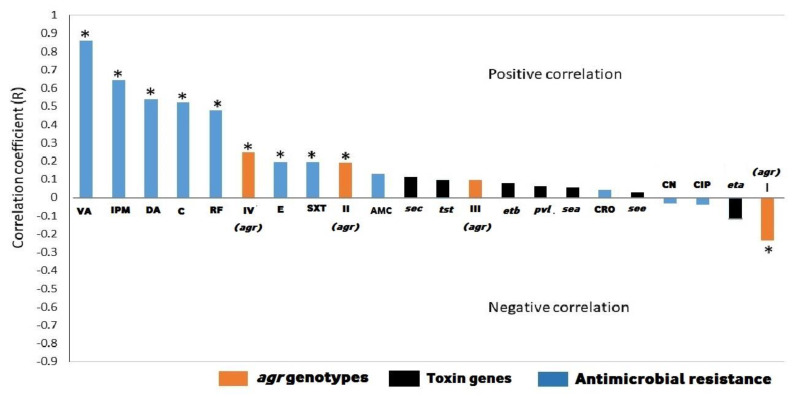
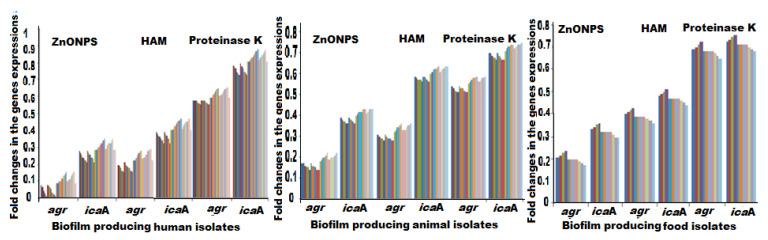
Multidrug resistant (MDR) methicillin-resistant Staphylococcus aureus (MRSA) is a superbug pathogen that causes serious diseases. One of the main reasons for the lack of the effectiveness of antibiotic therapy against infections caused by this resistant pathogen is the recalcitrant nature of MRSA biofilms, which results in an increasingly serious situation worldwide. Consequently, the development of innovative biofilm inhibitors is urgently needed to control the biofilm formation by this pathogen. In this work, we thus sought to evaluate the biofilm inhibiting ability of some promising antibiofilm agents such as zinc oxide nanoparticles (Zno NPs), proteinase K, and hamamelitannin (HAM) in managing the MRSA biofilms. Different phenotypic and genotypic methods were used to identify the biofilm producing MDR MRSA isolates and the antibiofilm/antimicrobial activities of the used promising agents. Our study demonstrated strong antibiofilm activities of ZnO NPs, proteinase K, and HAM against MRSA biofilms along with their transcriptional modulation of biofilm (intercellular adhesion A, icaA) and quorum sensing (QS) (agr) genes. Interestingly, only ZnO NPs showed a powerful antimicrobial activity against this pathogen. Collectively, we observed overall positive correlations between the biofilm production and the antimicrobial resistance/agr genotypes II and IV. Meanwhile, there was no significant correlation between the toxin genes and the biofilm production. The ZnO NPs were recommended to be used alone as potent antimicrobial and antibiofilm agents against MDR MRSA and their biofilm-associated diseases. On the other hand, proteinase-K and HAM can be co-administrated with other antimicrobial agents to manage such types of infections.
Keywords: HAM; MRSA; ZnO-NPs; antibiofilm; antimicrobial; proteinase-K.
Conflict of interest statement
The authors declare no conflict of interest.
Figures
References
-
- Abd El-Hamid M.I., Bendary M.M. Comparative phenotypic and genotypic discrimination of methicillin resistant and susceptible Staphylococcus aureus in Egypt. Cell. Mol. Biol. 2015;61:106–117. - PubMed
LinkOut - more resources
Full Text Sources
