. 2020 Oct 3;21(19):7322.
doi: 10.3390/ijms21197322.

Identification of the Cytosolic Glucose-6-Phosphate Dehydrogenase Gene from Strawberry Involved in Cold Stress Response

Affiliations

Identification of the Cytosolic Glucose-6-Phosphate Dehydrogenase Gene from Strawberry Involved in Cold Stress Response

Yunting Zhang et al. Int J Mol Sci. .

Abstract

Glucose-6-phosphate dehydrogenase (G6PDH) plays an important role in plant stress responses. Here, five FaG6PDH sequences were obtained in strawberry, designated as FaG6PDH-CY, FaG6PDH-P1, FaG6PDH-P1.1, FaG6PDH-P2 and FaG6PDH-P0, which were divided into cytosolic (CY) and plastidic (P) isoforms based on the bioinformatic analysis. The respective FaG6PDH genes had distinct expression patterns in all tissues and at different stages of fruit development. Notably, FaG6PDH-CY was the most highly expressed gene among five FaG6PDH members, indicating it encoded the major G6PDH isoform throughout the plant. FaG6PDH positively regulated cold tolerance in strawberry. Inhibition of its activity gave rise to greater cold-induced injury in plant. The FaG6PDH-CY transcript had a significant increase under cold stress, similar to the G6PDH enzyme activity, suggesting a principal participant in response to cold stress. Further study showed that the low-temperature responsiveness (LTR) element in FaG6PDH-CY promoter can promote the gene expression when plant encountered cold stimuli. Besides, FaG6PDH-CY was involved in regulating cold-induced activation of antioxidant enzyme genes (FaSOD, FaCAT, FaAPX and FaGR) and RBOH-dependent ROS generation. The elevated FaG6PDH-CY enhanced ROS-scavenging capability of antioxidant enzymes to suppress ROS excessive accumulation and relieved the oxidative damage, eventually improving the strawberry resistance to cold stress.

Keywords: Antioxidant enzymes; Cold stress; Glucose-6-phosphate dehydrogenase; Oxidative damage; Strawberry.


Conflict of interest statement

The authors declare that they have no competing interest.

Figures
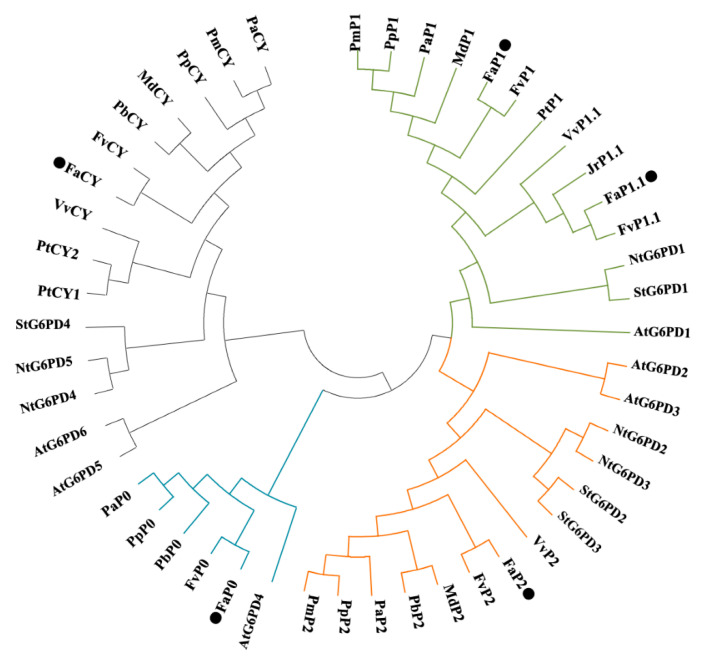
Figure 1
Figure 1
Phylogenetic analysis of G6PDHs from different species. Fa, Fragaria×ananassa (black circles); Fv, Fragaria vesca; Md, Malus×domestica; Pb, Pyrus×bretschneideri; Pa, Prunus avium; Pp, Prunus persica; Pm, Prunus mume; Pt, Prunus tenella; Vv, Vitis vinifera; At, Arabidopsis thaliana; Nt, Nicotiana tabacum; St, Solanum tuberosum; Jr, Juglans regia. CY, G6PDH-CY; P1, G6PDH-P1; P2, G6PDH-P2; P0, G6PDH-P0.
Figure 2
Figure 2
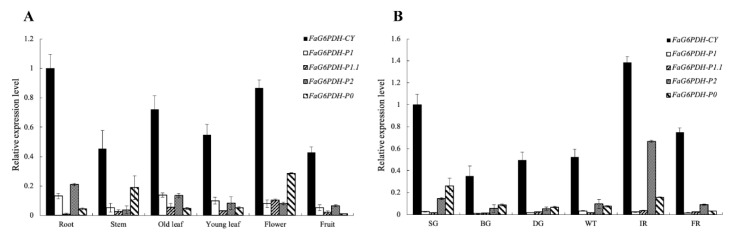
Expression profile of FaG6PDHs in different tissues and during the fruit development. (A) qRT-PCR analysis of FaG6PDHs in different tissues. (B) qRT-PCR analysis of FaG6PDHs during different fruit developmental stages. SG, small green; BG, big green; DG, de-green; WT, white; IR, initial red; FR, full red.
Figure 3
Figure 3
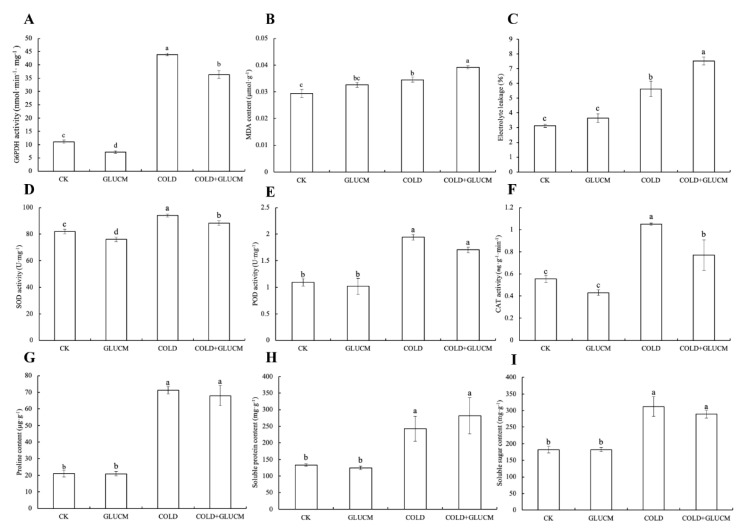
Effect of FaG6PDH enzyme activity on related physiological indexes in response to cold stress. Potted strawberry plantlets respectively treated by distilled water and glucosamine were subjected to room temperature and 0 °C environment for 24 h. Leaves were collected to measure G6PDH activity (A), and other related physiological indexes (BI). Different lowercase letters indicate significant differences at p < 0.05.
Figure 4
Figure 4
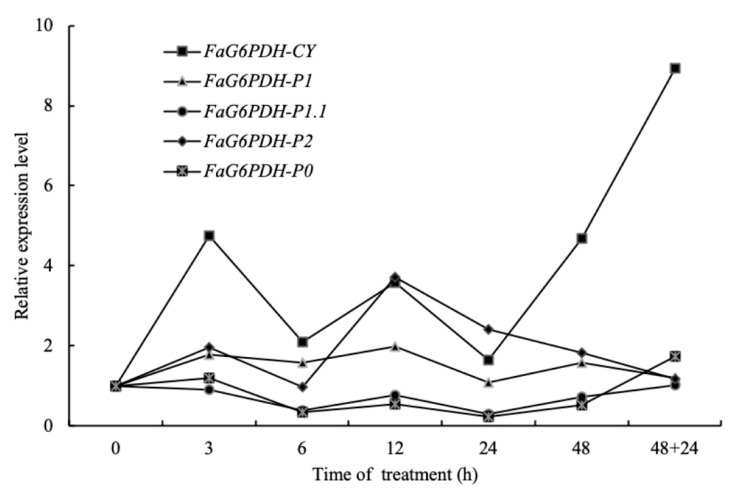
Relative expression level of FaG6PDH genes under cold stress. Potted strawberry plantlets were directly subjected to cold stress at 0 °C. Leaves were sampled at 0, 3, 6, 12, 24 and 48 h after treatment. Subsequently, plants were taken out to de-acclimate at room temperature for 24 h. All above samples were used to detect the expression of FaG6PDH genes by qRT-PCR.
Figure 5
Figure 5
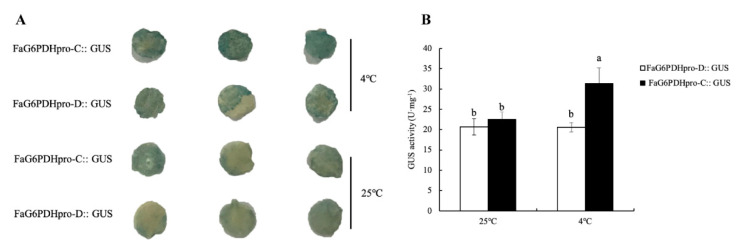
Beta-glucuronidase (GUS) activities in transgenic tobacco leaves under cold stress. FaG6PDHpro-C:: GUS and FaG6PDHpro-D:: GUS seedlings were kept at 4 °C and 25 °C for 48 h. Round leaf discs with a diameter of 1 cm punched from the treated tobacco leaves were performed histochemical staining (A) and quantification analysis (B) of GUS protein expression. Different lowercase letters indicate significant differences at p < 0.05.
Figure 6
Figure 6
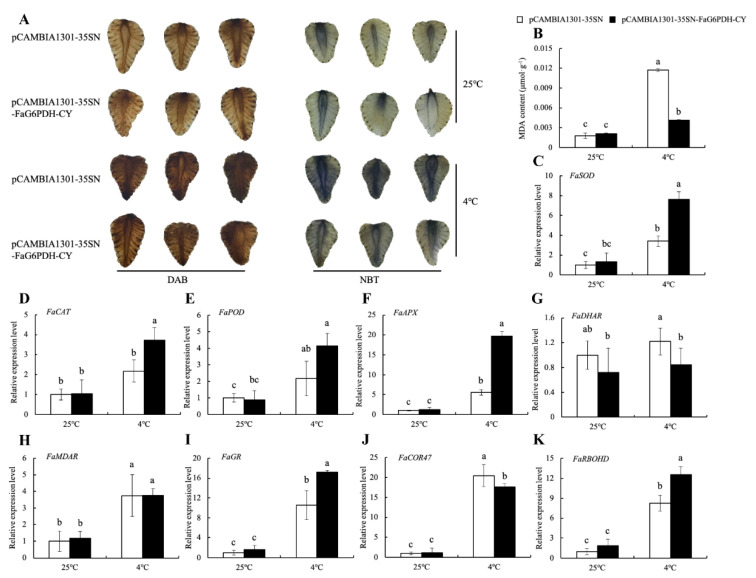
Effect of FaG6PDH-CY overexpressing on strawberry fruits in response to cold stress. Overexpressing strawberries were sampled after 5-day treatment at 4 °C and 25 °C to detect ROS production (A), MDA content (B) and gene expression (C–K). H2O2 was indicated by the presence of deep brown using 3, 3-diaminobenzidine (DAB) staining. O2- was indicated by the presence of dark blue using nitrobluetetrazolium (NBT) staining. Different lowercase letters indicate significant differences at p < 0.05.
Figure 7
Figure 7
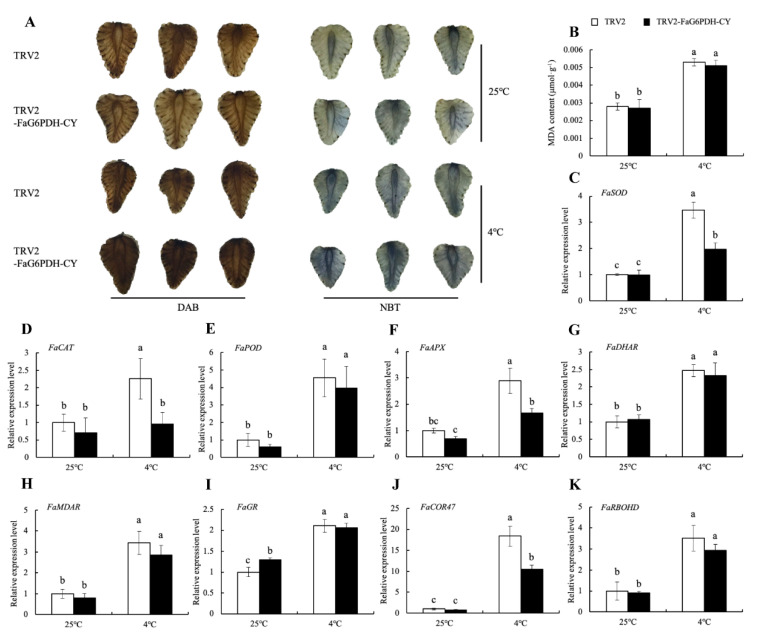
Effect of FaG6PDH-CY silencing on strawberry fruits in response to cold stress. silencing strawberries were sampled after 6-day treatment at 4 °C and 25 °C to detect ROS production (A), MDA content (B) and gene expression (C–K). H2O2 was indicated by the presence of deep brown using 3, 3-diaminobenzidine (DAB) staining. O2- was indicated by the presence of dark blue using nitrobluetetrazolium (NBT) staining. Different lowercase letters indicate significant differences at p < 0.05.
Figure 8
Figure 8
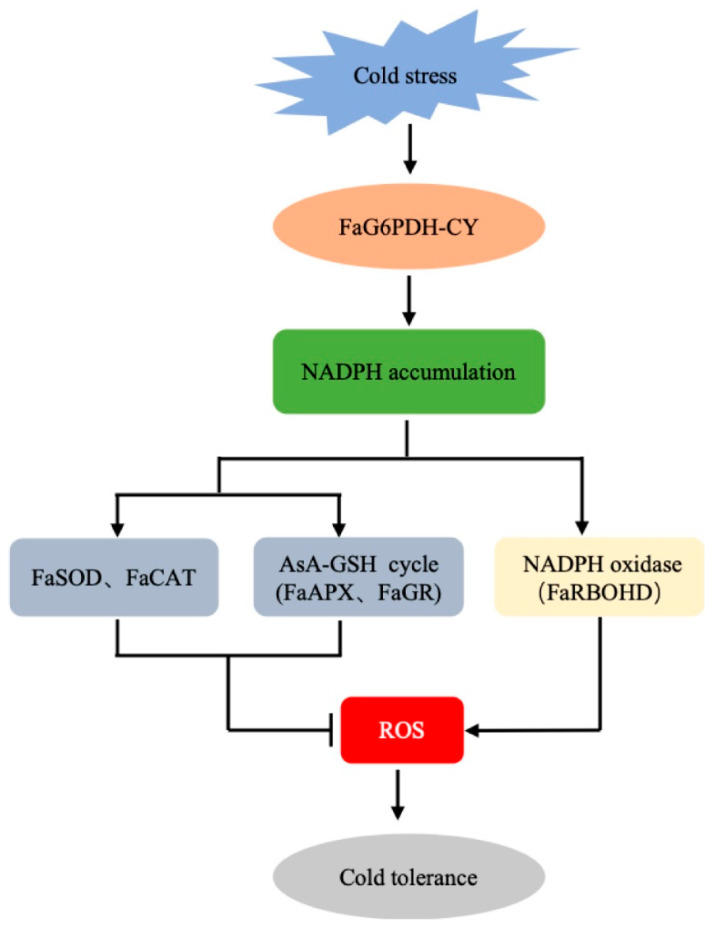
A putative model for FaG6PDH in response to cold stress in strawberry. When plant encountered cold stimuli, FaG6PDH was activated to promote NADPH generation. With the reducing power of NADPH, FaSOD, FaCAT, FaAPX and FaGR scavenged excessive ROS produced by NADPH oxidase (FaRBOHD) and protected cells from oxidative damage, thereby conferring the cold resistance to plant.

References

    1. Kruger N.J., Von Schaewen A. The oxidative pentose phosphate pathway: Structure and organisation. Curr. Opin. Plant Boil. 2003;6:236–246. doi: 10.1016/S1369-5266(03)00039-6. - DOI - PubMed
    1. Schnarrenberger C., Oeser A., Tolbert N. Two isoenzymes each of glucose-6-phosphate dehydrogenase and 6-phosphogluconate dehydrogenase in spinach leaves. Arch. Biochem. Biophys. 1973;154:438–448. doi: 10.1016/0003-9861(73)90077-5. - DOI - PubMed
    1. Von Schaewen A., Langenkämper G., Graeve K., Wenderoth I., Scheibe R. Molecular characterization of the plastidic glucose-6-phosphate dehydrogenase from potato in comparison to its cytosolic counterpart. Plant Physiol. 1995;109:1327–1335. doi: 10.1104/pp.109.4.1327. - DOI - PMC - PubMed
    1. Esposito S., Carfagna S., Massaro G., Vona V., Rigano V.D.M. Glucose-6-phosphate dehydrogenase in barley roots: Kinetic properties and localisation of the isoforms. Planta. 2001;212:627–634. doi: 10.1007/s004250000443. - DOI - PubMed
    1. Graeve K., Schaewen A., Scheibe R. Purification, characterization, and cDNA sequence of glucose-6-phosphate dehydrogenase from potato (Solatium tuberosum L.) Plant J. 1994;5:353–361. doi: 10.1111/j.1365-313X.1994.00353.x. - DOI - PubMed

MeSH terms

Substances

LinkOut - more resources