


Why crowding matters in the time of COVID-19 pandemic? - a lesson from the carnival effect on the 2017/2018 influenza epidemic in the Netherlands
- PMID: 33023561
- PMCID: PMC7537972
- DOI: 10.1186/s12889-020-09612-6
Why crowding matters in the time of COVID-19 pandemic? - a lesson from the carnival effect on the 2017/2018 influenza epidemic in the Netherlands
Abstract
Background: To evaluate the association between crowding and transmission of viral respiratory infectious diseases, we investigated the change in transmission patterns of influenza and COVID-19 before and after a mass gathering event (i.e., carnival) in the Netherlands.
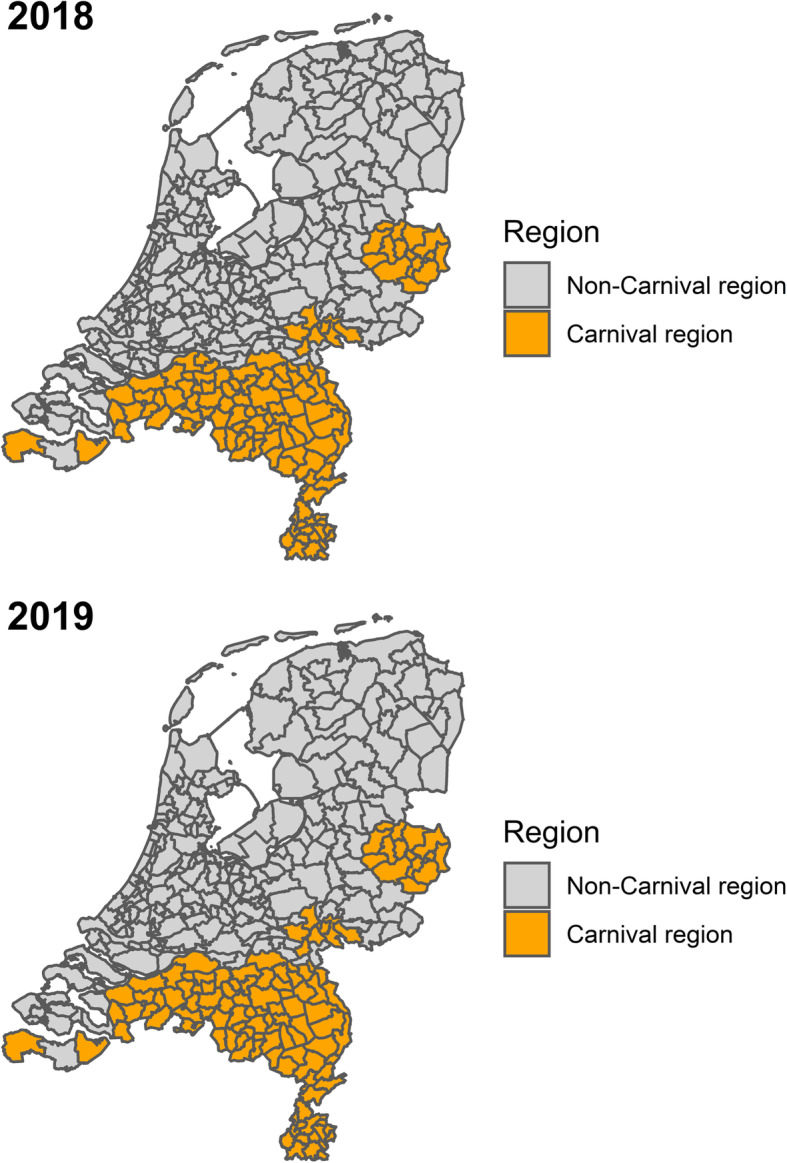
Methods: Information on individual hospitalizations related to the 2017/2018 influenza epidemic were accessed from Statistics Netherlands. The influenza cases were stratified between non-carnival and carnival regions. Distributions of influenza cases were plotted with time and compared between regions. A similar investigation in the early outbreak of COVID-19 was also conducted using open data from the Dutch National Institute for Public Health and the Environment.
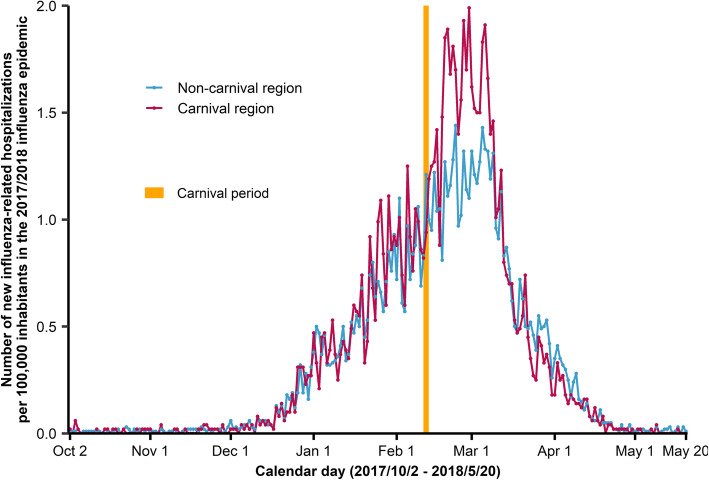
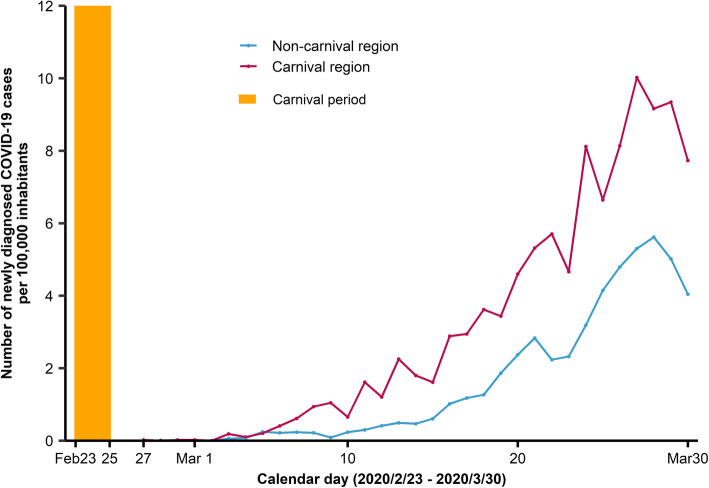
Results: Baseline characteristics between non-carnival and carnival regions were broadly similar. There were 13,836 influenza-related hospitalizations in the 2017/2018 influenza epidemic, and carnival fell about 1 week before the peak of these hospitalizations. The distributions of new influenza-related hospitalizations per 100,000 inhabitants with time between regions followed the same pattern with a surge of new cases in the carnival region about 1 week after carnival, which did not occur in the non-carnival region. The increase of new cases for COVID-19 in the carnival region exceeded that in the non-carnival region about 1 week after the first case was reported, but these results warrant caution as for COVID-19 there were no cases reported before the carnival and social measures were introduced shortly after carnival.
Conclusion: In this study, a mass gathering event (carnival) was associated with aggravating the spread of viral respiratory infectious diseases.
Keywords: COVID-19; Epidemiology; Influenza; Mass gathering medicine.
Conflict of interest statement
The authors declare that they have no competing interests.
Figures
References
-
- Christie AB. Infectious diseases: epidemiology and clinical practice. Edinburgh: Churchill Livingstone; 1987.
-
- Naming the coronavirus disease (COVID-19) and the virus that causes it. https://www.who.int/emergencies/diseases/novel-coronavirus-2019/technica.... Accessed 31 Mar 2020.
MeSH terms
LinkOut - more resources
Full Text Sources
Medical
