


Etiology of community-acquired pneumonia in adults: a systematic review
- PMID: 33024653
- PMCID: PMC7533148
- DOI: 10.1186/s41479-020-00074-3
Etiology of community-acquired pneumonia in adults: a systematic review
Abstract
Background: The etiology of community-acquired pneumonia (CAP) has evolved since the beginning of the antibiotic era. Recent guidelines encourage immediate empiric antibiotic treatment once a diagnosis of CAP is made. Concerns about treatment recommendations, on the one hand, and antibiotic stewardship, on the other, motivated this review of the medical literature on the etiology of CAP.
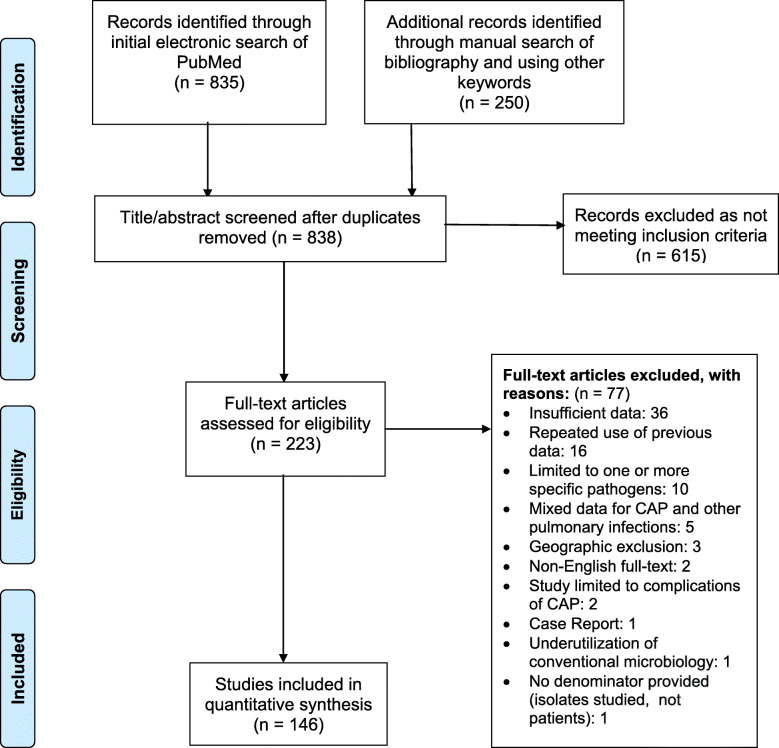
Methods: We conducted a systematic review of English-language literature on the etiology of CAP using methods defined by the Preferred Reporting Items for Systematic Reviews and Meta-Analyses (PRISMA) guidelines. We searched PubMed using a combination of the keywords 'pneumonia', 'CAP', 'etiology', 'microbiology', 'bacteriology', and 'pathogen'. We examined articles on antibiotics that were develop to treat pneumonia. We reviewed all 'related articles' as well as studies referenced by those that came up in the search. After we excluded articles that did not give sufficient microbiological data or failed to meet other predetermined criteria, 146 studies remained. Data were stratified into diagnostic categories according to the microbiologic studies that were done; results are presented as the percentage in each category of all cases in which an etiology was established.
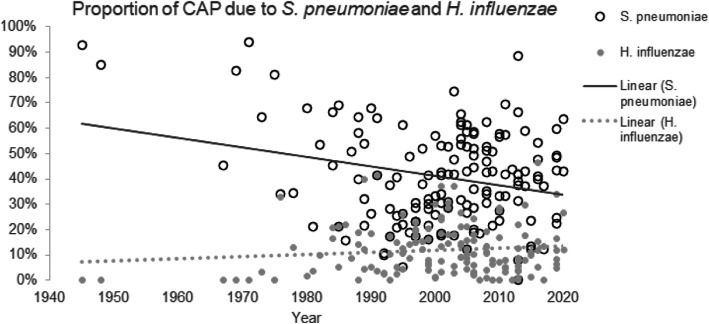
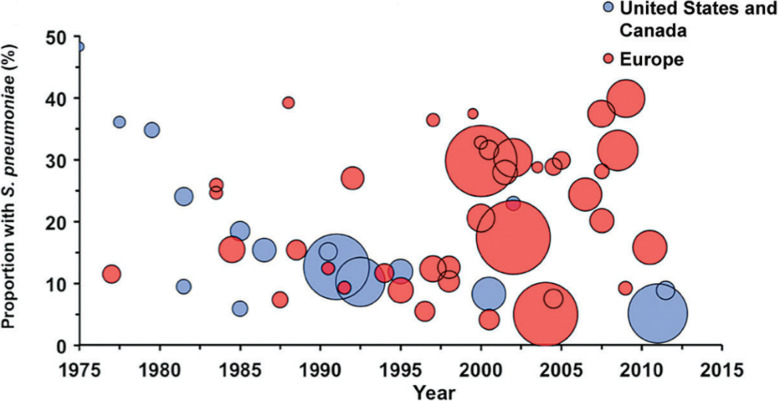
Results: Streptococcus pneumoniae remains the most common cause of CAP although declining in incidence; this decline has been greater in the US than elsewhere. Haemophilus influenzae is the second most common cause of CAP, followed by Staphylococcus aureus and Gram negative bacilli. The incidence of all bacteria as causes of CAP has declined because, with routine use of PCR for viruses, the denominator, cases with an established etiology, has increased. Viruses were reported on average in about 10% of cases, but recent PCR-based studies identified a respiratory virus in about 30% of cases of CAP, with substantial rates of viral/bacterial coinfection.
Conclusion: The results of this study justify current guidelines for initial empiric treatment of CAP. With pneumococcus and Haemophilus continuing to predominate, efforts at antibiotic stewardship might be enhanced by greater attention to the routine use of sputum Gram stain and culture. Because viral/bacterial coinfection is relatively common, the identification of a virus by PCR does not, by itself, allow for discontinuation of the antibiotic therapy.
Keywords: Antibiotic stewardship; Community acquired pneumonia; Etiology; Guidelines for management of CAP; Pneumococcus.
© The Author(s) 2020.
Conflict of interest statement
Competing interestsAuthors declare that they have no competing interest.
Figures
References
-
- Metlay JP, Waterer GW, Long AC, et al. Diagnosis and treatment of adults with community-acquired pneumonia. An official clinical practice guideline of the American Thoracic Society and Infectious Diseases Society of America. Am J Respir Crit Care Med. 2019;200(7):e45–e67. doi: 10.1164/rccm.201908-1581ST. - DOI - PMC - PubMed
Publication types
LinkOut - more resources
Full Text Sources
Medical
Miscellaneous
