


Prevalence and Correlates of Providing and Receiving Assistance With the Transition to Injection Drug Use
- PMID: 33024995
- PMCID: PMC7947591
- DOI: 10.1093/epirev/mxaa008
Prevalence and Correlates of Providing and Receiving Assistance With the Transition to Injection Drug Use
Abstract
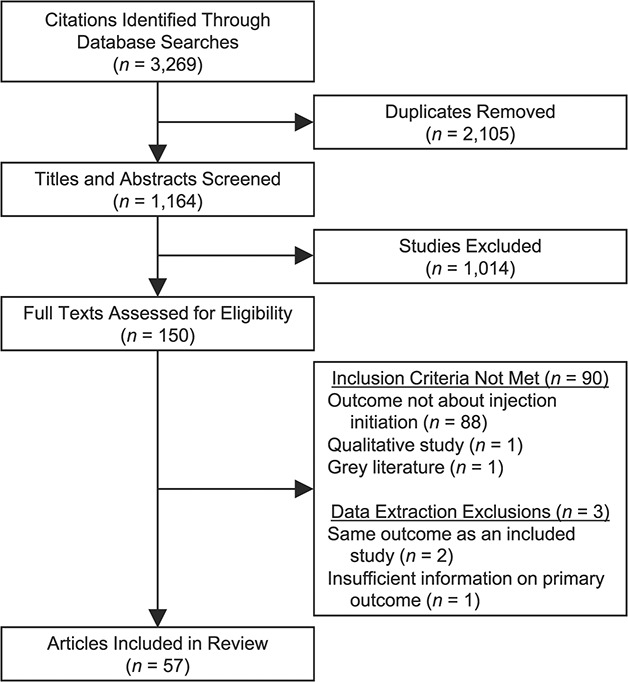
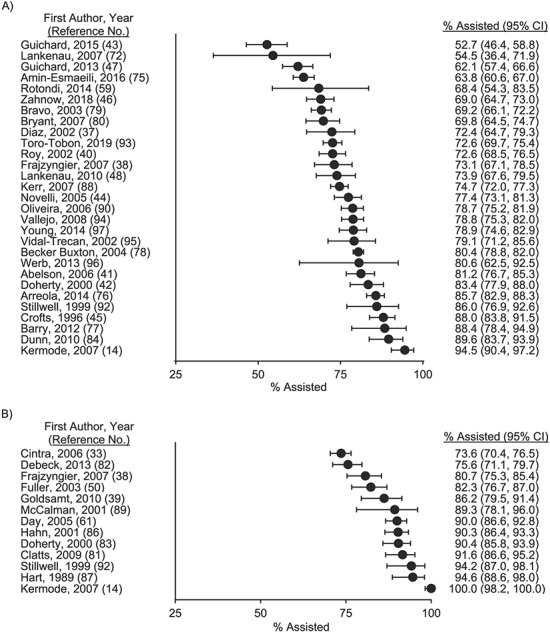
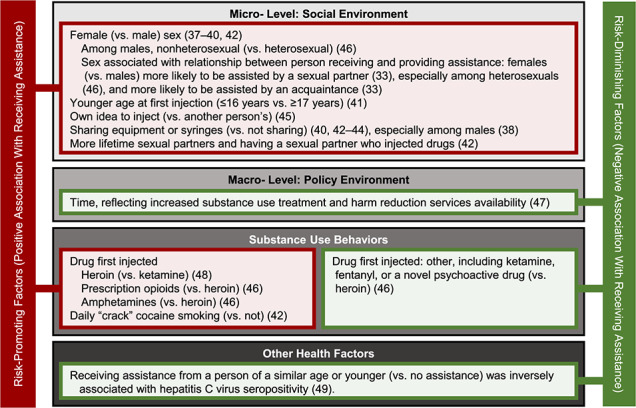
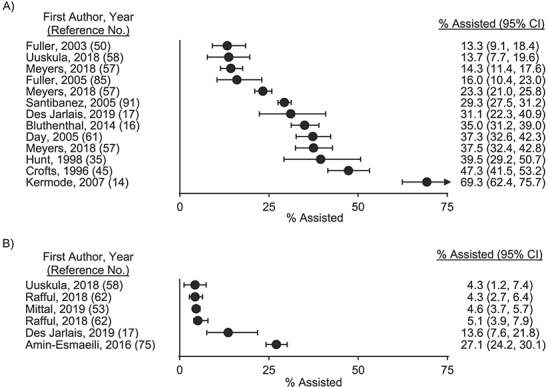
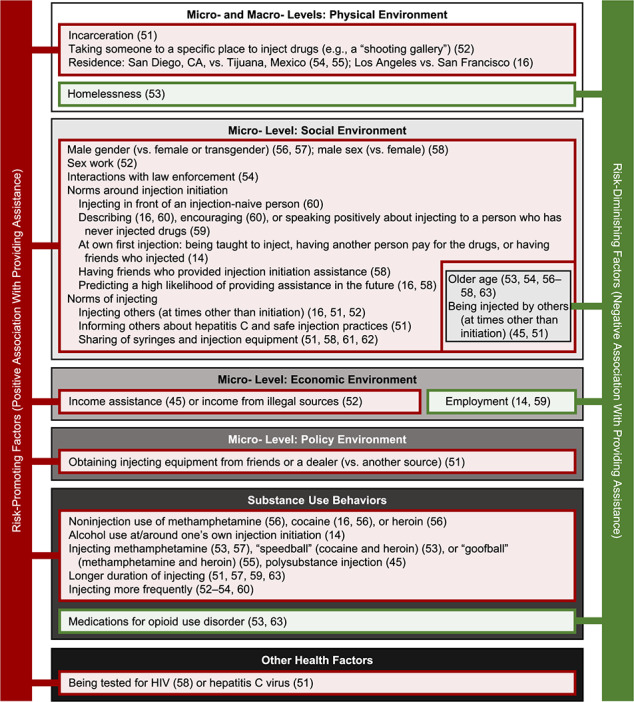
Preventing the transition to injection drug use is an important public health goal, as people who inject drugs (PWID) are at high risk for overdose and acquisition of infectious disease. Initiation into drug injection is primarily a social process, often involving PWID assistance. A better understanding of the epidemiology of this phenomenon would inform interventions to prevent injection initiation and to enhance safety when assistance is provided. We conducted a systematic review of the literature to 1) characterize the prevalence of receiving (among injection-naive persons) and providing (among PWID) help or guidance with the first drug injection and 2) identify correlates associated with these behaviors. Correlates were organized as substance use behaviors, health outcomes (e.g., human immunodeficiency virus infection), or factors describing an individual's social, economic, policy, or physical environment, defined by means of Rhodes' risk environments framework. After screening of 1,164 abstracts, 57 studies were included. The prevalence of receiving assistance with injection initiation (help or guidance at the first injection) ranged 74% to 100% (n = 13 estimates). The prevalence of ever providing assistance with injection initiation varied widely (range, 13%-69%; n = 13 estimates). Injecting norms, sex/gender, and other correlates classified within Rhodes' social risk environment were commonly associated with providing and receiving assistance. Nearly all PWID receive guidance about injecting for the first time, whereas fewer PWID report providing assistance. Substantial clinical and statistical heterogeneity between studies precluded meta-analysis, and thus local-level estimates may be necessary to guide the implementation of future psychosocial and sociostructural interventions. Further, estimates of providing assistance may be downwardly biased because of social desirability factors.
Keywords: injection drug use; injection initiation assistance; people who inject drugs; substance use; systematic reviews.
© The Author(s) 2020. Published by Oxford University Press on behalf of the Johns Hopkins Bloomberg School of Public Health. All rights reserved. For permissions, please e-mail: journals.permissions@oup.com.
Figures
References
-
- Joint United Nations Programme on HIV/AIDS . Health, Rights and Drugs—Harm Reduction, Decriminalization and Zero Discrimination for People Who Use Drugs. Geneva, Switzerland: Joint United Nations Programme on HIV/AIDS; 2019. (Publication no. UNAIDS/JC2954E).
-
- Colledge S, Peacock A, Leung J, et al. The prevalence of non-fatal overdose among people who inject drugs: a multi-stage systematic review and meta-analysis. Int J Drug Policy. 2019;73:172–184. - PubMed
-
- Iacobucci G. Drug related deaths in Scotland double in 10 years. BMJ. 2017;358:j3941. - PubMed
-
- Rudd RA, Seth P, David F, et al. Increases in drug and opioid-involved overdose deaths—United States, 2010–2015. MMWR Morb Mortal Wkly Rep. 2016;65(50-51):1445–1452. - PubMed
