


Suitability of target region amplified polymorphism (TRAP) markers to discern genetic variability in sweet sorghum
- PMID: 33025316
- PMCID: PMC7538518
- DOI: 10.1186/s43141-020-00071-5
Suitability of target region amplified polymorphism (TRAP) markers to discern genetic variability in sweet sorghum
Abstract
Background: Sweet sorghum is an emerging biofuel candidate crop with multiple benefits as a source of biomass energy. Increase of biomass and sugar productivity and quality is a central goal in its improvement. Target region amplified polymorphism (TRAP) is a polymerase chain reaction (PCR) based functional marker system that can detect genetic diversity in the functional region of target genes. Thirty sweet sorghum genotypes were used to study the potential of 24 pairs of TRAP marker system in assessing genetic diversity with regard to three lignin and three sucrose biosynthesis genes.
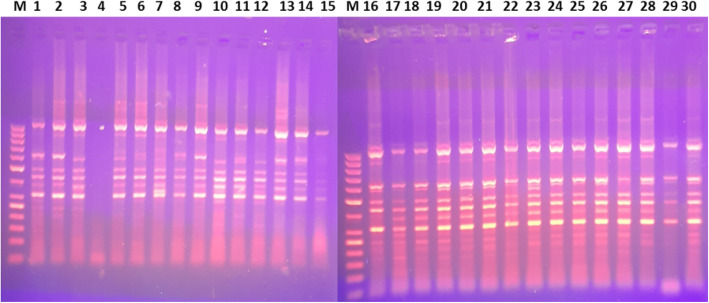
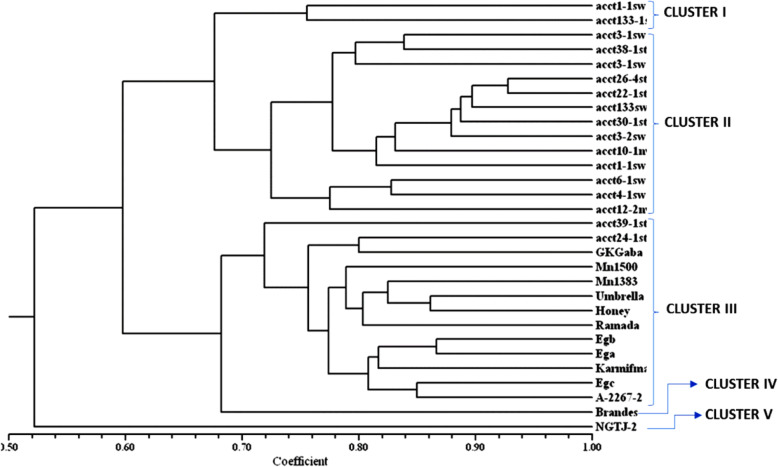
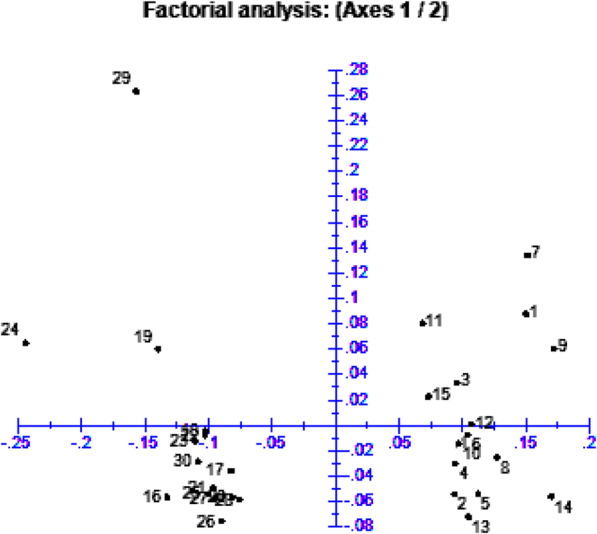
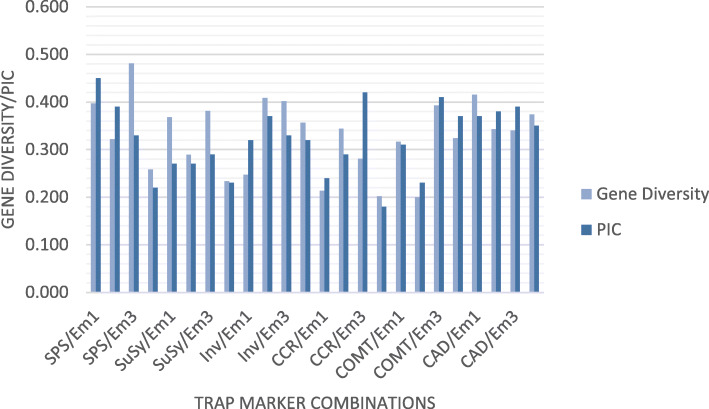
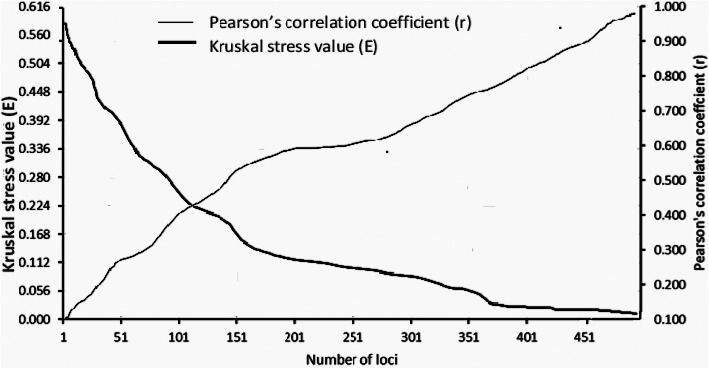
Results: A total of 1638 bands were produced out of which 1161 (70.88%) were polymorphic at least at one locus. The average polymorphic information content (PIC), resolving power (RP), marker index (MI), Shannon's diversity index (H), and gene diversity values were 0.32, 8.86, 1.74, 3.25, and 0.329, respectively. Analysis of molecular variance (AMOVA) revealed a highly significant genetic variation both within and among accessions studied (P = 0.01). However, the variation within the population was higher than among the populations (accessions). Bootstrap analysis showed that the number of loci amplified using this marker system is sufficient to estimate the available genetic diversity. The thirty genotypes were categorized into five clusters using a similarity matrix at 0.72 coefficient of similarity. The genotypes were also grouped mostly according to their geographic origin where the Ethiopian and Egyptian genotypes tend to fall in specific clusters. Moreover, the genotypes reflected the same pattern of distribution when ordinated using principal coordinate analysis.
Conclusions: In conclusion, TRAP marker can be used as a powerful tool to study genetic diversity in sweet sorghum.
Keywords: Lignin; Molecular markers; Sucrose.
Conflict of interest statement
The authors declare that they have no competing interests.
Figures
References
-
- Rao PS, Kumar CG, Reddy BVS. Sweet sorghum: from theory to practice. In: Rao PS, Kumar CG, editors. Characterization of improved sweet sorghum cultivars. Berlin: Springer; 2012. pp. 1–15.
-
- Wortmann CS, Liska AJ, Ferguson RB, Lyon DJ, Klein RN, Dweikat I. Dryland performance of sweet sorghum and grain crops for biofuel in Nebraska. Agron J. 2010;102:319–326. doi: 10.2134/agronj2009.0271. - DOI
-
- Xu Y, Li J, Moore C, Xin Z, Wang D. Physico-chemical characterization of pedigreed sorghum mutant stalks for biofuel production. Ind Crop Prod. 2018;124:806–811. doi: 10.1016/j.indcrop.2018.08.049. - DOI
-
- Rutto LK, Xu Y, Brandt M, Ren S, Kering MK. Juice, ethanol, and grain yield potential of five sweet sorghum (Sorghum bicolor [L.] Moench) cultivars. JSBS. 2013;3:113–118. doi: 10.4236/jsbs.2013.32016. - DOI
-
- Melillo JM, Richmond T, Yohe GW. Climate change impacts in the United States: the third national climate assessment. US Global Research Program. 2014. pp. 418–440.
LinkOut - more resources
Full Text Sources