Hepatitis B Awareness and Vaccination Patterns among Healthcare Workers in Africa
- PMID: 33025875
- PMCID: PMC7695068
- DOI: 10.4269/ajtmh.20-0521
Hepatitis B Awareness and Vaccination Patterns among Healthcare Workers in Africa
Abstract
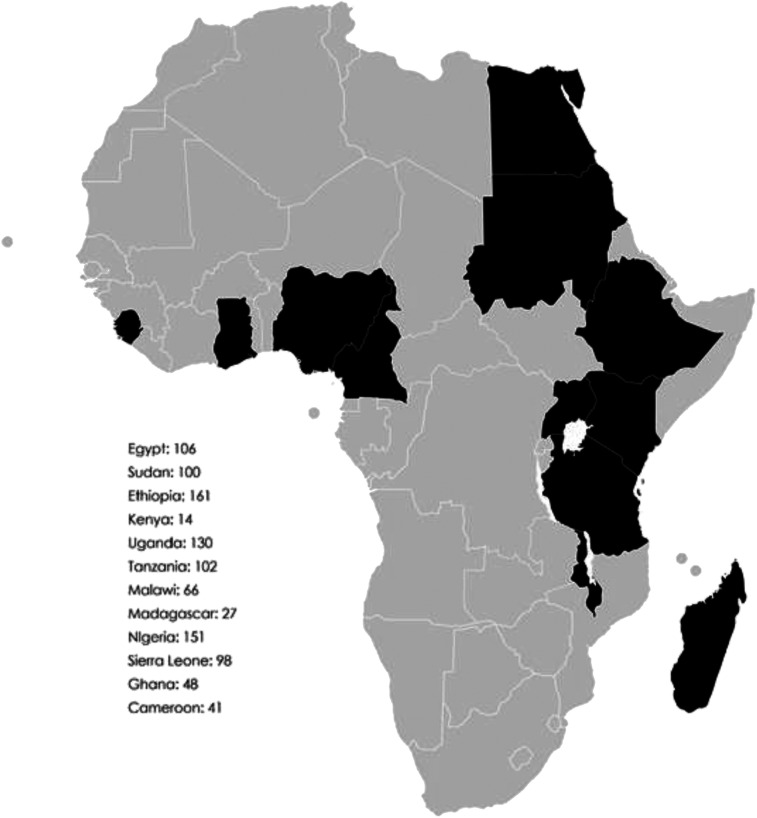
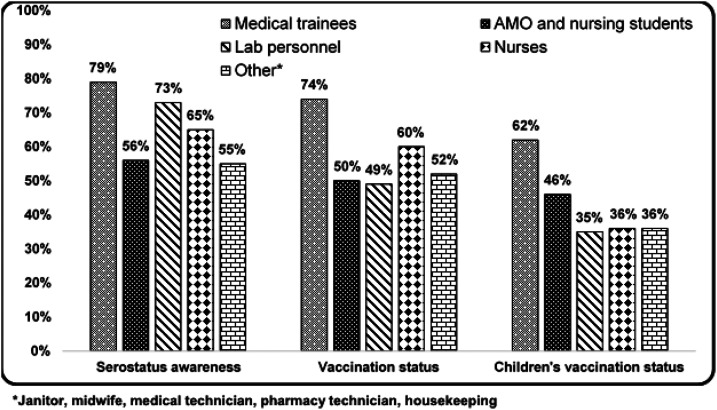
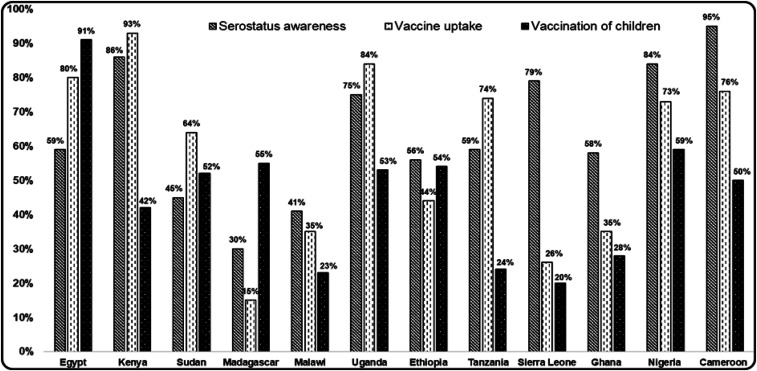
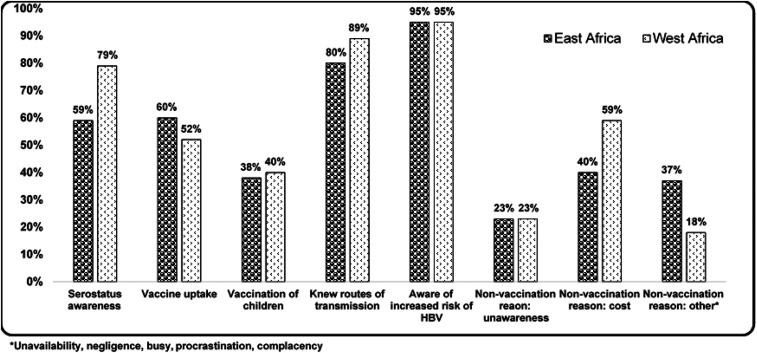
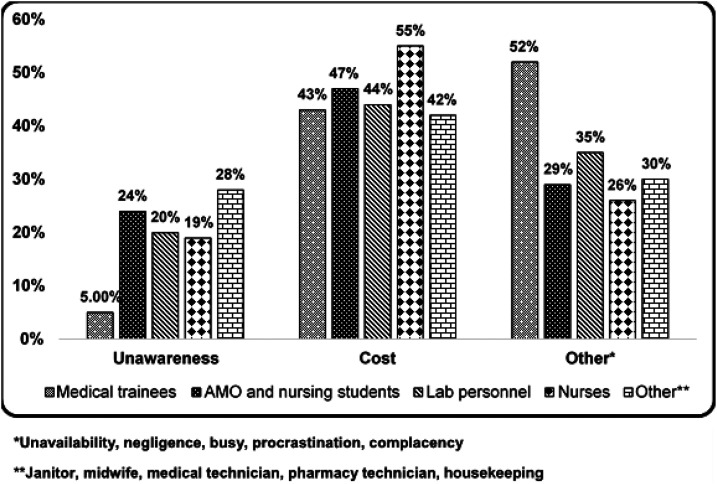
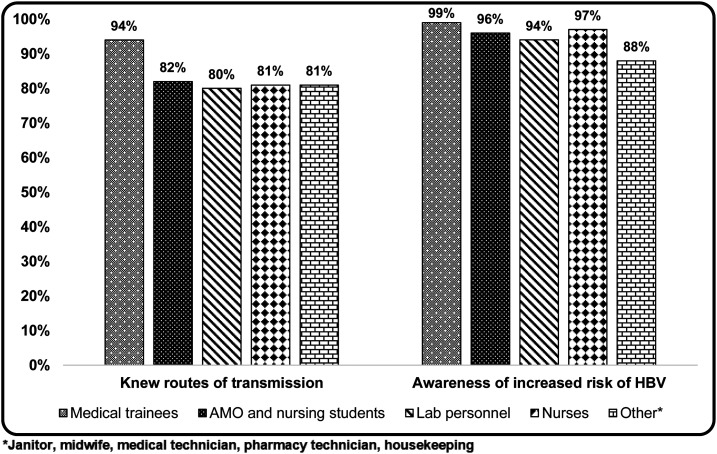
Hepatitis B virus (HBV) vaccination patterns and the understanding of its risks among healthcare workers (HCWs) is a critical step to decrease transmission. However, the depth of this understanding is understudied. We distributed surveys to HCWs in 12 countries in Africa. Surveys had nine multiple-choice questions that assessed HCWs' awareness and understanding of HBV. Participants included consultants, medical trainees, nurses, students, laboratory personnel, and other hospital workers. Surveys were completed anonymously. Fisher's exact test was used for analysis, with a P-value of < 0.05 considered significant; 1,044 surveys were collected from Kenya, Egypt, Sudan, Tanzania, Ethiopia, Uganda, Malawi, Madagascar, Nigeria, Cameroon, Ghana, and Sierra Leone. Hepatitis B virus serostatus awareness, vaccination rate, and vaccination of HCWs' children were 65%, 61%, and 48%, respectively. Medical trainees had higher serostatus awareness, vaccination rate, and vaccination of their children than HCWs in other occupations (79% versus 62%, P < 0.001; 74% versus 58%, P < 0.001; and 62% versus 45%, P = 0.006, respectively). Cost was cited as the most frequent reason for non-vaccination. West African countries were more aware of their serostatus but less often vaccinated than East African countries (79% versus 59%, P < 0.0001 and 52% versus 60%, P = 0.03, respectively). West African countries cited cost as the reason for non-vaccination more than East African countries (59% versus 40%, P = 0.0003). Our study shows low HBV serostatus awareness and vaccination rate among HCWs in Africa, and reveals gaps in the perception and understanding of HBV prevention that should be addressed to protect HCWs and improve their capacity to control HBV infection.
Figures
References
-
- Tang LSY, Covert E, Wilson E, Kottilil S, 2018. Chronic hepatitis B infection: a review. JAMA 319: 1802–1813. - PubMed
-
- WHO , 2018. Hepatitis B. Geneva, Switzerland: World Health Organization; Available at: https://www.who.int/news-room/fact-sheets/detail/hepatitis-b. Accessed February 12, 2019.
-
- Ott JJ, Stevens GA, Groeger J, Wiersma ST, 2012. Global epidemiology of hepatitis B virus infection: new estimates of age-specific HBsAg seroprevalence and endemicity. Vaccine 30: 2212–2219. - PubMed
Publication types
MeSH terms
Substances
Grants and funding
LinkOut - more resources
Full Text Sources
Medical