


Platelet Extracellular Vesicles: Beyond the Blood
- PMID: 33028092
- PMCID: PMC7769913
- DOI: 10.1161/ATVBAHA.120.314644
Platelet Extracellular Vesicles: Beyond the Blood
Abstract
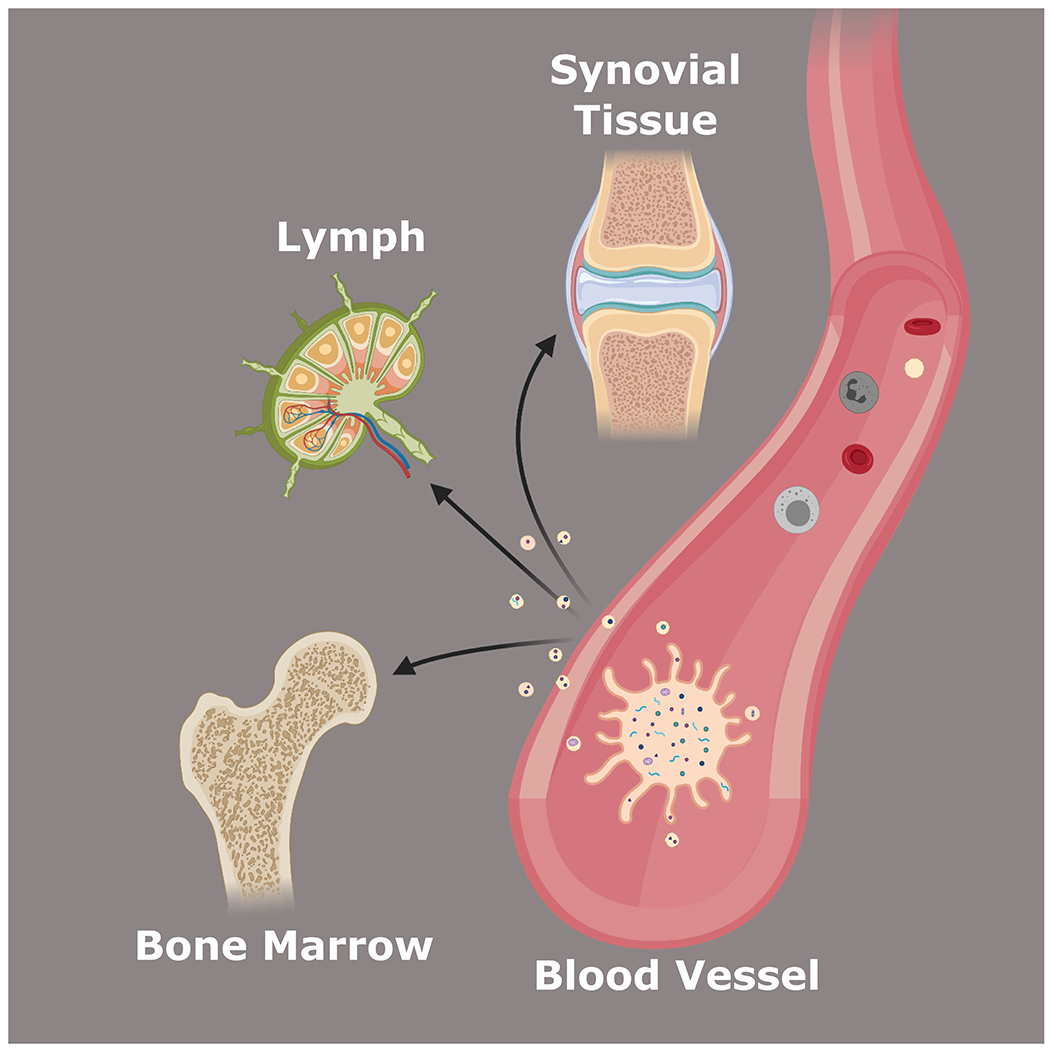
Extracellular vesicles (EVs) are a means of cell-to-cell communication and can facilitate the exchange of a broad array of molecules between adjacent or distant cells. Platelets are anucleate cells derived from megakaryocytes and are primarily known for their role in maintaining hemostasis and vascular integrity. Upon activation by a variety of agonists, platelets readily generate EVs, which were initially identified as procoagulant particles. However, as both platelets and their EVs are abundant in blood, the role of platelet EVs in hemostasis may be redundant. Moreover, findings have challenged the significance of platelet-derived EVs in coagulation. Looking beyond hemostasis, platelet EV cargo is incredibly diverse and can include lipids, proteins, nucleic acids, and organelles involved in numerous other biological processes. Furthermore, while platelets cannot cross tissue barriers, their EVs can enter lymph, bone marrow, and synovial fluid. This allows for the transfer of platelet-derived content to cellular recipients and organs inaccessible to platelets. This review highlights the importance of platelet-derived EVs in physiological and pathological conditions beyond hemostasis.
Keywords: blood platelets; bone marrow; extracellular vesicles; hemostasis; inflammation; lipids.
Conflict of interest statement
Conflict of interest disclosures: The authors have nothing to disclose
Figures
References
-
- Boilard E, Paré G, Rousseau M, Cloutier N, Dubuc I, Lévesque T, Borgeat P, Flamand L. Influenza virus H1N1 activates platelets through FcγRIIA signaling and thrombin generation. Blood. 2014;123:2854–63. - PubMed
Publication types
MeSH terms
Substances
Grants and funding
LinkOut - more resources
Full Text Sources
