


Chemotherapy use and quality of life in cancer patients at the end of life: an integrative review
- PMID: 33028381
- PMCID: PMC7540433
- DOI: 10.1186/s12955-020-01580-0
Chemotherapy use and quality of life in cancer patients at the end of life: an integrative review
Abstract
Background: When curative treatments are no longer available for cancer patients, the aim of treatment is palliative. The emphasis of palliative care is on optimizing quality of life and provided support for patients nearing end of life. However, chemotherapy is often offered as a palliative therapy for patients with advanced cancer nearing death. The purpose of this review was to evaluate the state of the science relative to use of palliative chemotherapy and maintenance of quality of life in patients with advanced cancer who were at end of life.
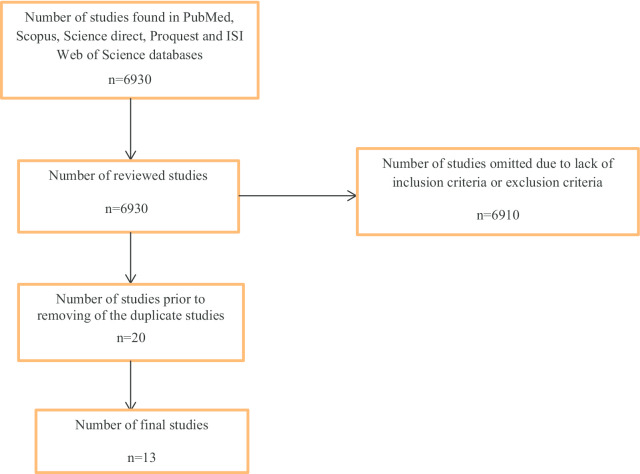
Materials and methods: Published research from January 2010 to December 2019 was reviewed using PRISMA guidelines using PubMed, Proquest, ISI web of science, Science Direct, and Scopus databases. MeSH keywords including quality of life, health related quality of life, cancer chemotherapy, drug therapy, end of life care, palliative care, palliative therapy, and palliative treatment.
Findings: 13 studies were evaluated based on inclusion criteria. Most of these studies identified that reduced quality of life was associated with receipt of palliative chemotherapy in patients with advanced cancer at the end of life.
Conclusion: Studies have primarily been conducted in European and American countries. Cultural background of patients may impact quality of life at end of life. More research is needed in developing countries including Mideastern and Asian countries.
Keywords: Cancer chemotherapy; Drug therapy; End of life care; Health related quality of life (HRQOL); Palliative care; Palliative therapy; Palliative treatment; Quality of life (QOL).
Conflict of interest statement
Not applicable.
Figures
References
-
- Karver SB, Berger J. Advanced care planning–empowering patients for a peaceful death. Asian Pac J Cancer Prev APJCP. 2010;11(Suppl 1):23–25. - PubMed
Publication types
MeSH terms
LinkOut - more resources
Full Text Sources
Medical
