


Towards integrated surveillance-response systems for the prevention of future pandemics
- PMID: 33028426
- PMCID: PMC7539270
- DOI: 10.1186/s40249-020-00757-5
Towards integrated surveillance-response systems for the prevention of future pandemics
Abstract
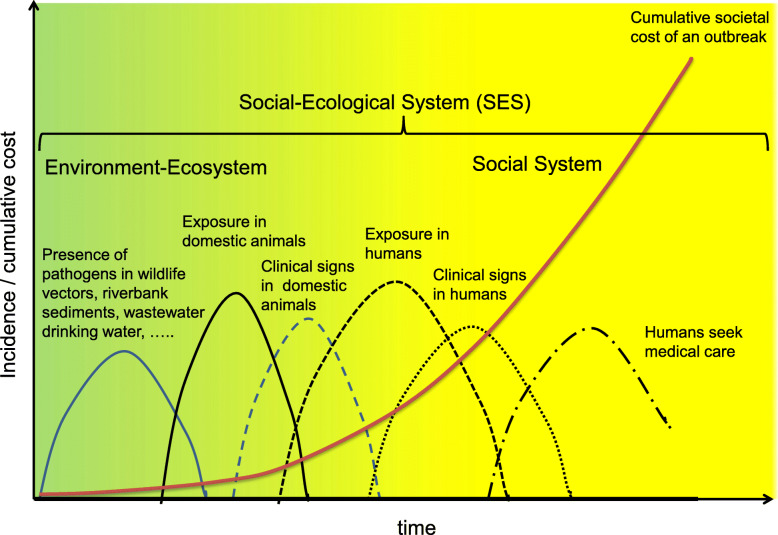
Most human pathogens originate from non-human hosts and certain pathogens persist in animal reservoirs. The transmission of such pathogens to humans may lead to self-sustaining chains of transmission. These pathogens represent the highest risk for future pandemics. For their prevention, the transmission over the species barrier - although rare - should, by all means, be avoided. In the current COVID-19 pandemic, surprisingly though, most of the current research concentrates on the control by drugs and vaccines, while comparatively little scientific inquiry focuses on future prevention. Already in 2012, the World Bank recommended to engage in a systemic One Health approach for zoonoses control, considering integrated surveillance-response and control of human and animal diseases for primarily economic reasons. First examples, like integrated West Nile virus surveillance in mosquitos, wild birds, horses and humans in Italy show evidence of financial savings from a closer cooperation of human and animal health sectors. Provided a zoonotic origin can be ascertained for the COVID-19 pandemic, integrated wildlife, domestic animal and humans disease surveillance-response may contribute to prevent future outbreaks. In conclusion, the earlier a zoonotic pathogen can be detected in the environment, in wildlife or in domestic animals; and the better human, animal and environmental surveillance communicate with each other to prevent an outbreak, the lower are the cumulative costs.
Keywords: Integrated surveillance-response; One health; Pandemics; Transdisciplinarity; Zoonoses.
Conflict of interest statement
XNZ is an Editor-in-Chief of
Figures
References
MeSH terms
Grants and funding
LinkOut - more resources
Full Text Sources
Medical
