


Alkaloids from Cryptolepis sanguinolenta as Potential Inhibitors of SARS-CoV-2 Viral Proteins: An In Silico Study
- PMID: 33029513
- PMCID: PMC7512045
- DOI: 10.1155/2020/5324560
Alkaloids from Cryptolepis sanguinolenta as Potential Inhibitors of SARS-CoV-2 Viral Proteins: An In Silico Study
Abstract
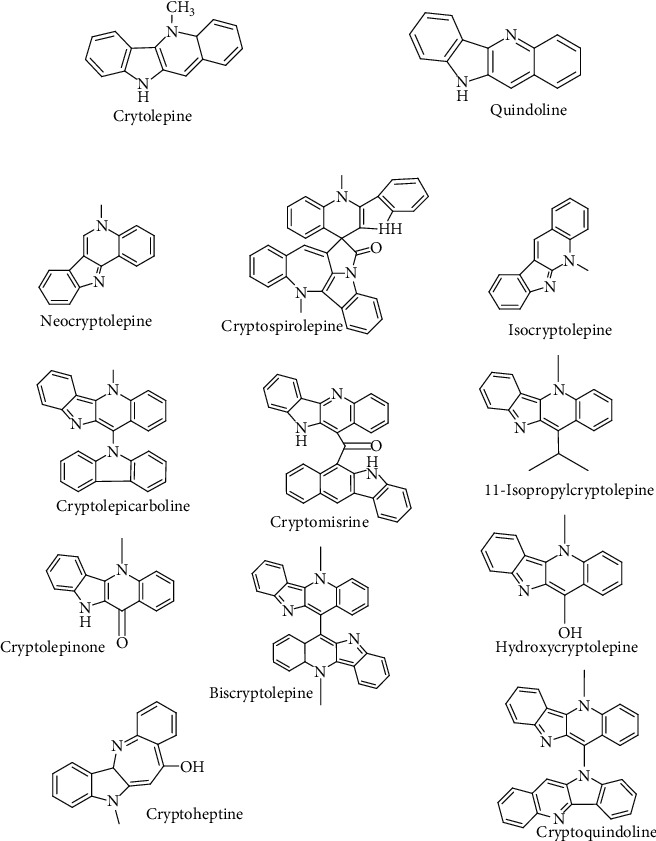
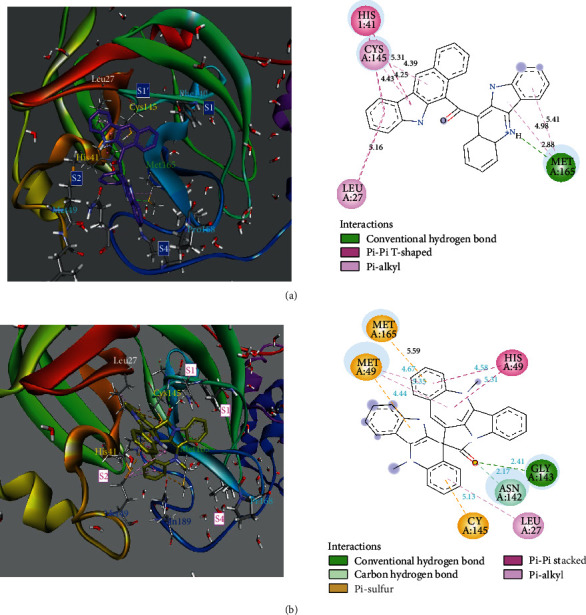
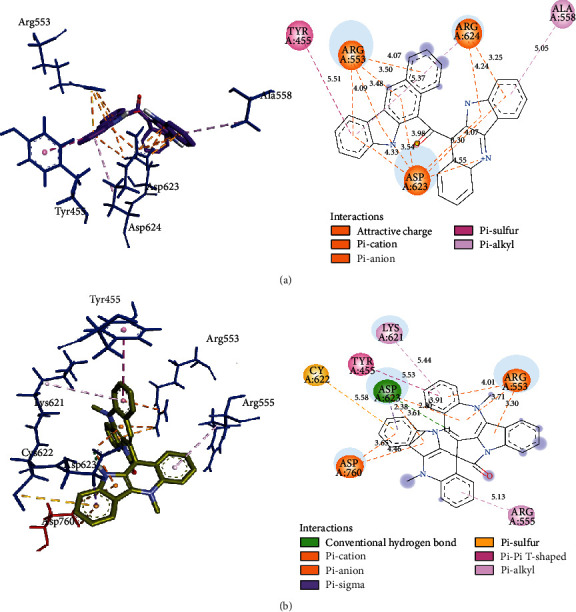
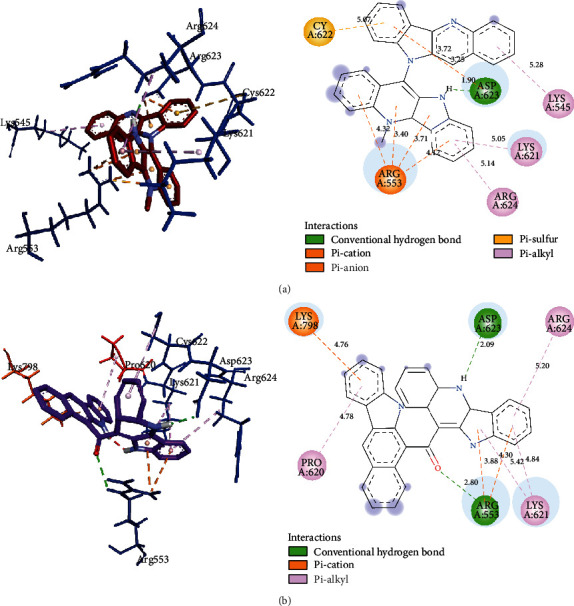
The ongoing global pandemic caused by the human coronavirus, severe acute respiratory syndrome coronavirus 2 (SARS-CoV-2), has infected millions of people and claimed hundreds of thousands of lives. The absence of approved therapeutics to combat this disease threatens the health of all persons on earth and could cause catastrophic damage to society. New drugs are therefore urgently required to bring relief to people everywhere. In addition to repurposing existing drugs, natural products provide an interesting alternative due to their widespread use in all cultures of the world. In this study, alkaloids from Cryptolepis sanguinolenta have been investigated for their ability to inhibit two of the main proteins in SARS-CoV-2, the main protease and the RNA-dependent RNA polymerase, using in silico methods. Molecular docking was used to assess binding potential of the alkaloids to the viral proteins whereas molecular dynamics was used to evaluate stability of the binding event. The results of the study indicate that all 13 alkaloids bind strongly to the main protease and RNA-dependent RNA polymerase with binding energies ranging from -6.7 to -10.6 kcal/mol. In particular, cryptomisrine, cryptospirolepine, cryptoquindoline, and biscryptolepine exhibited very strong inhibitory potential towards both proteins. Results from the molecular dynamics study revealed that a stable protein-ligand complex is formed upon binding. Alkaloids from Cryptolepis sanguinolenta therefore represent a promising class of compounds that could serve as lead compounds in the search for a cure for the corona virus disease.
Copyright © 2020 Lawrence Sheringham Borquaye et al.
Conflict of interest statement
All authors declare no competing financial, professional, or personal interests that might have influenced the performance or presentation of the work described in this manuscript.
Figures
References
-
- WHO. WHO Director-General’s opening remarks at the media briefing on COVID-19 - 11 March 2020. 2020. https://www.who.int/dg/speeches/detail/who-director-general-s-opening-re....
-
- Monto A. S., Cowling B. J., Peiris J. S. M. In Viral Infectios of Humans. Boston, MA: Springer; 2014. Coronaviruses; pp. 199–223. - DOI
MeSH terms
Substances
LinkOut - more resources
Full Text Sources
Miscellaneous
