


Systematic analysis of the scientific literature on population surveillance
- PMID: 33029562
- PMCID: PMC7528878
- DOI: 10.1016/j.heliyon.2020.e05141
Systematic analysis of the scientific literature on population surveillance
Abstract
Introduction: Population surveillance provides data on the health status of the population through continuous scrutiny of different indicators. Identifying risk factors is essential for the quickly detecting and controlling of epidemic outbreaks and reducing the incidence of cross-infections and non-communicable diseases. The objective of the present study is to analyze research on population surveillance, identifying the main topics of interest for investigators in the area.
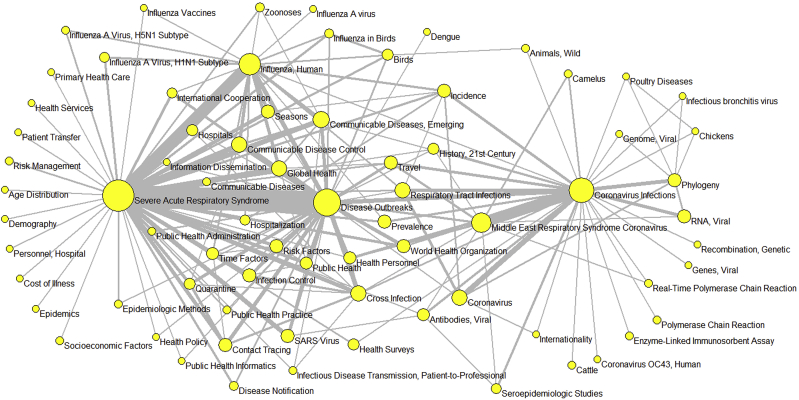
Methodology: We included documents indexed in the Web of Science Core Collection in the period from 2000 to 2019 and assigned with the generic Medical Subject Heading (MeSH) "population surveillance" or its related terms ("public health surveillance," "sentinel surveillance" or "biosurveillance"). A co-occurrence analysis was undertaken to identify the document clusters comprising the main research topics. Scientific production, collaboration, and citation patterns in each of the clusters were characterized bibliometrically. We also analyzed research on coronaviruses, relating the results obtained to the management of the COVID-19 pandemic.
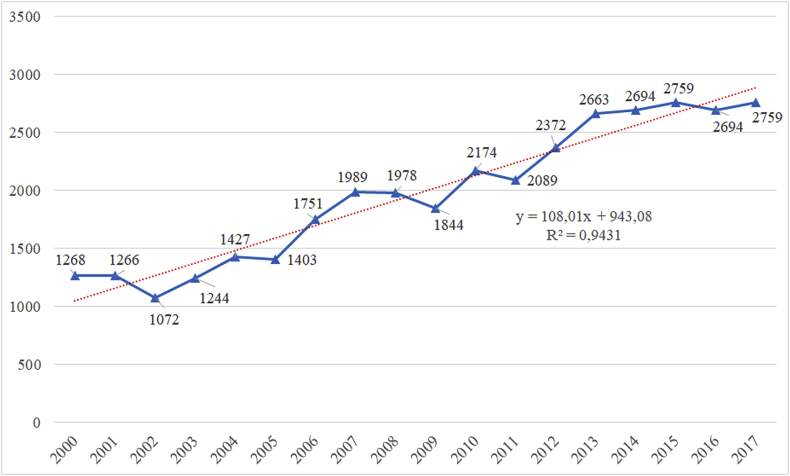
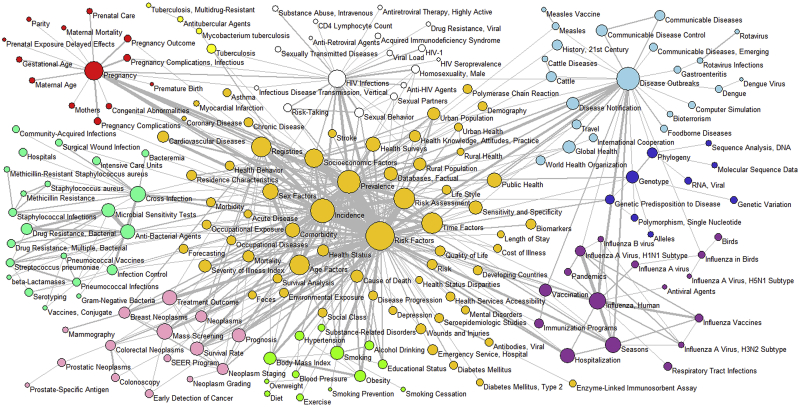
Results: We included 39,184 documents, which reflected a steady growth in scientific output driven by papers on "Public, Environmental & Occupational Health" (21.62% of the documents) and "Infectious Diseases" (10.49%). Research activity was concentrated in North America (36.41%) and Europe (32.09%). The USA led research in the area (40.14% of documents). Ten topic clusters were identified, including "Disease Outbreaks," which is closely related to two other clusters ("Genetics" and "Influenza"). Other clusters of note were "Cross Infections" as well as one that brought together general public health concepts and topics related to non-communicable diseases (cardiovascular and coronary diseases, mental diseases, diabetes, wound and injuries, stroke, and asthma). The rest of the clusters addressed "Neoplasms," "HIV," "Pregnancy," "Substance Abuse/Obesity," and "Tuberculosis." Although research on coronavirus has focused on population surveillance only occasionally, some papers have analyzed and collated guidelines whose relevance to the dissemination and management of the COVID-19 pandemic has become obvious. Topics include tracing the spread of the virus, limiting mass gatherings that would facilitate its propagation, and the imposition of quarantines. There were important differences in the scientific production and citation of different clusters: the documents on mental illnesses, stroke, substance abuse/obesity, and cross-infections had much higher citations than the clusters on disease outbreaks, tuberculosis, and especially coronavirus, where these values are substantially lower.
Conclusions: The role of population surveillance should be strengthened, promoting research and the development of public health surveillance systems in countries whose contribution to the area is limited.
Keywords: Bibliometrics; Content analysis; Data mining; Disease outbreaks; Information science; Knowledge representation; Network analysis; Public health; Public health surveillance; Research gaps; Subject areas.
© 2020 Published by Elsevier Ltd.
Figures
References
-
- Garske T., Legrand J., Donnelly C.A., Ward H., Cauchemez S., Fraser C. Assessing the severity of the novel influenza A/H1N1 pandemic. BMJ. 2009;339:b2840. - PubMed
-
- Watson R. Council of Europe launches investigation into H1N1 pandemic. Br. Med. J. 2010;340:c641. - PubMed
-
- Doshi P. Calibrated response to emerging infections. BMJ. 2009;339:b3471. - PubMed
LinkOut - more resources
Full Text Sources
