


The Histopathology of Oral Cancer Pain in a Mouse Model and a Human Cohort
- PMID: 33030108
- PMCID: PMC8173346
- DOI: 10.1177/0022034520961020
The Histopathology of Oral Cancer Pain in a Mouse Model and a Human Cohort
Abstract
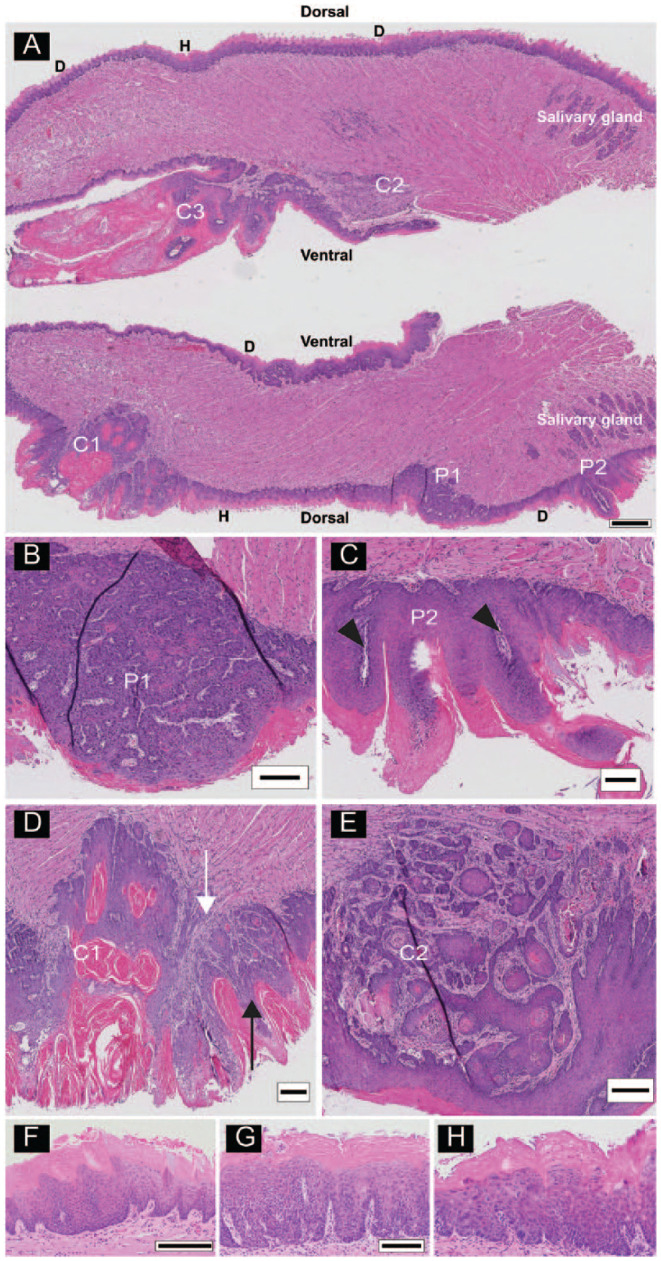
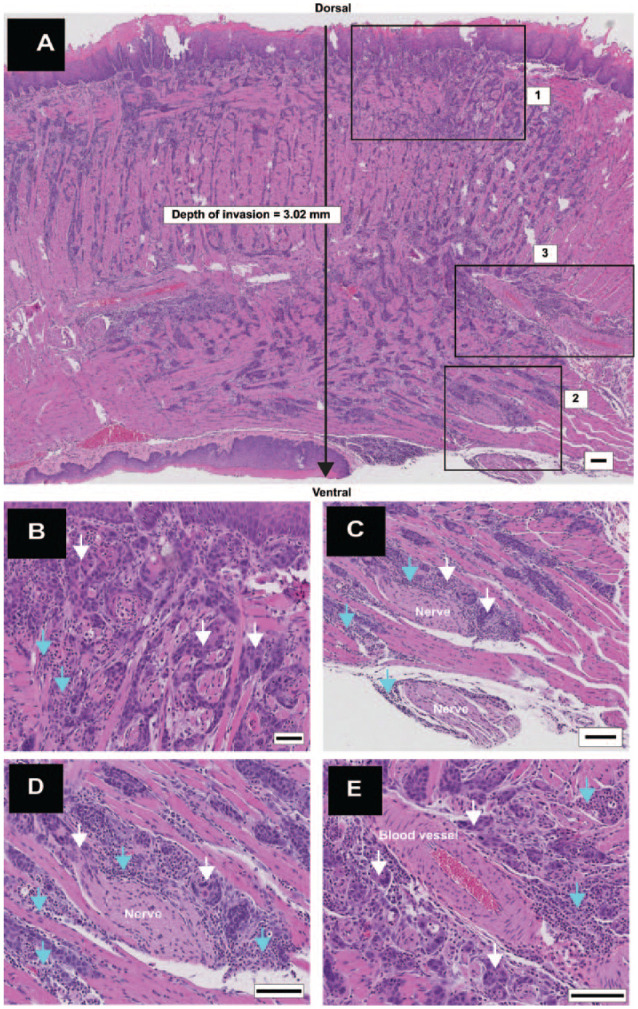
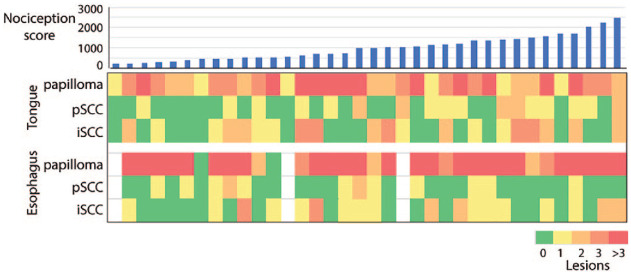
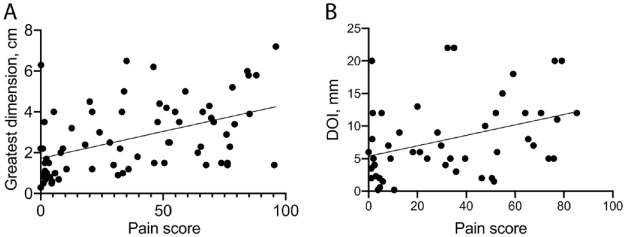
Oral cancer patients often have severe, chronic, and mechanically induced pain at the site of the primary cancer. Oral cancer pain is initiated and maintained in the cancer microenvironment and attributed to release of mediators that sensitize primary sensory nerves. This study was designed to investigate the histopathology associated with painful oral cancers in a preclinical model. The relationship of pain scores with pathologic variables was also investigated in a cohort of 72 oral cancer patients. Wild-type mice were exposed to the carcinogen, 4-nitroquinoline 1-oxide (4NQO). Nociceptive (pain) behavior was measured with the dolognawmeter, an operant device and assay for measuring functional and mechanical allodynia. Lesions developed on the tongues and esophagi of the 4NQO-treated animals and included hyperkeratoses, papillomas, dysplasias, and cancers. Papillomas included lesions with benign and dysplastic pathological features. Two histologic subtypes of squamous cell carcinomas (SCCs) were identified-SCCs with exophytic and invasive components associated with papillary lesions (pSCCs) and invasive SCCs without exophytic histology (iSCCs). Only the pSCC subtype of tongue cancer was associated with nociceptive behavior. Increased tumor size was associated with greater nociceptive behavior in the mouse model and more pain experienced by oral cancer patients. In addition, depth of invasion was associated with patient-reported pain. The pSCC histology identifies 4NQO-induced tongue cancers that are expected to be enriched for expression and release of nociceptive mediators.
Keywords: 4-nitroquinoline 1-oxide; nociception; nociceptive pain; oral SCC; oral cancer pathology; oral carcinogenesis.
Conflict of interest statement
Figures
References
-
- Abbey LM, Kaugars GE, Gunsolley JC, Burns JC, Page DG, Svirsky JA, Eisenberg E, Krutchkoff DJ, Cushing M. 1995. Intraexaminer and interexaminer reliability in the diagnosis of oral epithelial dysplasia. Oral Surg Oral Med Oral Pathol Oral Radiol Endod. 80(2):188–191. - PubMed
-
- Allen-Ayodabo CO, Eskander A, Davis LE, Zhao H, Mahar AL, Karam I, Singh S, Gupta V, Bubis LD, Moody L, et al.. 2019. Symptom burden among head and neck cancer patients in the first year after diagnosis: association with primary treatment modality. Oral Oncol. 99:104434. - PubMed
-
- Arora A, Husain N, Bansal A, Neyaz A, Jaiswal R, Jain K, Chaturvedi A, Anand N, Malhotra K, Shukla S. 2017. Development of a new outcome prediction model in early-stage squamous cell carcinoma of the oral cavity based on histopathologic parameters with multivariate analysis: the aditi-nuzhat lymph-node prediction score (ANLPS) system. Am J Surg Pathol. 41(7):950–960. - PubMed
-
- Bapat AA, Hostetter G, Von Hoff DD, Han H. 2011. Perineural invasion and associated pain in pancreatic cancer. Nat Rev Cancer. 11(10):695–707. - PubMed
Publication types
MeSH terms
Substances
Grants and funding
LinkOut - more resources
Full Text Sources
Medical
Research Materials
