. 2020 Oct 8;15(10):e0240189.
doi: 10.1371/journal.pone.0240189. eCollection 2020.

The procoagulant activity of tissue factor expressed on fibroblasts is increased by tissue factor-negative extracellular vesicles

Affiliations

The procoagulant activity of tissue factor expressed on fibroblasts is increased by tissue factor-negative extracellular vesicles

Marcela Rosas et al. PLoS One. .

Abstract

Tissue factor (TF) is critical for the activation of blood coagulation. TF function is regulated by the amount of externalised phosphatidylserine (PS) and phosphatidylethanolamine (PE) on the surface of the cell in which it is expressed. We investigated the role PS and PE in fibroblast TF function. Fibroblasts expressed 6-9 x 10⁴ TF molecules/cell but had low specific activity for FXa generation. We confirmed that this was associated with minimal externalized PS and PE and characterised for the first time the molecular species of PS/PE demonstrating that these differed from those found in platelets. Mechanical damage of fibroblasts, used to simulate vascular injury, increased externalized PS/PE and led to a 7-fold increase in FXa generation that was inhibited by annexin V and an anti-TF antibody. Platelet-derived extracellular vesicles (EVs), that did not express TF, supported minimal FVIIa-dependent FXa generation but substantially increased fibroblast TF activity. This enhancement in fibroblast TF activity could also be achieved using synthetic liposomes comprising 10% PS without TF. In conclusion, despite high levels of surface TF expression, healthy fibroblasts express low levels of external-facing PS and PE limiting their ability to generate FXa. Addition of platelet-derived TF-negative EVs or artificial liposomes enhanced fibroblast TF activity in a PS dependent manner. These findings contribute information about the mechanisms that control TF function in the fibroblast membrane.


Conflict of interest statement

No authors have competing interests.

Figures
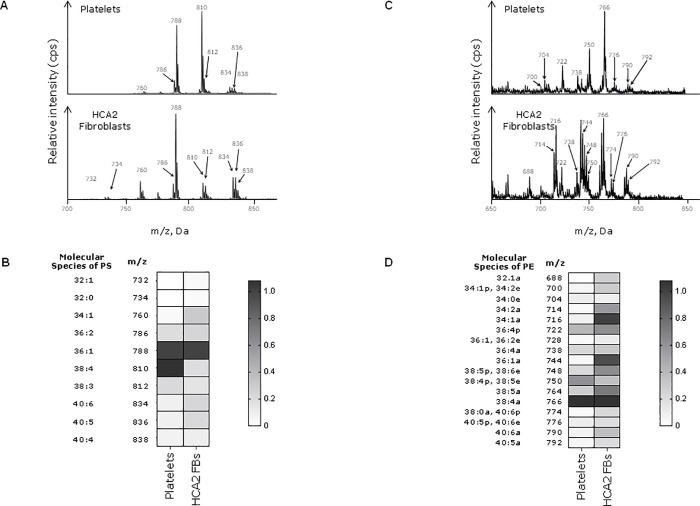
Fig 1
Fig 1. PS/PE species in platelets and fibroblasts.
Lipids were extracted from 106 unstimulated fibroblasts and 2 x 10⁸ freshly-isolated human platelets. PS/PE precursor scans were run using a QTRAP 6500 LC-MS/MS system as specified in materials and methods. Data are representative of three independent experiments. A) Mass spectra of PS species showing the mass-to-charge ratio (m/z) and the relative intensity (cps) of each species. B) PS intensity values from the spectra represented on the Heatmap. C) Mass spectra of PE species. D) Heat map representing PE intensity values. Molecular species refers to the total number of carbon atoms and double bonds in the two fatty acid chains of the phospholipid.
Fig 2
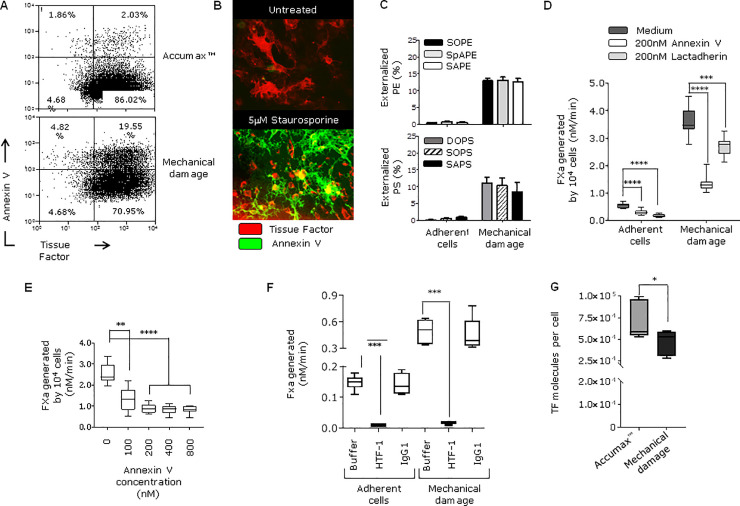
Fig 2. Externalization of PS/PE, expression of TF and pro-coagulant activity on healthy and damaged fibroblasts.
A) Flow cytometry analysis of HCA2 fibroblasts lifted either using Accumax™ cell detachment solution to avoid membrane disruption or by scraping to induce mechanical damage. Cells were stained with Annexin V- Pacific Blue and anti-TF antibody labelled with APC. Plots show cell populations after propidium iodine was used to exclude dead cells. B) Adherent HCA2 fibroblasts were cultured either with medium alone (untreated) or with 5μM staurosporine for 1 hour at 37°C to induce membrane damage due to apoptosis (positive control). Cells were stained with TF antibody (NY2) labelled with APC and Annexin V-A488 for analysis by microscopy. C) Percentage of total and externalized PS and PE species was determined by MS (mean ± SEM) as indicated in materials and methods. Amounts (ng) of externalized PS and PE are presented in Table 1. D) FXa generation was measured on adherent cells and cells after mechanical damage. The effect of PS-binding proteins was assessed by pre-incubating the cells with 200 nM Annexin V or Lactadherin for 30 min at room temperature before adding coagulation factors (FVIIa and FX) ****p <0.0001, ***p <0.001 E) Mechanically-damaged fibroblasts were pre-incubated with increasing concentrations of annexin V prior the addition of FVIIa and FX, ****p <0.0001, **p = 0.005. F) FXa generation by fibroblasts and was measured when cells were adhered or after mechanical damage. TF antibody (HTF-1) or isotype control (10 μg/ml) were pre-incubated with cells before adding FVIIa/FX, and FXa production was assessed, ***p <0.001. G) The number of TF molecules on HCA2 fibroblasts was determined by flow cytometry as described in materials and methods. Cells were labelled with TF antibody-APC after Accumax treatment or scraping. Experiments in this figure were repeated two or three times.
Fig 3
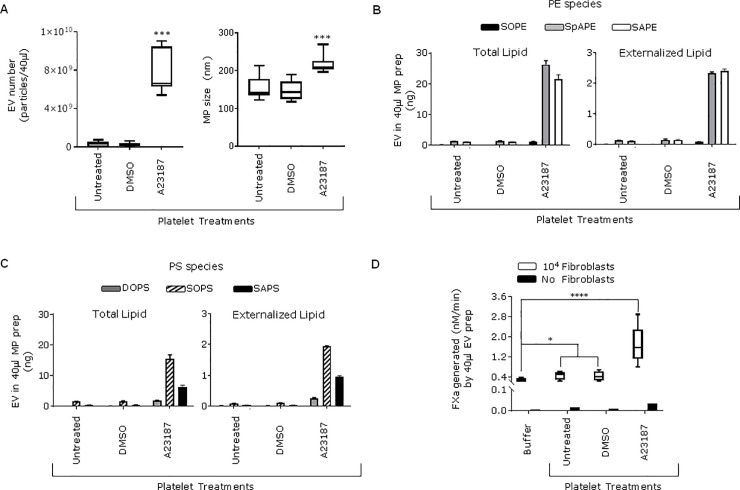
Fig 3. Addition of platelet-derived extracellular vesicles enhances the procoagulant activity of fibroblasts.
Platelet-derived EVs were isolated from unstimulated platelet supernatant (untreated) or treated with the ionophore A23187. DMSO is the vehicle control for ionophore. A) The number and size of EVs was determined using Nanoparticle Tracking Analysis as described in materials and methods. B) Quantification of total and externalized PE and C) PS on EVs was performed by MS (mean ± SEM). D) EVs were added to either 104 fibroblasts or in absence of cells for 10 min at 37°C and FXa generation measured as described in materials and methods. Fibroblasts or no cells were also loaded with only buffer but not platelet-derived treatments, ****p <0.0001, *p <0.05. Data correspond to EVs generated from three independent donors. PS/PE species were quantified on EVs derived from one of those donors.
Fig 4
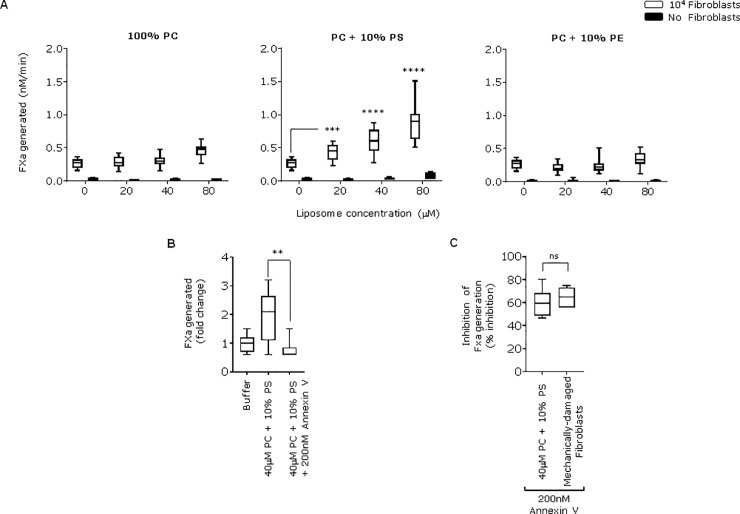
Fig 4. Addition of TF-negative liposomes with 10% PS enhances the procoagulant activity of fibroblasts.
A) Increasing concentration of liposomes comprising 100% PC, 10% PS + 90% PC or 10% PE + 90% PC were added to 104 adherent fibroblasts or in absence of cells for 10 min at 37°C. FXa production was measured, ****p <0.0001, ***p <0.001. B) Changes in FXa production by adherent fibroblasts were compared when cells were incubated with buffer only or with either the PC + 10% PS liposomes or after pre-incubating these liposomes with 200 nM Annexin V for 30min at room temperature, **p <0.001. C) Addition of Annexin V (200 nM) for 30 min to either adherent fibroblasts treated with PC + 10% PS liposomes or mechanically-damaged fibroblasts inhibited FXa production by fibroblasts at similar levels non-significant (ns). Experiments with liposomes were done three times.
Fig 5
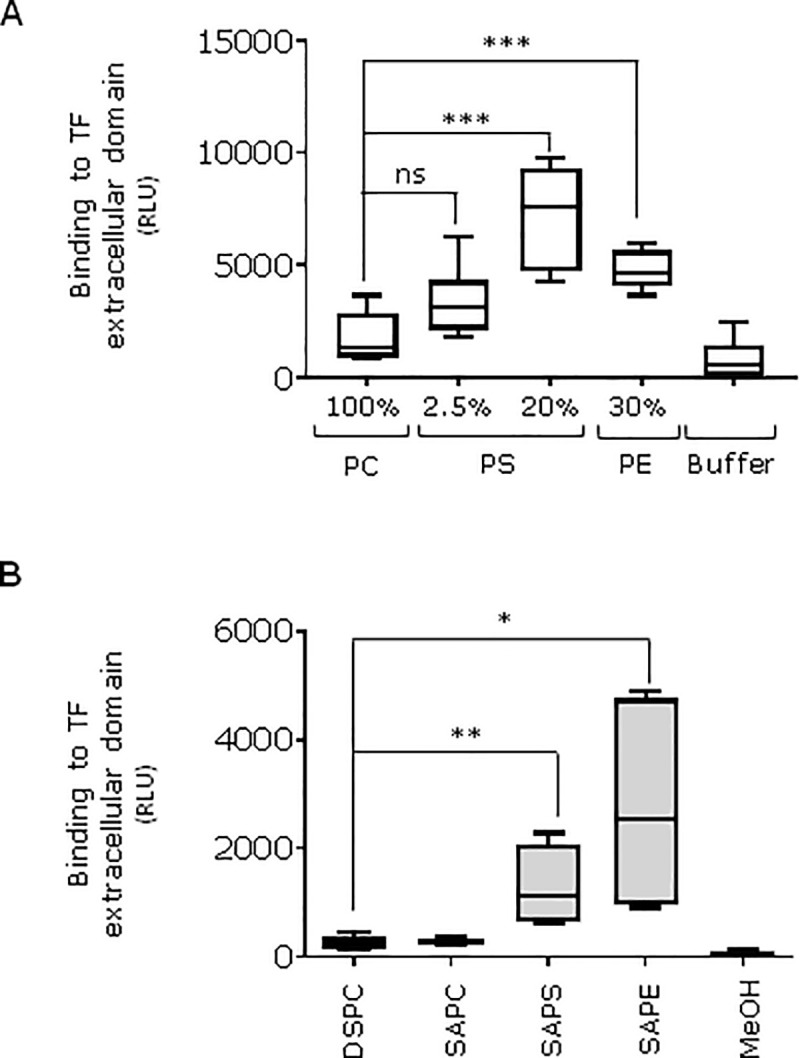
Fig 5. TF binding to PL.
A) Liposomes with the proportion of PS or PE shown were incubated with soluble TF (see methods), ***p <0.001, non-significant (ns) P = 0.07. B) Pure lipids (DSPC, SAPC, SAPE, SAPS) were diluted in methanol at 3 μg/ml and air-dried for 90min at room temperature, **p <0.01, *p <0.05. Liposome or air-dried lipid ELISA procedure was performed as indicated in the methods. Graphs show relative luminescence units (RLU). These experiments were done two times.

References

    1. Butenas S, Orfeo T, Mann KG. Tissue factor in coagulation: Which? where? when? Arteriosclerosis, Thrombosis, and Vascular Biology. 2009;29(12):1989–96. 10.1161/ATVBAHA.108.177402 - DOI - PMC - PubMed
    1. D'Alessandro E, Posma JJN, Spronk HMH, ten Cate H. Tissue factor (:Factor VIIa) in the heart and vasculature: More than an envelope. Thrombosis Research. 2018;168:130–7. 10.1016/j.thromres.2018.06.020 - DOI - PubMed
    1. Grover SP, Mackman N. Tissue Factor: An Essential Mediator of Hemostasis and Trigger of Thrombosis. Arteriosclerosis, Thrombosis, and Vascular Biology. 2018;38(4):709–25. 10.1161/ATVBAHA.117.309846 - DOI - PubMed
    1. O'Donnell JS, O'Sullivan JM, Preston RJS. Advances in understanding the molecular mechanisms that maintain normal haemostasis. British Journal of Haematology. 2019;186(1):24–36. 10.1111/bjh.15872 - DOI - PubMed
    1. Okamoto K, Tamura T, Sawatsubashi Y. Sepsis and disseminated intravascular coagulation. Journal of Intensive Care. 2016;4(1). - PMC - PubMed

Publication types