


Combination of Pancreastatin inhibitor PSTi8 with metformin inhibits Fetuin-A in type 2 diabetic mice
- PMID: 33033766
- PMCID: PMC7533370
- DOI: 10.1016/j.heliyon.2020.e05133
Combination of Pancreastatin inhibitor PSTi8 with metformin inhibits Fetuin-A in type 2 diabetic mice
Abstract
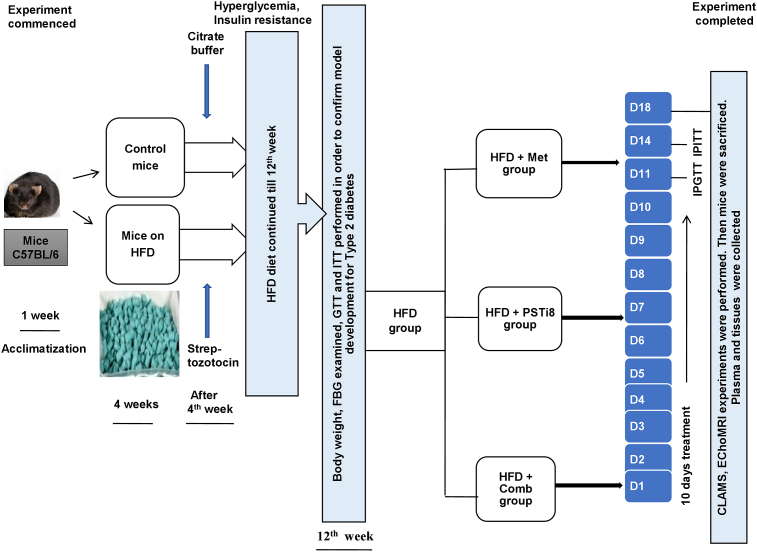
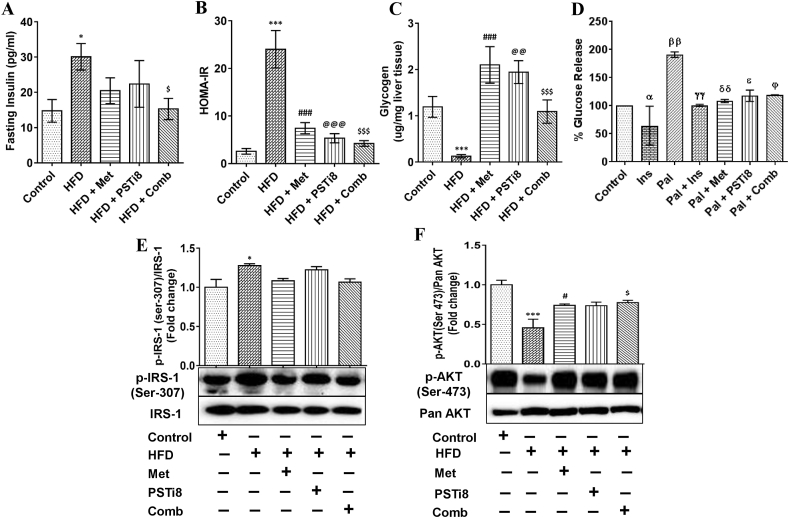
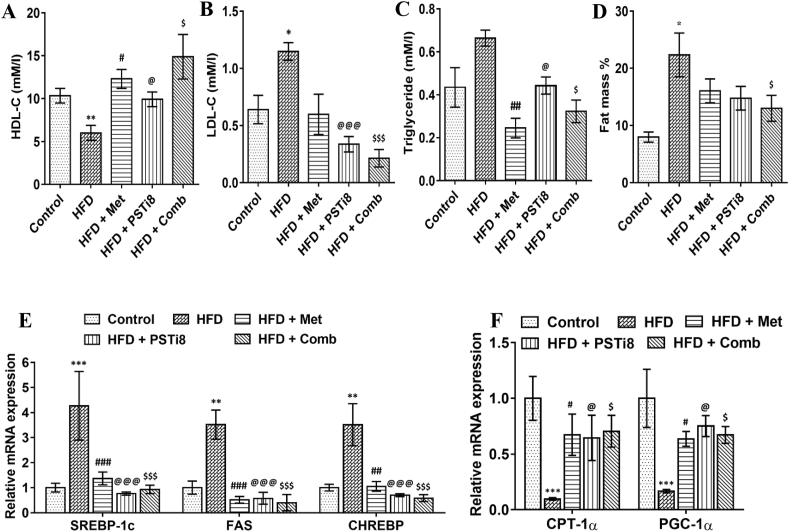
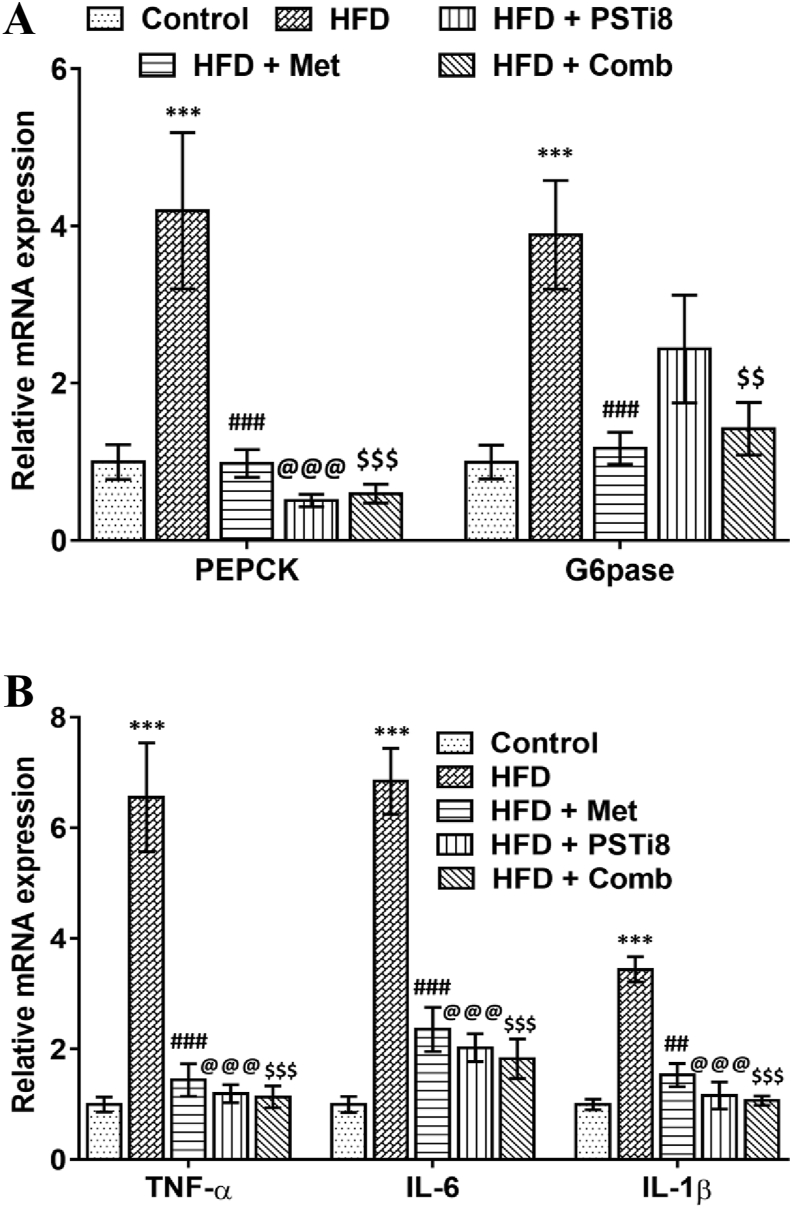
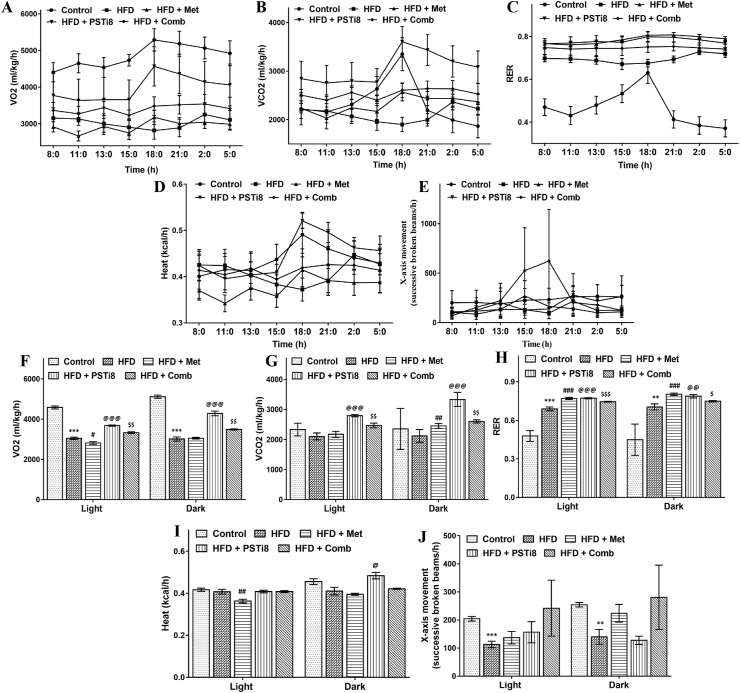
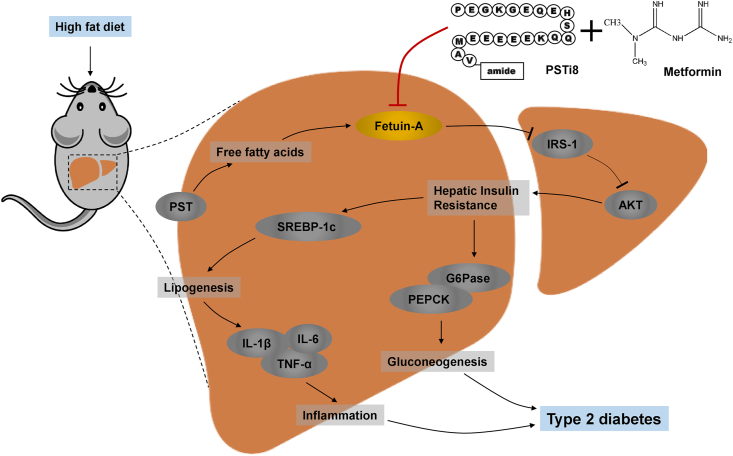
In the preceding study, we delineated that high-fat diet (HFD) consumption in mice increases the circulatory level of pancreastatin (PST), which additionally enhances the free fatty acid (FFA) concentration in circulation. Consequently, the aggravated FFA activates Fetuin-A, which facilitates hepatic lipid accumulation, insulin resistance (IR), and culminates in type 2 diabetes (T2D). Metformin (Met) is a widely known first-line drug for the treatment of T2D. We previously unveiled PSTi8, an inhibitor of PST, comprising antidiabetic property. Hence, we hypothesized that combination therapy of Met and PSTi8, at reduced therapeutic doses, would mitigate HFD-induced IR by inhibiting hepatic Fetuin-A in mice model of T2D. C57BL/6 mice were fed HFD for 12 weeks, followed by treatment with Met, PSTi8, and its combination for 10 days. Glucose and insulin tolerance tests were conducted. Circulatory levels of PST, Fetuin-A, and lipid markers were determined. Also, the mRNA and protein expression of Fetuin-A was assessed by qPCR, western blotting, and immunofluorescence. Moreover, the energy expenditure was measured by comprehensive laboratory animal monitoring system (CLAMS). Combination therapy displayed improved PST, Fetuin-A, and lipid profile in plasma. We also found reduced hepatic Fetuin-A, which reduced inhibitory phosphorylation of IRS and increased phosphorylation of AKT. Consequently, ameliorated hepatic lipogenesis, gluconeogenesis, and inflammation. Also, combination treatment attenuated Fetuin-A expression, lipid accumulation, and glucose production in palmitate-induced HepG2 cells. Altogether current study promulgates the beneficial effect of combination therapy of Met and PSTi8 (comparable to alone higher therapeutic doses) to ameliorate Fetuin-A activation, hepatic lipid accumulation, insulin resistance, and associated progressive pathophysiological alterations in T2D.
Keywords: Biochemistry; Biotechnology; Combination therapy; Diabetes; Endocrinology; Fetuin-A; Insulin resistance; Metabolic disorder; Metabolism; Metformin; Molecular biology; PSTi8; Pharmaceutical science; Pharmacology.
© 2020 The Authors.
Figures



References
-
- Arulmozhi D.K., Kurian R., Bodhankar S.L., Veeranjaneyulu A. Metabolic effects of various antidiabetic and hypolipidaemic agents on a high-fat diet and multiple low-dose streptozocin (MLDS) mouse model of diabetes. J. Pharm. Pharmacol. 2008;60:1167–1173. - PubMed
-
- Bandyopadhyay G.K., Lu M., Avolio E., Siddiqui J.A., Gayen J.R., Wollam J., Vu C.U., Chi N.-W., O’Connor D.T., Mahata S.K. Pancreastatin-dependent inflammatory signaling mediates obesity-induced insulin resistance. Diabetes. 2015;64:104–116. - PubMed
-
- Benarbia M. el A., Macherel D., Faure S., Jacques C., Andriantsitohaina R., Malthièry Y. Plasmatic concentration of organochlorine lindane acts as metabolic disruptors in HepG2 liver cell line by inducing mitochondrial disorder. Toxicol. Appl. Pharmacol. 2013;272:325–334. - PubMed
-
- Boden G., She P., Mozzoli M., Cheung P., Gumireddy K., Reddy P., Xiang X., Luo Z., Ruderman N. Free fatty acids produce insulin resistance and activate the proinflammatory nuclear factor-κB pathway in rat liver. Diabetes. 2005;54:3458–3465. - PubMed
LinkOut - more resources
Full Text Sources
Molecular Biology Databases
Miscellaneous
