


Baseplate Options for Reverse Total Shoulder Arthroplasty
- PMID: 33034820
- PMCID: PMC7661608
- DOI: 10.1007/s12178-020-09677-1
Baseplate Options for Reverse Total Shoulder Arthroplasty
Abstract
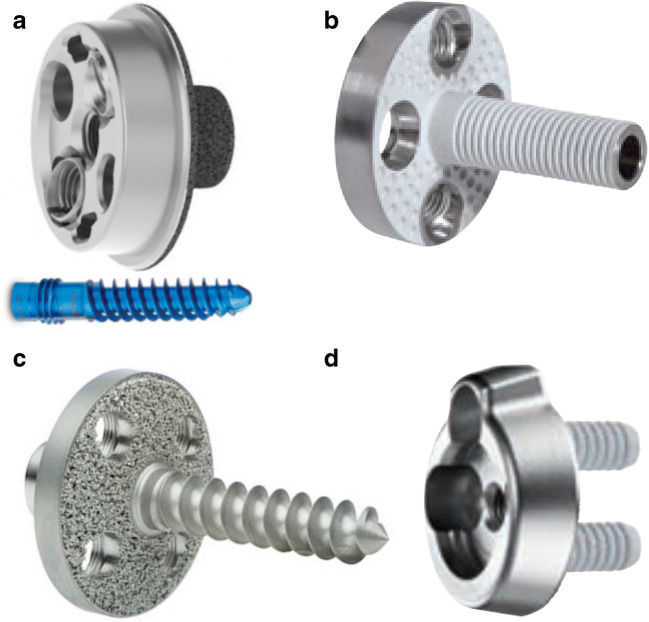
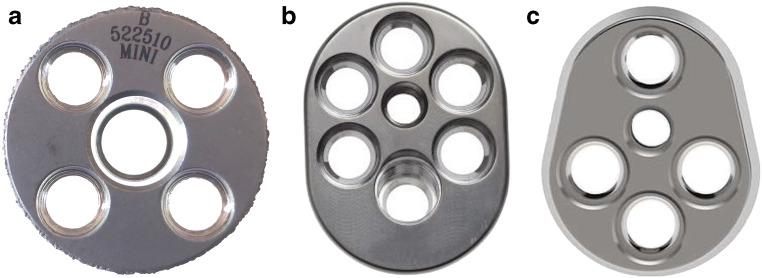
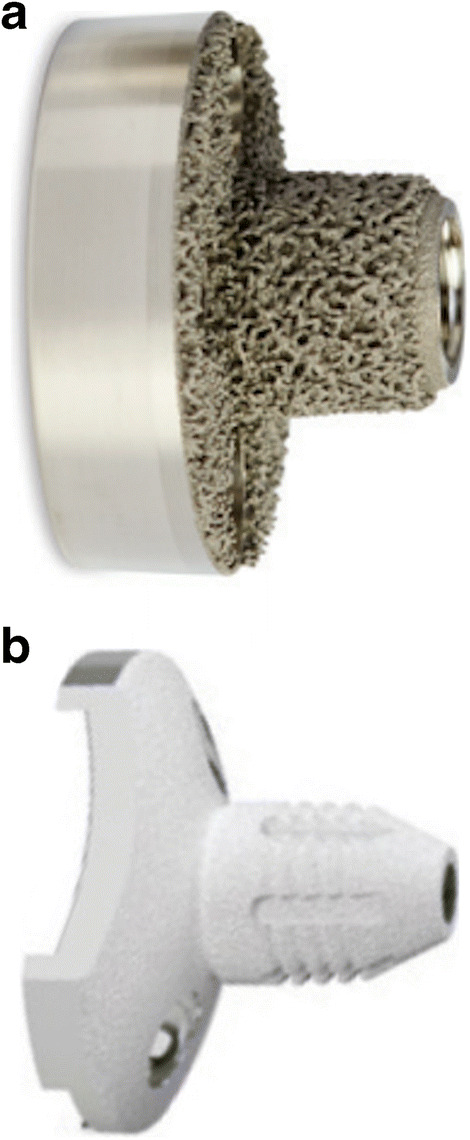
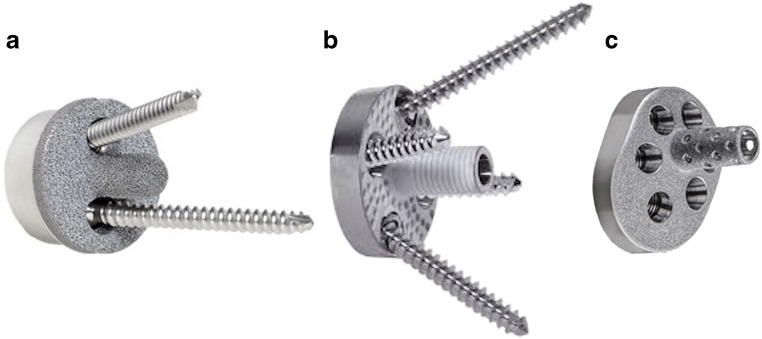
Purpose of review: Baseplate fixation has been known to be the weak link in reverse total shoulder arthroplasty (RTSA). A wide variety of different baseplates options are currently available. This review investigates the recent literature to present the reader with an overview of the currently available baseplate options and modes of fixation.
Recent findings: The main elements that differentiate baseplates are the central fixation element, the size of the baseplate, the shape, the backside geometry, whether or not an offset central fixation exists, the number of peripheral screws, and the availability of peripheral augmentation. The wide array of baseplate options indicates that no particular design has proven superiority. As such, surgeons should be aware of their options and choose an implant that the surgeon is comfortable with and one that best suits the individual patient anatomy. With the growing number of RTSA procedures and registries with long-term follow-up, future investigations will hopefully delineate the ideal baseplate design to optimize survivorship.
Keywords: Baseplate; Glenoid implant; Metaglene; Shoulder arthroplasty; Shoulder implant; Shoulder replacement.
Conflict of interest statement
Wassim Mourad, Alexander Martusiewicz, and Brett P. Wiater declare that they have no conflict of interest.
J. Michael Wiater reports personal fees from Zimmer Biomet, personal fees from Depuy Synthes, outside the submitted work.
Figures



References
-
- •• Gumina S, Grassi F, Paladini P. Reverse shoulder arthroplasty - current techniques and complications. 1 ed: Springer International Publishing; 2019. XV, 375 p. Comprehensive book discussing the recent advances in RTSA.
Publication types
LinkOut - more resources
Full Text Sources
Research Materials
