


Chinese caterpillar fungus (Ophiocordyceps sinensis) in China: Current distribution, trading, and futures under climate change and overexploitation
- PMID: 33035977
- PMCID: PMC7521209
- DOI: 10.1016/j.scitotenv.2020.142548
Chinese caterpillar fungus (Ophiocordyceps sinensis) in China: Current distribution, trading, and futures under climate change and overexploitation
Abstract
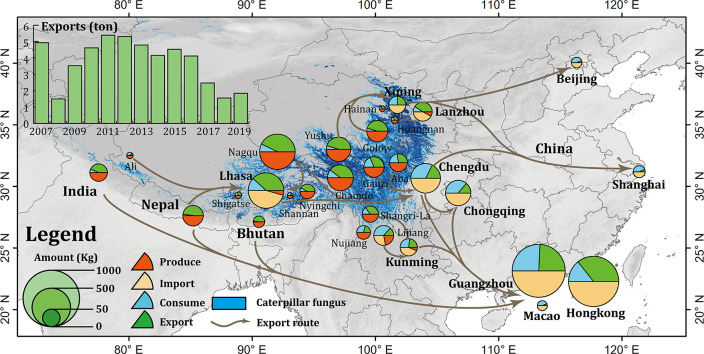
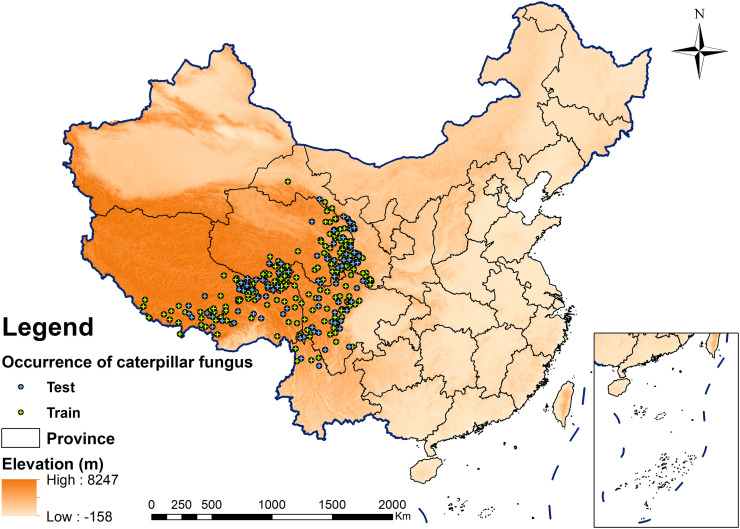
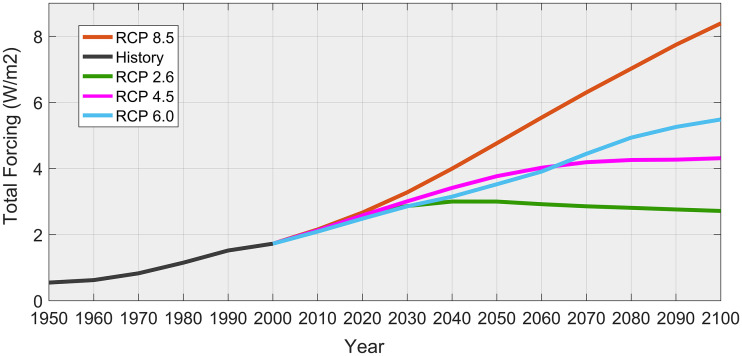
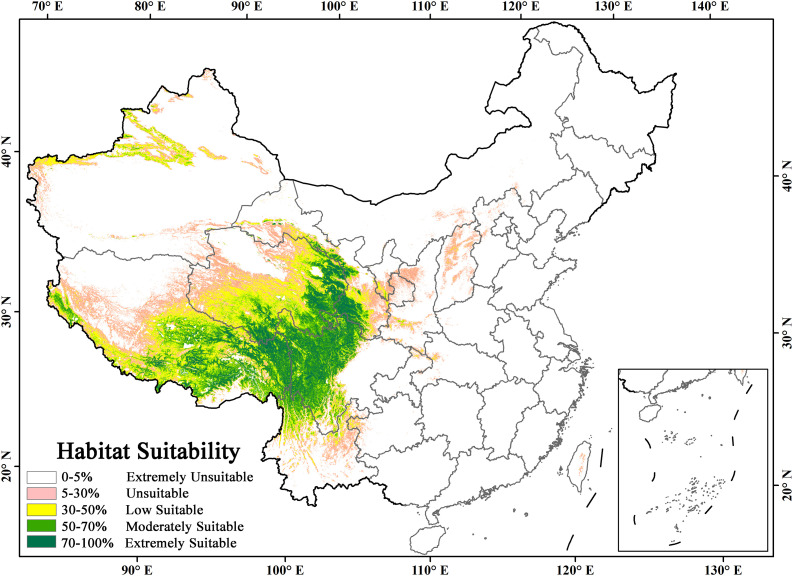
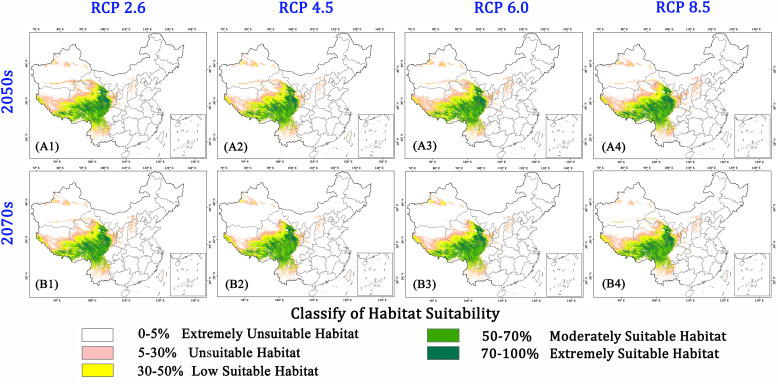
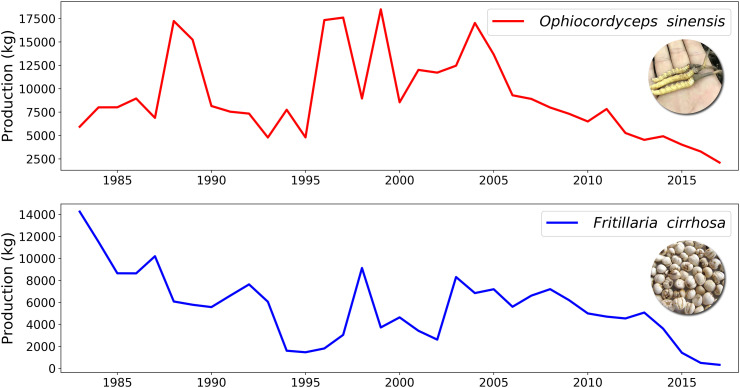
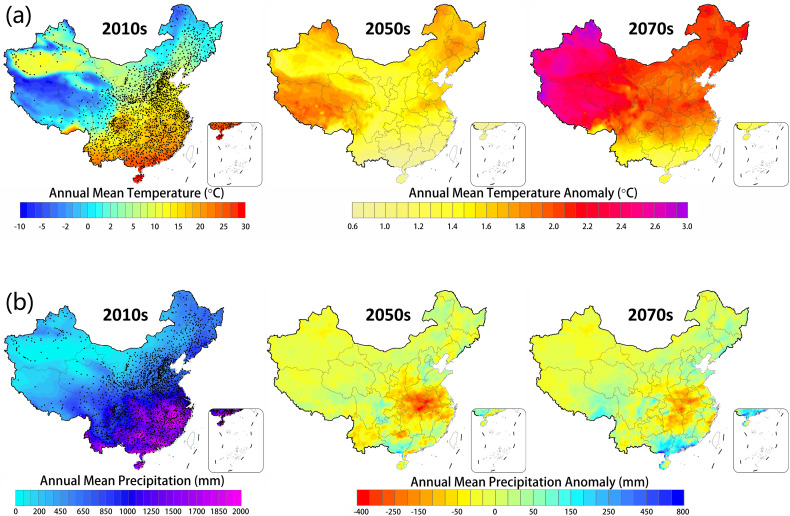
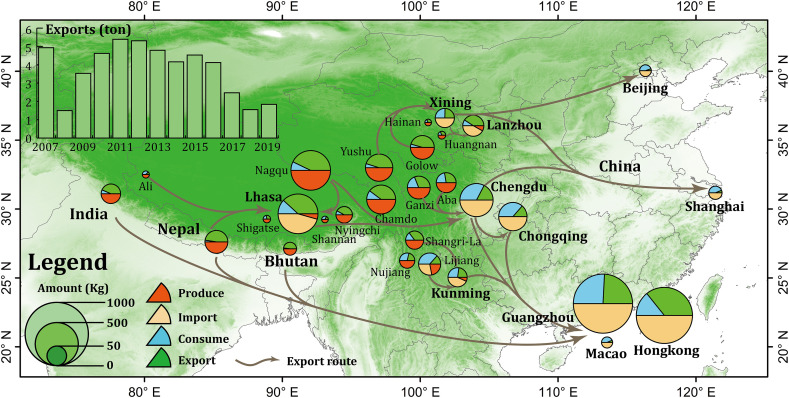
Chinese caterpillar fungus (Ophiocordyceps sinensis) is a precious traditional medicine which is mostly distributed on the Qinghai-Tibetan Plateau (QTP). Due to its medicinal values, it has become one of the most valuable biological commodities and widely traded in recent years worldwide. However, its habitat has changed profoundly in recent years under global warming as well as anthropogenic pressures, resulting in a sharp decline in its wild population in recent years. Based on the occurrence samples, this paper estimates the potential distribution of caterpillar fungus using MaxEnt model. The model simulates potential geographical distribution of the species under current climate conditions, and examine future distributions under different climatic change scenarios (i.e., RCP 2.6, RCP 4.5, RCP 6.0 and RCP 8.5 have been modelled in 2050s and 2070s, respectively). For examining the impacts of climate change in future, the integrated effects of climatic impact, trading, and overexploitation had been analyzed in detailed routes. The results show that: 1) The distribution patterns of caterpillar fungus under scenario RCP 2.6 have been predicted without obvious changes. However, range shift has been observed with significant shrinks across all classes of suitable areas in Tianshan, Kunlun Mountains, and the southwestern QTP in 2050s and 2070s under RCP 4.5, RCP 6.0 and RCP 8.5 scenarios, respectively. 2) The exports were decreasing drastically in recent years. Guangzhou and Hongkong are two international super import and consumption centres of caterpillar fungus in the world. 3) Both ecological and economic sustainable utilization of the caterpillar fungus has been threatened by the combined pressures of climate change and overexploitation. A strict but effective regulation and protection system, even a systematic management plan not just on the collectors but the whole explore process are urgently needed and has to be issued in the QTP.
Keywords: Climate change; Conservation; MaxEnt; Ophiocordyceps sinensis; Qinghai-Tibetan Plateau; Species distribution modelling.
Copyright © 2020 Elsevier B.V. All rights reserved.
Conflict of interest statement
Declaration of competing interest The authors declare that they have no known competing financial interests or personal relationships that could have appeared to influence the work reported in this paper.
Figures
References
-
- Abdelaal M., Fois M., Fenu G., Bacchetta G. Using MaxEnt modeling to predict the potential distribution of the endemic plant Rosa arabica Crép. in Egypt. Ecol. Inform. 2019;50(1):68–75. doi: 10.1016/j.ecoinf.2019.01.003. - DOI
-
- Alacs E., Georges A. Wildlife across our borders: a review of the illegal trade in Australia. Aust. J. Forensic Sci. 2008;40(2):147–160. doi: 10.1080/00450610802491382. - DOI
-
- Beardall J., Stojkovic S., Larsen S. Living in a high CO2 world: impacts of global climate change on marine phytoplankton. Plant Ecol. Divers. 2009;2(2):191–205. http://www.informaworld.com/10.1080/17550870903271363 - DOI
MeSH terms
LinkOut - more resources
Full Text Sources
Other Literature Sources
Medical
