


Deceased donor kidney allocation: an economic evaluation of contemporary longevity matching practices
- PMID: 33036621
- PMCID: PMC7547436
- DOI: 10.1186/s12913-020-05736-y
Deceased donor kidney allocation: an economic evaluation of contemporary longevity matching practices
Abstract
Background: Matching survival of a donor kidney with that of the recipient (longevity matching), is used in some kidney allocation systems to maximize graft-life years. It is not part of the allocation algorithm for Australia. Given the growing evidence of survival benefit due to longevity matching based allocation algorithms, development of a similar kidney allocation system for Australia is currently underway. The aim of this research is to estimate the impact that changes to costs and health outcomes arising from 'longevity matching' on the Australian healthcare system.
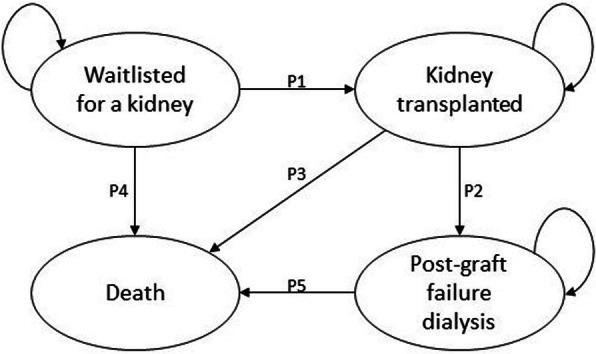
Methods: A decision analytic model to estimate cost-effectiveness was developed using a Markov process. Four plausible competing allocation options were compared to the current kidney allocation practice. Models were simulated in one-year cycles for a 20-year time horizon, with transitions through distinct health states relevant to the kidney recipient. Willingness to pay was considered as AUD 28000.
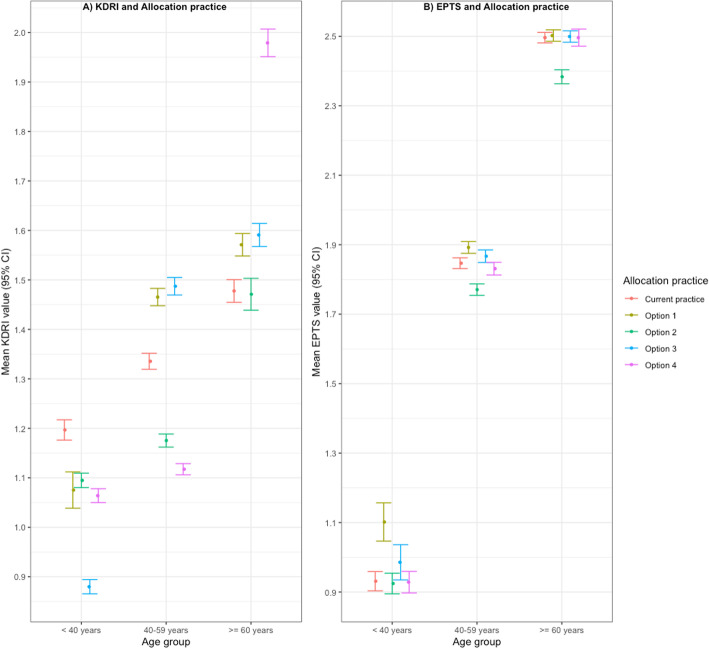
Results: Base case analysis indicated that allocating the worst 20% of Kidney Donor Risk Index (KDRI) donor kidneys to the worst 20% of estimated post-transplant survival (EPTS) recipients (option 2) and allocating the oldest 25% of donor kidneys to the oldest 25% of recipients are both cost saving and more effective compared to the current Australian allocation practice. Option 2, returned the lowest costs, greatest health benefits and largest gain to net monetary benefits (NMB). Allocating the best 20% of KDRI donor kidneys to the best 20% of EPTS recipients had the lowest expected incremental NMB.
Conclusion: Of the four longevity-based kidney allocation practices considered, transplanting the lowest quality kidneys to the worst kidney recipients (option 2), was estimated to return the best value for money for the Australian health system.
Keywords: Cost utility analysis; Kidney allocation; Longevity matching; QALY; Transplant.
Conflict of interest statement
The authors declare that they have no competing interest.
Figures

References
-
- Gill JS, Gill J, Rose C, Zalunardo N, Landsberg D. The older living kidney donor: part of the solution to the organ shortage. Transplantation. 2006;82(12):1662–1666. - PubMed
-
- National Kidney Foundation. Organ donation and transplantation statistics: National Kidney Foundation; 2019 [cited 2019 October 23]. Available from: https://www.kidney.org/news/newsroom/factsheets/Organ-Donation-and-Trans....
-
- NHS Blood and Transplant. Kidney acticity United Kingdom: NHS Blood and Transplant; 2020 [cited 2020 July 29]. Available from: https://nhsbtdbe.blob.core.windows.net/umbraco-assets-corp/19192/section....
-
- Australian Government OaTA. Facts and statistics Australia: Australian Government, Organ and Tissue Authority; 2019 [cited 2020 July 29]. Available from: https://donatelife.gov.au/about-donation/frequently-asked-questions/fact....
-
- Global Observatory on Donation and Transplantation. Global data: World Health Organization (WHO) and the Spanish Transplant Organization; 2020 [cited 2020 July 29]. Available from: http://www.transplant-observatory.org/summary/.
MeSH terms
LinkOut - more resources
Full Text Sources
Medical
