


Recurrent and persistent carpal tunnel syndrome: "Triple-therapy approach"
- PMID: 33041567
- PMCID: PMC7533349
- DOI: 10.1016/j.jor.2020.09.003
Recurrent and persistent carpal tunnel syndrome: "Triple-therapy approach"
Abstract
Background: Various procedures have been described for patients undergoing a revision carpal tunnel release. These can include repeat open decompression with external or internal neurolysis, tenosynovectomy, endoscopic release, various flap techniques, saphenous vein wrapping and use of prosthetic implants. This study reports a case series of 30 consecutive patients who underwent revision carpal tunnel release at single institution from 2012 to 2018. Our surgical plan in all the patients involved a combination of these three techniques (triple therapy approach): neurolysis (external or internal) and tenosynovectomy, collagen matrix conduit wrap (NeuraWrap; Integra LifeSciences or Axoguard Nerve Protector, AxoGen Inc), and hypothenar fat flap.
Materials and methods: A total of 30 patient records were identified. The index surgery was performed by a variety of surgeons at varied private institutions as well as the VA hospital. However, all of the revision interventions in this series were performed by the senior author (Z.J.P.). Demographic data (age, sex, hand dominance, comorbidities, alcohol, and smoking history) were collected. Preoperative and postoperative symptoms were recorded for all patients, including: subjective outcomes, need for additional surgery and complications. Mean VAS preoperatively and postoperatively were compared using a paired t-test. All statistical analyses were performed with SPSS 20 (IBM, Chicago, IL).
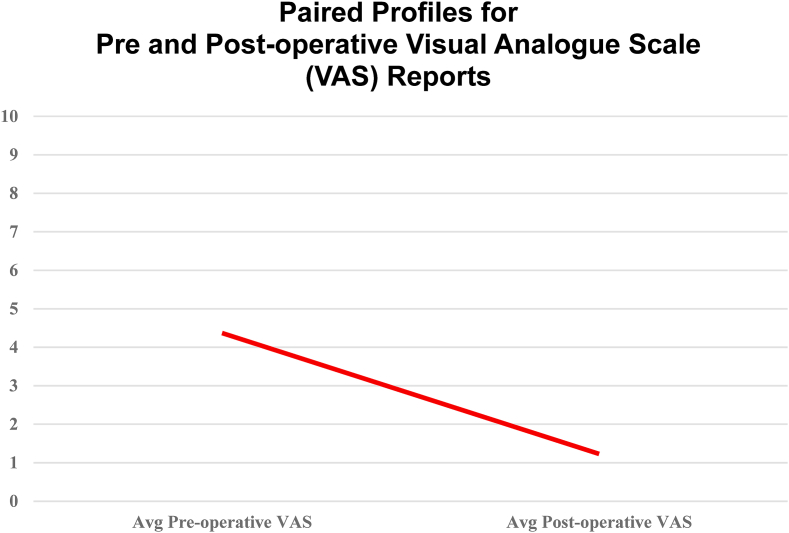
Results: Patient reported measures of resolution of symptoms and VAS scores documented at 3 months. Of the 30 patients who underwent surgery for persistent or recurrent carpal tunnel syndrome, symptoms resolved completely in 25 patients. 2 patients were lost to follow up. 3 patients showed no improvement. The mean preoperative VAS score was 4.37 and declined to 1.23 after surgery (P < .0001).
Conclusion: Our study demonstrates that a combination of neurolysis and tenosynovectomy along with a nerve wrap and hypothenar fat flap should be considered in patients presenting with recurrent or persistent carpal tunnel syndrome.
Keywords: Hand treatment; Hypothenar flap; Median neuropathy; Nerve conduit; Nerve wrap; Neurolysis; Recurrent and persistent carpal tunnel syndrome; Redo carpal tunnel release; Secondary procedure.
© 2020 Published by Elsevier B.V. on behalf of Professor P K Surendran Memorial Education Foundation.
Conflict of interest statement
None.
Figures

Similar articles
-
Management of Failed Carpal and Cubital Tunnel Release: An Evidence-Based Guide to Success.J Hand Surg Glob Online. 2023 Jun 9;5(4):510-518. doi: 10.1016/j.jhsg.2023.05.008. eCollection 2023 Jul. J Hand Surg Glob Online. 2023. PMID: 37521553 Free PMC article. Review.
-
Clinical outcomes following neurolysis and porcine collagen extracellular matrix wrapping of scarred nerves in revision carpal tunnel decompression.J Plast Reconstr Aesthet Surg. 2022 Aug;75(8):2802-2808. doi: 10.1016/j.bjps.2022.04.010. Epub 2022 Apr 21. J Plast Reconstr Aesthet Surg. 2022. PMID: 35597709
-
Revision surgery for persistent and recurrent carpal tunnel syndrome and for failed carpal tunnel release.Plast Reconstr Surg. 2012 Mar;129(3):683-692. doi: 10.1097/PRS.0b013e3182402c37. Plast Reconstr Surg. 2012. PMID: 22090245
-
Patient-Reported Outcomes Improve after Hypothenar Fat Flap for the Treatment of Recurrent Carpal Tunnel Syndrome.J Hand Surg Asian Pac Vol. 2023 Oct;28(5):573-579. doi: 10.1142/S2424835523500649. Epub 2023 Oct 27. J Hand Surg Asian Pac Vol. 2023. PMID: 37905363
-
Flexor Tenosynovectomy for Recurrent Carpal Tunnel Syndrome: A Retrospective Case Series of 108 Hands.Hand (N Y). 2021 Jan;16(1):18-24. doi: 10.1177/1558944719840735. Epub 2019 Apr 2. Hand (N Y). 2021. PMID: 30939941 Free PMC article. Review.
Cited by
-
Cutting-Edge Approaches for Nerve Debridement Prior to Repair.J Hand Surg Glob Online. 2024 Apr 16;6(5):681-684. doi: 10.1016/j.jhsg.2024.01.026. eCollection 2024 Sep. J Hand Surg Glob Online. 2024. PMID: 39381395 Free PMC article. Review.
-
Investigation of Neuropathology after Nerve Release in Chronic Constriction Injury of Rat Sciatic Nerve.Int J Mol Sci. 2021 Apr 29;22(9):4746. doi: 10.3390/ijms22094746. Int J Mol Sci. 2021. PMID: 33947104 Free PMC article.
-
Management of Failed Carpal and Cubital Tunnel Release: An Evidence-Based Guide to Success.J Hand Surg Glob Online. 2023 Jun 9;5(4):510-518. doi: 10.1016/j.jhsg.2023.05.008. eCollection 2023 Jul. J Hand Surg Glob Online. 2023. PMID: 37521553 Free PMC article. Review.
-
Outcomes following use of VersaWrap nerve protector in treatment of patients with recurrent compressive neuropathies.Front Surg. 2023 Mar 21;10:1123375. doi: 10.3389/fsurg.2023.1123375. eCollection 2023. Front Surg. 2023. PMID: 37025263 Free PMC article.
-
Identifying anatomic landmarks and median nerve characteristics for the analysis of persistent carpal tunnel syndrome using magnetic resonance imaging (MRI).Skeletal Radiol. 2024 Feb;53(2):299-305. doi: 10.1007/s00256-023-04397-2. Epub 2023 Jul 11. Skeletal Radiol. 2024. PMID: 37432476
References
-
- Ashworth N.L. Carpal tunnel syndrome. Clin Evid. 2007:1114. - PubMed
-
- Atroshi I., Gummesson C., Johnsson R., Ornstein E., Ranstam J., Rosen I. Prevalence of carpal tunnel syndrome in a general population. J Am Med Assoc. 1999;282:153–158. - PubMed
-
- Kulick M.I., Gordillo G., Javidi T., Kilgore E.S., Jr., Newmayer W.L., III Long-term analysis of patients having surgical treatment for carpal tunnel syndrome. J Hand Surg. 1986;11:59–66. - PubMed
-
- Louis D.S., Greene T.L., Noellert R.C. Complications of carpal tunnel surgery. J Neurosurg. 1985;62:352–356. - PubMed
-
- MacDonald R.I., Lichtman D.M., Hanlon J.J., Wilson J.N. Complications of surgical release for carpal tunnel syndrome. J Hand Surg. 1978;3:70–76. - PubMed
LinkOut - more resources
Full Text Sources
