Review
. 2020 Sep 11:11:553109.
doi: 10.3389/fmicb.2020.553109. eCollection 2020.

High-Throughput Sequencing for Deciphering the Virome of Alfalfa (Medicago sativa L.)

Affiliations
Review

High-Throughput Sequencing for Deciphering the Virome of Alfalfa (Medicago sativa L.)

Nicolas Bejerman et al. Front Microbiol. .

Abstract

Alfalfa (Medicago sativa L.), also known as lucerne, is a major forage crop worldwide. In the United States, it has recently become the third most valuable field crop, with an estimated value of over $9.3 billion. Alfalfa is naturally infected by many different pathogens, including viruses, obligate parasites that reproduce only inside living host cells. Traditionally, viral infections of alfalfa have been considered by breeders, growers, producers and researchers to be diseases of limited importance, although they are widespread in all major cultivation areas. However, over the past few years, due to the rapid development of high-throughput sequencing (HTS), viral metagenomics, bioinformatics tools for interpreting massive amounts of HTS data and the increasing accessibility of public data repositories for transcriptomic discoveries, several emerging viruses of alfalfa with the potential to cause serious yield losses have been described. They include alfalfa leaf curl virus (family Geminiviridae), alfalfa dwarf virus (family Rhabdoviridae), alfalfa enamovirus 1 (family Luteoviridae), alfalfa virus S (family Alphaflexiviridae) and others. These discoveries have called into question the assumed low economic impact of viral diseases in alfalfa and further suggested their possible contribution to the severity of complex infections involving multiple pathogens. In this review, we will focus on viruses of alfalfa recently described in different laboratories on the basis of the above research methodologies.

Keywords: Medicago sativa L.; alfalfa; emerging viruses; high throughput sequencing; virome.


Figures

FIGURE 1
FIGURE 1
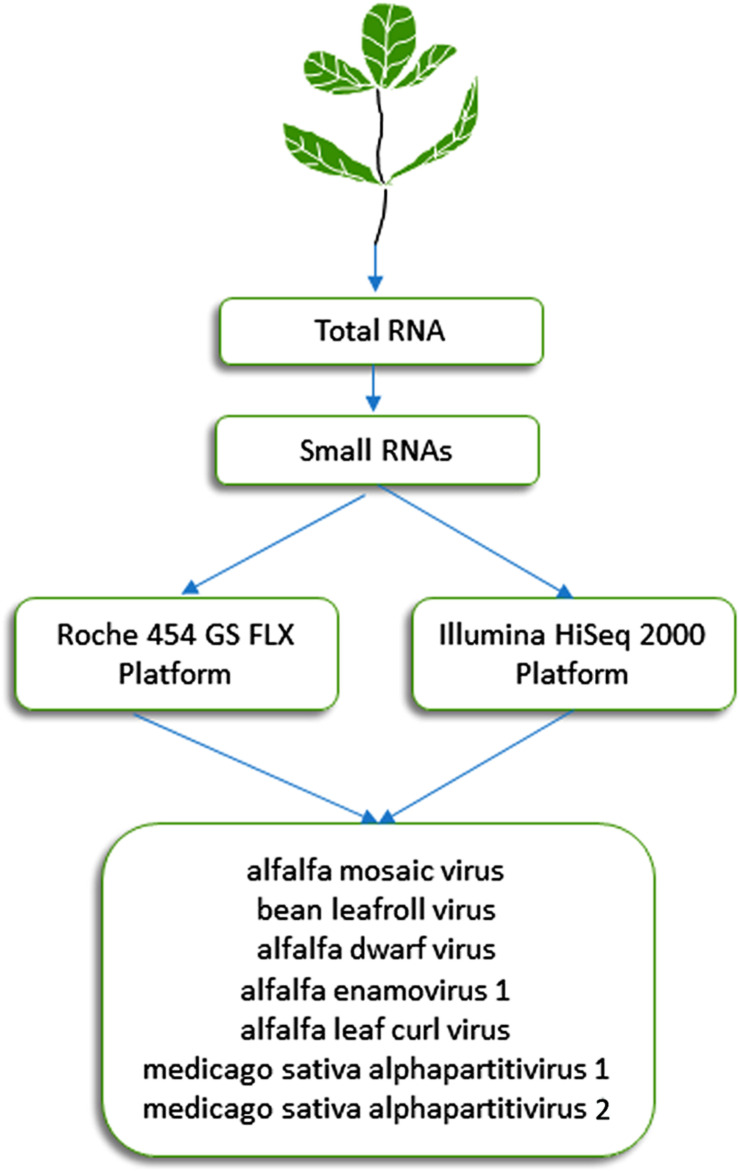
Schematic diagram of the HTS approaches used in Argentina for the identification of seven viruses in alfalfa (Bejerman et al., 2011, 2015, 2016, 2019; Trucco et al., 2014, 2016).
FIGURE 2
FIGURE 2
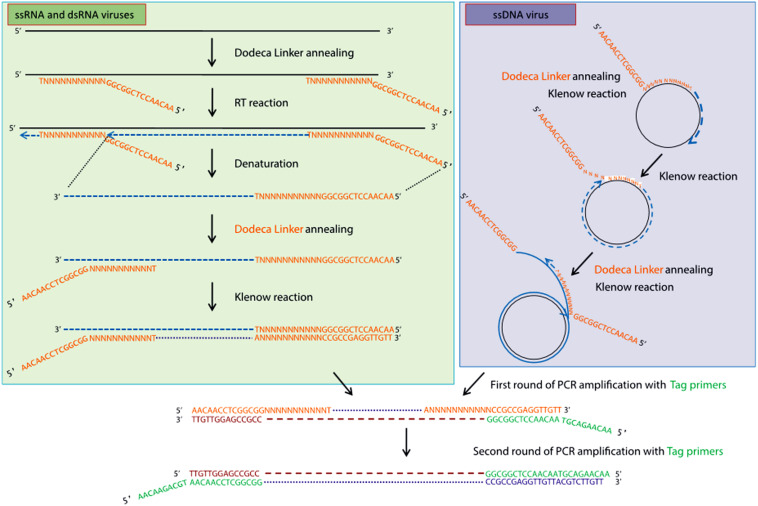
Schematic outline of the VANA-based metagenomics method (François et al., 2018). Upper left panel: conversion by the random priming of viral ssRNA or dsRNA with sequence-ready cDNA, including a reverse transcription step, followed by a Klenow reaction step. Upper right panel: conversion by the random priming of viral DNA (e.g., circular ssDNA) with sequence-ready cDNA, including a Klenow reaction step (strand displacement amplification). Bottom panel: double-stranded DNA is amplified using a single PCR multiplex identifier primer, which yields amplicons that are all tagged at both ends with the same multiplex identifier primer (François et al., 2018). License to publish this figure obtained from the publisher (license #4897140253092).
FIGURE 3
FIGURE 3
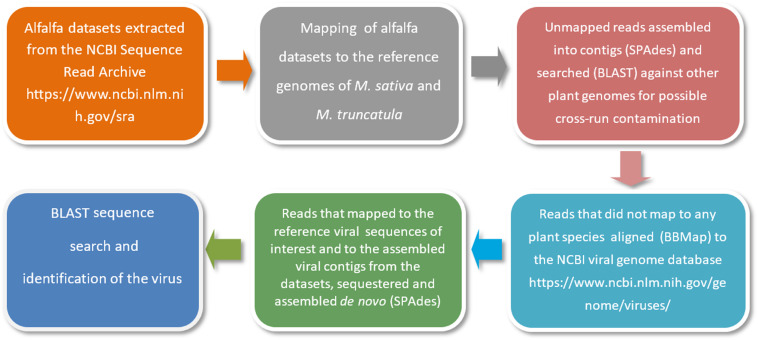
A simplified illustration of the bioinformatics pipeline used for the identification of viral pathogens in alfalfa transcriptome datasets (Jiang et al., 2019a).
FIGURE 4
FIGURE 4
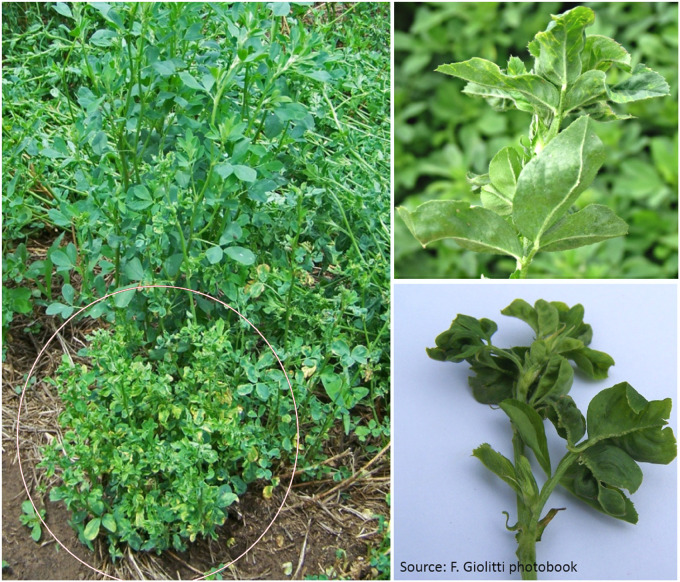
Alfalfa plants exhibiting the alfalfa dwarf disease complex (shortened internodes, bushy appearance, chlorosis at the margins and ribs of the leaflets, leaf puckering and vein enations of varying sizes on abaxial leaf surfaces) (Bejerman et al., 2011).
FIGURE 5
FIGURE 5
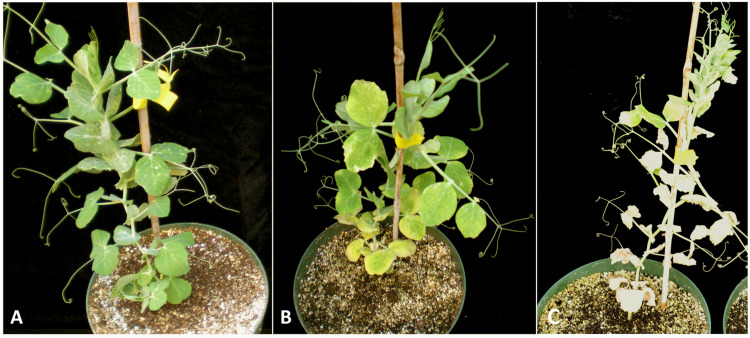
Symptoms of alfalfa latent virus on pea plants (Pisum sativum) (Nemchinov, 2017). (A) Control uninfected plant. (B) Plants infected with ALV showing symptoms of a chlorotic mosaic pattern and necrotic zones along the leaf margins. (C) Plants infected with ALV developed extensive necrosis and severe browning (Nemchinov, 2017). License to publish this figure obtained from the publisher (license #4897140253092).
FIGURE 6
FIGURE 6
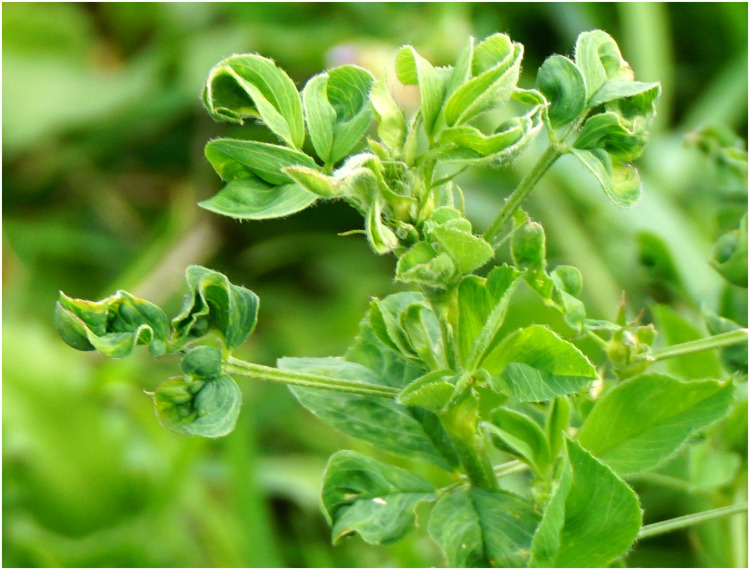
Symptoms of alfalfa leaf curl virus on alfalfa (Roumagnac et al., 2015).
FIGURE 7
FIGURE 7
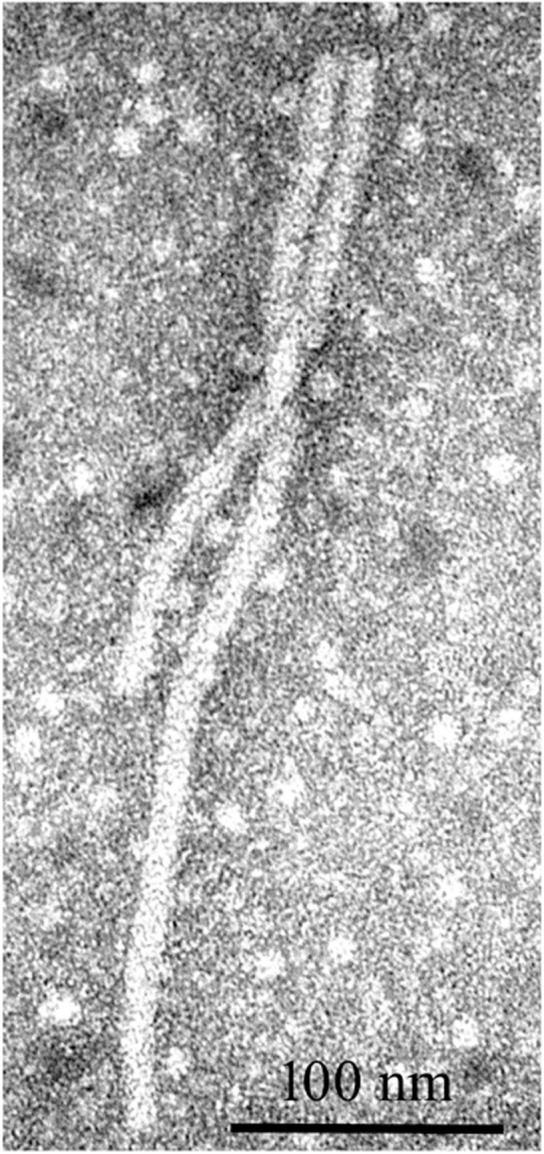
Filamentous virions observed by transmission electron microscopy in alfalfa tissues infected with alfalfa virus S (Nemchinov et al., 2017a).
FIGURE 8
FIGURE 8
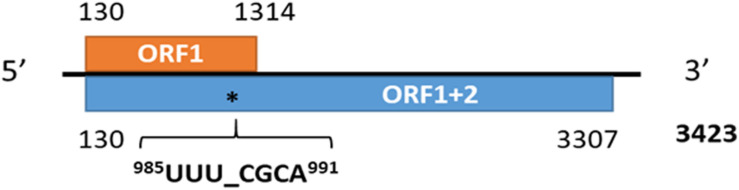
The genome organization of medicago sativa amalgavirus 1 and the putative + 1 programmed ribosomal frameshifting motif in MsAV1 (Jiang et al., 2019a).
FIGURE 9
FIGURE 9
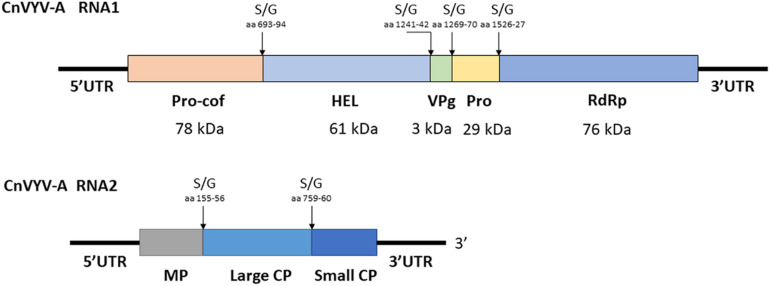
Putative genomic organization of the alfalfa strains of cnidium vein yellowing virus (CnVYV-A). The open reading frames are indicated by boxes, and the putative serine/glycine (S/G) cleavage sites and their amino acid positions are indicated by arrows (Jiang et al., 2019a).
FIGURE 10
FIGURE 10
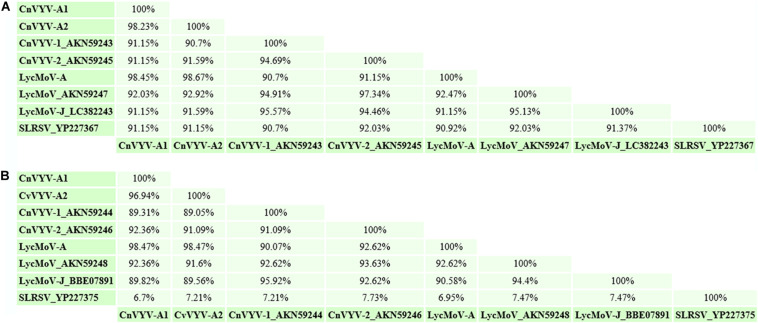
Amino acid identities between the Pro-Pol (A) and CP (B) regions of the cnidium vein yellowing virus CnVYV-A strains, the CnVYV1 and CnVYV2 strains, lychnis mottle virus LycMoV-A, LycMoV, and LycMoV-J strains and strawberry latent ringspot virus (SLRSV), as predicted by the SIAS tool (http://imed.med.ucm.es/Tools/sias.html) (Jiang et al., 2019a).
FIGURE 11
FIGURE 11
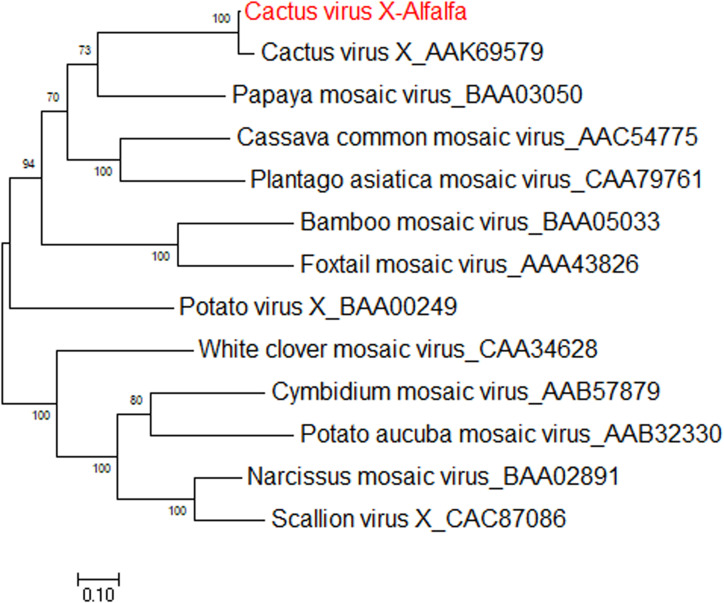
Phylogenetic analyses based on the amino acid alignments of the predicted RdRp sequence of CVX-A and other members of the Potexviridae family. The trees were generated using the Maximum Likelihood method of MEGA7 with 1000 bootstrap replicates (Jiang et al., 2019a).

References

    1. Abdullah A. S., Moffat C. S., Lopez-Ruiz F. J., Gibberd M. R., Hamblin J., Zerihun A. (2017). Host-multi-pathogen warfare: pathogen interactions in co-infected plants. Front. Plant Sci. 8:1806. 10.3389/fpls.2017.01806 - DOI - PMC - PubMed
    1. Alizon S., de Roode J. C., Michalakis Y. (2013). Multiple infections and the evolution of virulence. Ecol. Lett. 16 556–567. 10.1111/ele.12076 - DOI - PubMed
    1. Alliot B., Signoret P. A. (1972). La maladie a enations de la lucerne, une maladie nouvelle pour la France. Phytopathol. Z 74:69 10.1111/j.1439-0434.1972.tb04647.x - DOI
    1. Babadoost M. (1990). Virus Diseases of Alfalfa and Clovers in Illinois. Reports on Plant Diseases, RPD No. 307, Champaign: University of Illinois at Urbana-Champaign.
    1. Bankevich A., Nurk S., Antipov D., Gurevich A. A., Dvorkin M., Kulikov L., et al. (2012). SPAdes: a new genome assembly algorithm and its applications to single-cell sequencing. J. Comput. Biol. 19 455–477. 10.1089/cmb.2012.0021 - DOI - PMC - PubMed