


Job-Specific Physical Fitness Changes Measured by the Work Sample Test Battery within Deputy Sheriffs between Training Academy and their First Patrol Assignment
- PMID: 33042372
- PMCID: PMC7523909
- DOI: 10.70252/NCHZ6196
Job-Specific Physical Fitness Changes Measured by the Work Sample Test Battery within Deputy Sheriffs between Training Academy and their First Patrol Assignment
Abstract
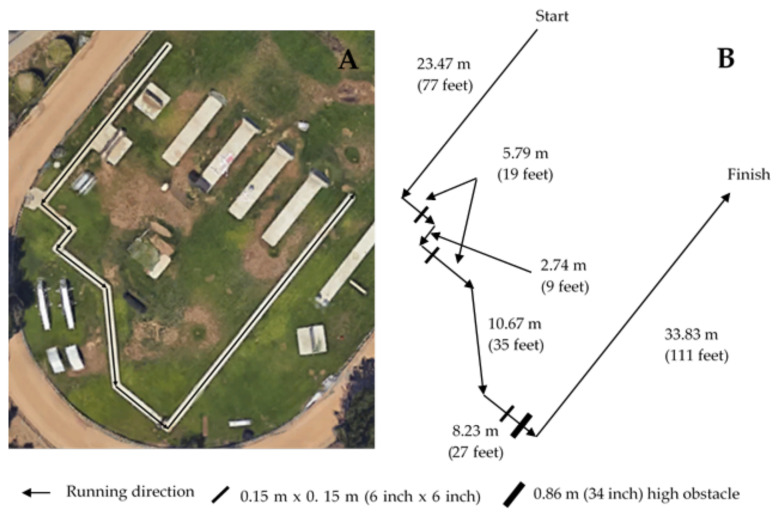
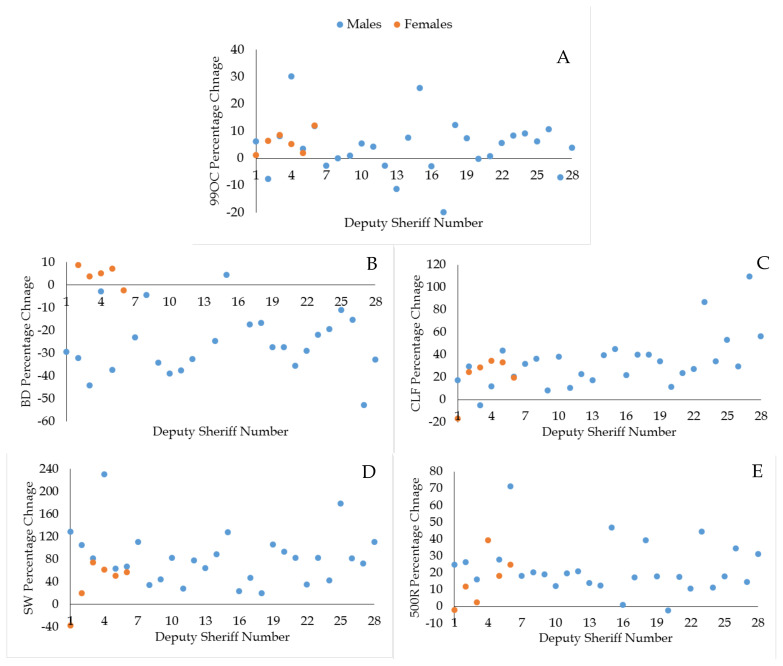
Deputy Sheriffs need to exhibit job-specific fitness throughout their occupational lifespan. This study evaluated job-specific fitness changes measured by the Work Sample Test Battery (WSTB) in deputy sheriffs from training academy to patrol school (refresher program completed before first patrol assignment). WSTB data for 34 deputy sheriffs (28 males, 6 females) was retrospectively analyzed. The WSTB included five tests: a 99-yard obstacle course (99OC); a 165-pound body drag (BD); 6-foot chain link fence (CLF) and solid wall (SW) climbs; and a 500-yard run (500R). WSTB task times measured at the end of academy and start of patrol school were compared by paired samples t-tests, percentage change, and effect sizes (all deputy sheriffs combined and by sex). When data for all deputy sheriffs was combined, there were significant time increases for the WSTB tasks at patrol school (p ≤ 0.009; d = 0.45-1.67), except for the BD (p < 0.001; d = 0.80). Male deputy sheriffs exhibited the same changes (p ≤ 0.042, d = 0.40-2.37), with very large CLF and SW decrements (34-83%). Females experienced a significant decline in the 99OC (p = 0.013; d = 0.79), and non-significant declines in all other tasks (p ≤ 0.324; d = 0.50-0.96). Apart from the BD for male deputy sheriffs, job-specific fitness measured by the WSTB declined when deputy sheriffs went on their first patrol assignment. The ability to perform obstacle clearance (CLF, SW) and foot pursuit tasks (99OC, 500R) was particularly reduced. Intervention strategies to aid job-specific fitness maintenance is recommended for deputy sheriffs.
Keywords: Body drag; foot pursuit; obstacle clearance; occupational testing; police; tactical.
Figures
References
-
- Boyce RW, Jones GR, Schendt KE, Lloyd CL, Boone EL. Longitudinal changes in strength of police officers with gender comparisons. J Strength Cond Res. 2009;23(8):2411–2418. - PubMed
-
- Cesario KA, Dulla JM, Moreno MR, Bloodgood AM, Dawes JJ, Lockie RG. Relationships between assessments in a physical ability test for law enforcement: Is there redundancy in certain assessments? Int J Exerc Sci. 2018;11(4):1063–1073.
-
- Cohen J. Statistical Power Analysis for the Behavioral Sciences. 2nd ed. Hillsdale, New Jersey: Lawrence Earlbaum Associates; 1988.
LinkOut - more resources
Full Text Sources