


The Impact of the COVID-19 Pandemic on Surgical Management of Breast Cancer: Global Trends and Future Perspectives
- PMID: 33044007
- PMCID: PMC7675306
- DOI: 10.1002/onco.13560
The Impact of the COVID-19 Pandemic on Surgical Management of Breast Cancer: Global Trends and Future Perspectives
Abstract
Introduction: The rapid spread of COVID-19 across the globe is forcing surgical oncologists to change their daily practice. We sought to evaluate how breast surgeons are adapting their surgical activity to limit viral spread and spare hospital resources.
Methods: A panel of 12 breast surgeons from the most affected regions of the world convened a virtual meeting on April 7, 2020, to discuss the changes in their local surgical practice during the COVID-19 pandemic. Similarly, a Web-based poll based was created to evaluate changes in surgical practice among breast surgeons from several countries.
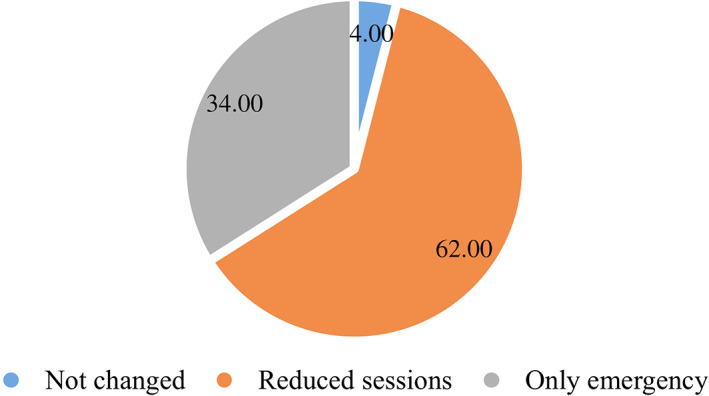
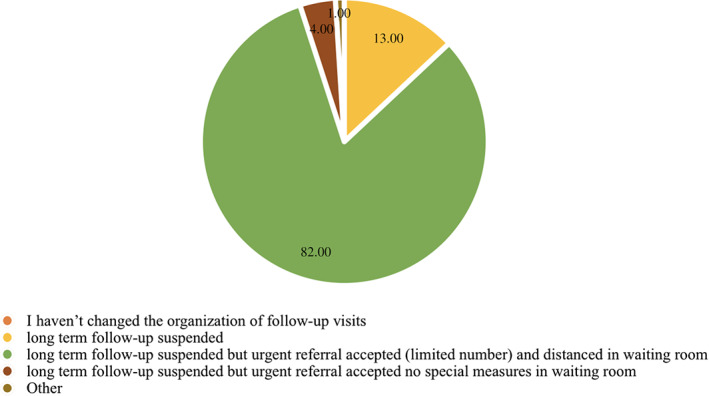
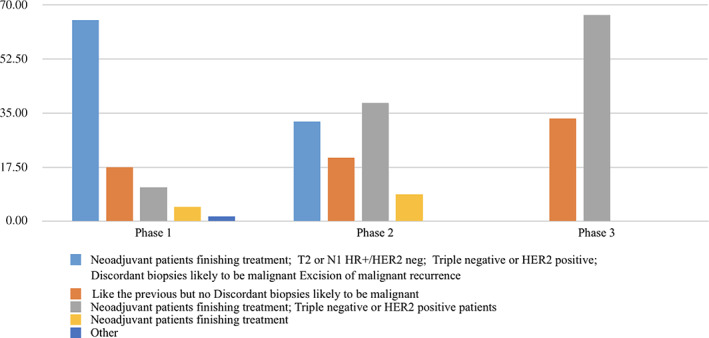
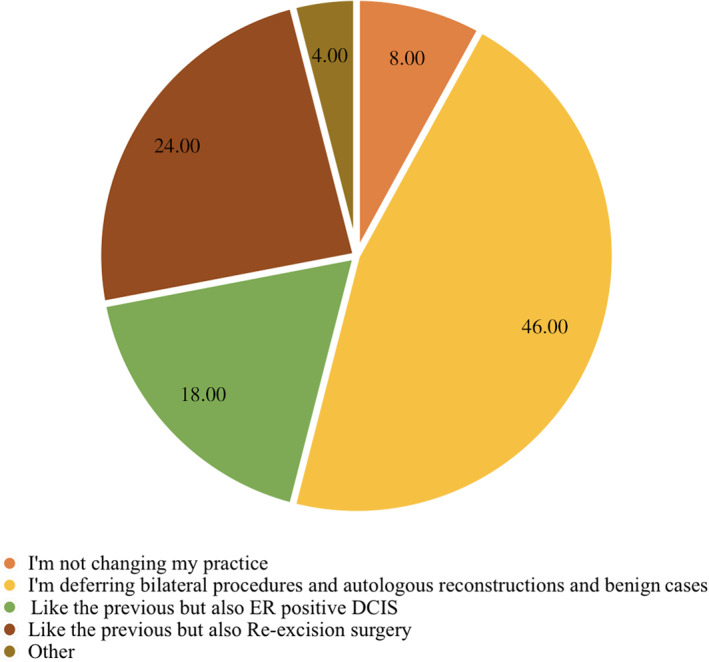
Results: The virtual meeting showed that distinct countries and regions were experiencing different phases of the pandemic. Surgical priority was given to patients with aggressive disease not candidate for primary systemic therapy, those with progressive disease under neoadjuvant systemic therapy, and patients who have finished neoadjuvant therapy. One hundred breast surgeons filled out the poll. The trend showed reductions in operating room schedules, indications for surgery, and consultations, with an increasingly restrictive approach to elective surgery with worsening of the pandemic.
Conclusion: The COVID-19 emergency should not compromise treatment of a potentially lethal disease such as breast cancer. Our results reveal that physicians are instinctively reluctant to abandon conventional standards of care when possible. However, as the situation deteriorates, alternative strategies of de-escalation are being adopted.
Implications for practice: This study aimed to characterize how the COVID-19 pandemic is affecting breast cancer surgery and which strategies are being adopted to cope with the situation.
Keywords: Alternatives to surgery; Breast cancer surgery; COVID-19; Surgical priorities; Triage.
© 2020 AlphaMed Press.
Conflict of interest statement
Figures


References
-
- Galea S, Merchant RM, Lurie N. The mental health consequences of COVID‐19 and physical distancing: The need for prevention and early intervention. JAMA Intern Med 2020;180:817–818. - PubMed
-
- Sharma R. Breast cancer incidence, mortality and mortality‐to‐incidence ratio (MIR) are associated with human development, 1990‐2016: Evidence from Global Burden of Disease Study 2016. Breast Cancer 2019;26:428–445. - PubMed
MeSH terms
Grants and funding
LinkOut - more resources
Full Text Sources
Medical
Miscellaneous
