


The History of Engineered Tracheal Replacements: Interpreting the Past and Guiding the Future
- PMID: 33045942
- PMCID: PMC8390779
- DOI: 10.1089/ten.TEB.2020.0238
The History of Engineered Tracheal Replacements: Interpreting the Past and Guiding the Future
Abstract
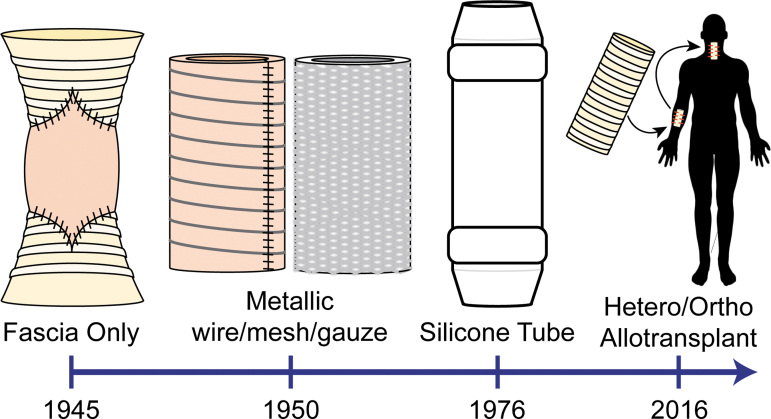
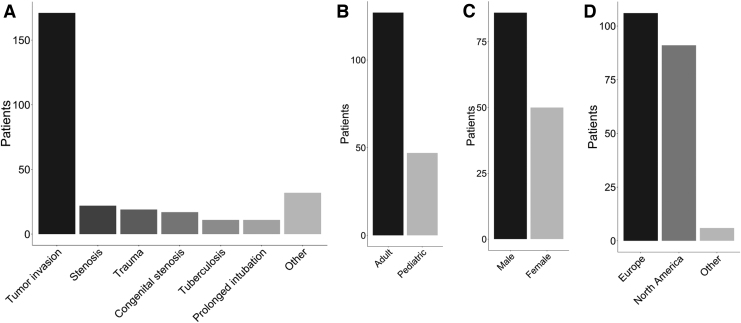
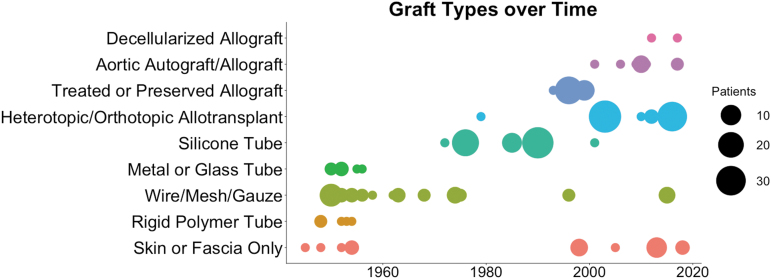
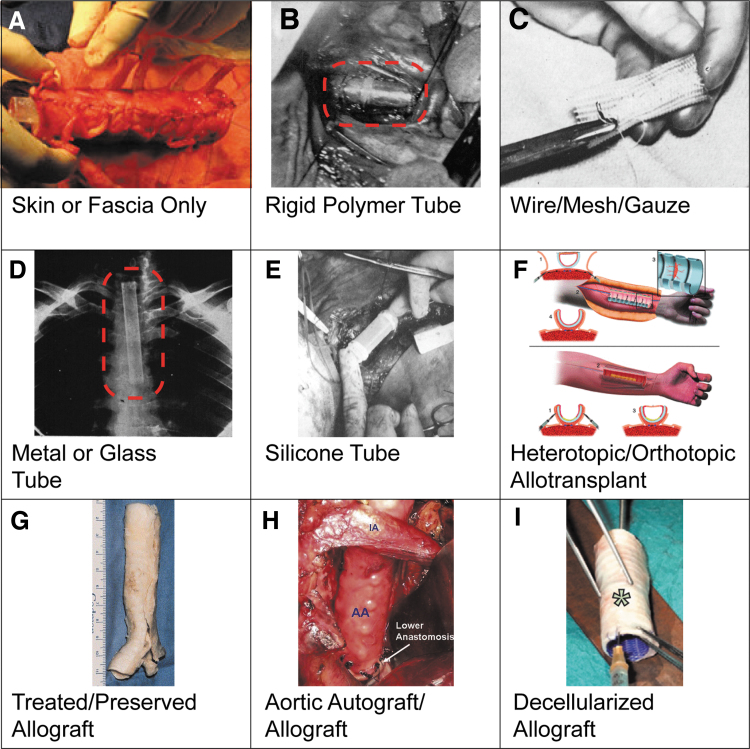
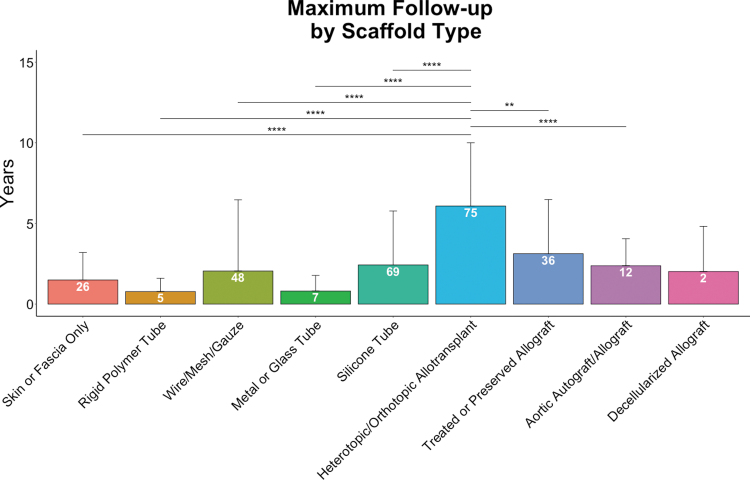
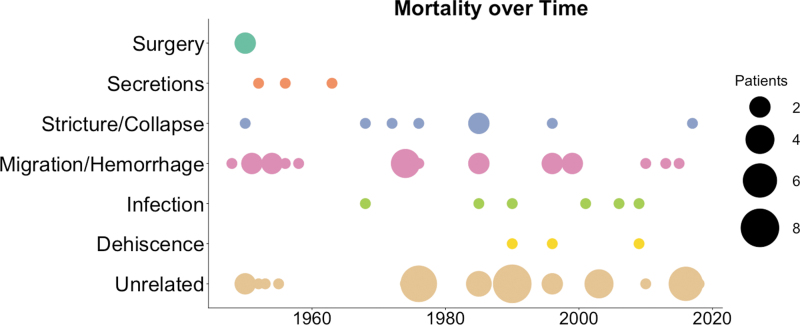
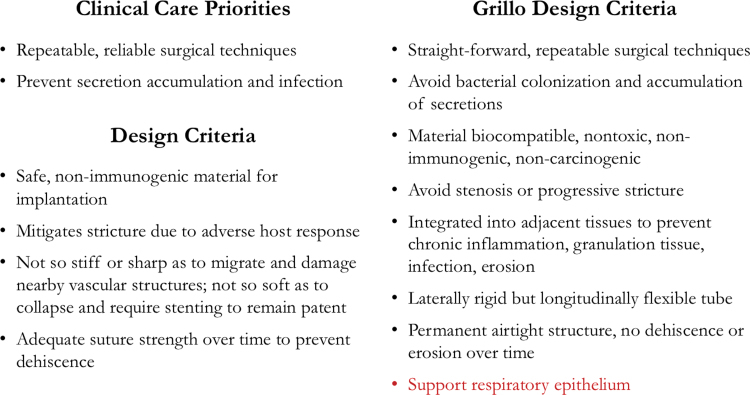
The development of a tracheal graft to replace long-segment defects has thwarted clinicians and engineers alike for over 100 years. To better understand the challenges facing this field today, we have consolidated all published reports of engineered tracheal grafts used to repair long-segment circumferential defects in humans, from the first in 1898 to the most recent in 2018, totaling 290 clinical cases. Distinct trends emerge in the types of grafts used over time, including repair using autologous fascia, rigid tubes of various inert materials, and pretreated cadaveric allografts. Our analysis of maximum clinical follow-up, as a proxy for graft performance, revealed that the Leuven protocol has a significantly longer clinical follow-up time than all other methods of airway reconstruction. This method involves transplanting a cadaveric tracheal allograft that is first prevascularized heterotopically in the recipient. We further quantified graft-related causes of mortality, revealing failure modes that have been resolved, and those that remain a hurdle, such as graft mechanics. Finally, we briefly summarize recent preclinical work in tracheal graft development. In conclusion, we synthesized top clinical care priorities and design criteria to inform and inspire collaboration between engineers and clinicians toward the development of a functional tracheal replacement graft. Impact statement The field of tracheal engineering has floundered in recent years due to multiple article retractions. However, with recent advances in biofabrication and tissue analysis techniques, the field remains ripe for advancement through collaboration between engineers and clinicians. With a long history of clinical application of tracheal replacements, engineered tracheas are arguably the regenerative technology with the greatest potential for translation. This work describes the many phases of engineered tracheal replacements that have been applied in human patients over the past 100 years with the goal of carrying forward critical lessons into development of the next generation of engineered tracheal graft.
Keywords: clinical outcomes; history; scaffold design; tracheal engineering.
Conflict of interest statement
L.E.N. is a founder of and shareholder in Humacyte, which is a regenerative medicine company. Humacyte produces engineered blood vessels from allogeneic smooth muscle cells for vascular surgery. L.E.N.'s spouse has equity in Humacyte, and L.E.N. serves on Humacyte's board of directors. L.E.N. is listed as an inventor on patents that are licensed to Humacyte and that produce royalties for L.E.N. L.E.N. has received an unrestricted research gift to support research in her laboratory at Yale University. Humacyte did not fund these studies and Humacyte did not influence the conduct, description, or interpretation of the findings in this article.
Figures
References
-
- Rob, C.G., and Bateman, G.H.. Reconstruction of the trachea and cervical oesophagus—preliminary report. Br J Surg 37,202, 1949 - PubMed
-
- Cotton, B.H., and Penido, J.R.F.. Resection of the trachea for carcinoma—report of 2 cases. J Thorac Surg 24,231, 1952 - PubMed
-
- Jacobs, J.P., Elliott, M.J., Haw, M.P., Bailey, C.M., and Herberhold, C.. Pediatric tracheal homograft reconstruction: a novel approach to complex tracheal stenoses in children. J Thorac Cardiovasc Surg 112,1549, 1996 - PubMed
-
- Jacobs, J.P., Quintessenza, J.A., Andrews, T., et al. Tracheal allograft reconstruction: the total North American and worldwide pediatric experiences. Ann Thorac Surg 68,1043, 1999 - PubMed
-
- Spaggiari, L., Calabrese, L.S., D'Aiuto, M., et al. Successful subtotal tracheal replacement (using a skin/omental graft) for dehiscence after a resection for thyroid cancer. J Thorac Cardiovasc Surg 129,1455, 2005 - PubMed
Publication types
MeSH terms
Grants and funding
LinkOut - more resources
Full Text Sources
Other Literature Sources
Miscellaneous
