


Increased prevalence of depression in South Korea from 2002 to 2013
- PMID: 33046758
- PMCID: PMC7550589
- DOI: 10.1038/s41598-020-74119-4
Increased prevalence of depression in South Korea from 2002 to 2013
Abstract
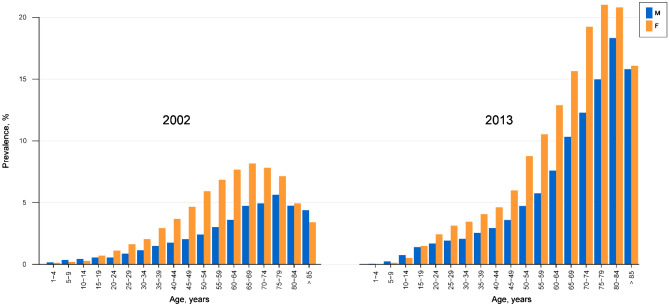
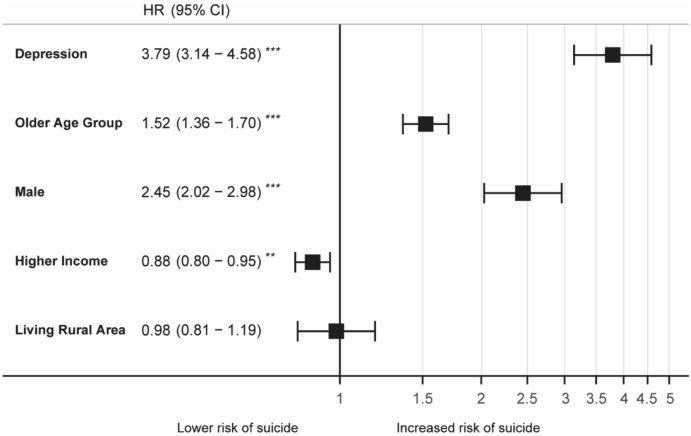
South Korea has one of the highest suicide rates among countries. However, the prevalence of depression in South Korea has been reported to be much lower than in other countries. The current study aims to estimate the prevalence of major depressive disorder using a large representative sample of the South Korean population. The prevalence of depression in a sampled population of one million individuals increased from 2.8% in 2002 to 5.3% in 2013; it was found to increase with the age of the population, and was higher in females than in males for most age groups. A Cox's proportional hazard model showed that suicide risk was significantly higher in people with depression (hazard ratio [HR] 3.79, 95% CI 3.14-4.58) than those without depression. It was also significantly higher in older people (HR 1.52, 95% CI 1.36-1.70) than in younger people, and in males (HR 2.45, 95% CI 2.02-2.96) than in females. Furthermore, higher income groups were at lower suicide risk as compared to lower income groups (HR 0.88, 95% CI 0.80-0.95). This study using the large representative sample data provided evidence that increased prevalence of depression contributed to the increased risk of suicide in South Korea during the recent decade.
Conflict of interest statement
The authors declare no competing interests.
Figures


References
-
- GBD 2017 Disease and Injury Incidence and Prevalence Collaborators Global, regional, and national incidence, prevalence, and years lived with disability for 354 diseases and injuries for 195 countries and territories, 1990–2017: A systematic analysis for the Global Burden of Disease Study 2017. Lancet. 2018;392:1789–1858. doi: 10.1016/S0140-6736(18)32279-7. - DOI - PMC - PubMed
-
- OECD . Health at a Glance 2015: OECD Indicators. Paris: OECD Publishing; 2015.
Publication types
MeSH terms
Substances
LinkOut - more resources
Full Text Sources
Medical
