


Revisiting pharmacological potentials of Nigella sativa seed: A promising option for COVID-19 prevention and cure
- PMID: 33047412
- PMCID: PMC7675410
- DOI: 10.1002/ptr.6895
Revisiting pharmacological potentials of Nigella sativa seed: A promising option for COVID-19 prevention and cure
Abstract
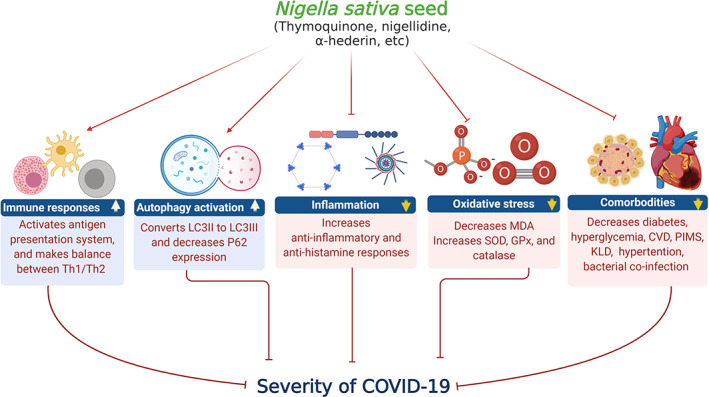
Nigella sativa seed and its active compounds have been historically recognized as an effective herbal panacea that can establish a balanced inflammatory response by suppressing chronic inflammation and promoting healthy immune response. The essential oil and other preparations of N. sativa seed have substantial therapeutic outcomes against immune disturbance, autophagy dysfunction, oxidative stress, ischemia, inflammation, in several COVID-19 comorbidities such as diabetes, cardiovascular disorders, Kawasaki-like diseases, and many bacterial and viral infections. Compelling evidence in the therapeutic efficiency of N. sativa along with the recent computational findings is strongly suggestive of combating emerged COVID-19 pandemic. Also, being an available candidate in nutraceuticals, N. sativa seed oil could be immensely potential and feasible to prevent and cure COVID-19. This review was aimed at revisiting the pharmacological benefits of N. sativa seed and its active metabolites that may constitute a potential basis for developing a novel preventive and therapeutic strategy against COVID-19. Bioactive compounds of N. sativa seed, especially thymiquinone, α-hederin, and nigellidine, could be alternative and promising herbal drugs to combat COVID-19. Preclinical and clinical trials are required to delineate detailed mechanism of N. sativa's active components and to investigate their efficacy and potency under specific pathophysiological conditions of COVID-19.
Keywords: COVID-19; Nigella sativa; SARS-CoV-2 infection; autophagy; immune response; inflammation; oxidative stress.
© 2020 John Wiley & Sons Ltd.
Conflict of interest statement
No conflict of interest from authors regarding the publication of this manuscript.
Figures
References
-
- Abbas, A. T. , Abdel‐Aziz, M. M. , Zalata, K. R. , & Abd Al‐Galel Tel, D. (2005). Effect of dexamethasone and Nigella sativa on peripheral blood eosinophil count, IgG1 and IgG2a, cytokine profiles and lung inflammation in murine model of allergic asthma. The Egyptian Journal of Immunology, 12(1), 95–102. - PubMed
-
- Abdallah, E. M. (2017). Black seed (Nigella sativa) as antimicrobial drug: A mini‐review. Novel Approaches in Drug Designing & Development, 3(2), 1–5.
-
- Abdel Azeiz, A. Z. , Saad, A. H. , & Darweesh, M. F. (2013). Efficacy of thymoquinone against vaginal candidiasis in prednisolone‐induced immunosuppressed mice. Journal of American Science, 9(2013), 55–159.
-
- Abdelrazek, H. M. A. , Kilany, O. E. , Muhammad, M. A. A. , Tag, H. M. , & Abdelazim, A. M. (2018). Black seed thymoquinone improved insulin secretion, hepatic glycogen storage, and oxidative stress in streptozotocin‐induced diabetic male wistar rats. Oxidative Medicine and Cellular Longevity, 2018, 8104110–8104165. 10.1155/2018/8104165 - DOI - PMC - PubMed
Publication types
MeSH terms
Substances
Grants and funding
LinkOut - more resources
Full Text Sources
Miscellaneous
