


The Principles, Mechanisms, and Benefits of Unconventional Agents in the Treatment of Biofilm Infection
- PMID: 33050521
- PMCID: PMC7600518
- DOI: 10.3390/ph13100299
The Principles, Mechanisms, and Benefits of Unconventional Agents in the Treatment of Biofilm Infection
Abstract
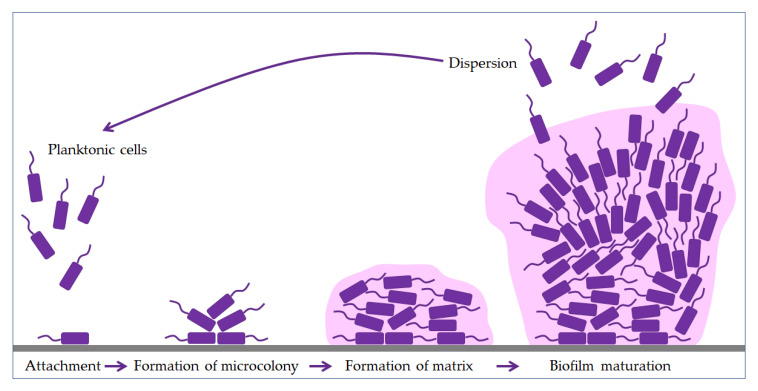
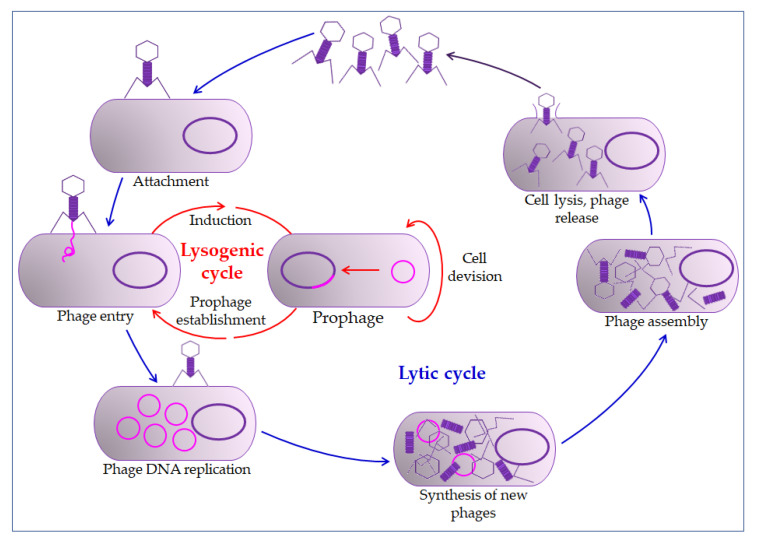
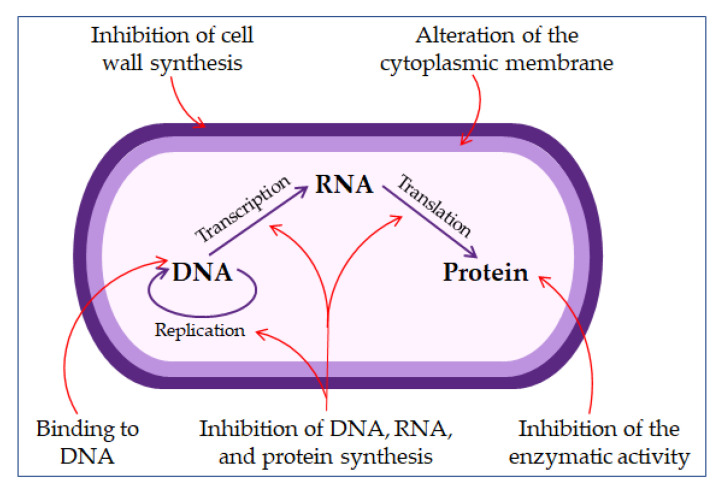
Today, researchers are looking at new ways to treat severe infections caused by resistance to standard antibiotic therapy. This is quite challenging due to the complex and interdependent relationships involved: the cause of infection-the patient-antimicrobial agents. The sessile biofilm form is essential in research to reduce resistance to very severe infections (such as ESKAPE pathogens: Enterococcus faecium, Staphylococcus aureus, Klebsiella pneumoniae, Acinetobacter baumanni, Pseudomonas aeruginosa, and Enterobacter spp). The purpose of this study is to elucidate the mechanisms of the occurrence, maintenance, and suppression of biofilm infections. One form of biofilm suppression is the efficient action of natural antagonists of bacteria-bacteriophages. Bacteriophages effectively penetrate the biofilm's causative cells. They infect those bacterial cells and either destroy them or prevent the infection spreading. In this process, bacteriophages are specific, relatively easy to apply, and harmless to the patient. Antimicrobial peptides (AMPs) support the mechanisms of bacteriophages' action. AMPs could also attack and destroy infectious agents on their own (even on biofilm). AMPs are simple, universal peptide molecules, mainly cationic peptides. Additional AMP research could help develop even more effective treatments of biofilm (bacteriophages, antibiotics, AMPs, nanoparticles). Here, we review recent unconventional agents, such as bacteriophages and AMPs, used for eradication of biofilm, providing an overview of potentially new biofilm treatment strategies.
Keywords: antimicrobial peptides; bacteriophage; biofilm; immunomodulatory action; resistance.
Conflict of interest statement
The authors declare no conflict of interest. The funders had no role in the design of the study; in the collection, analyses, or interpretation of data; in the writing of the manuscript, or in the decision to publish the results.
Figures
References
Publication types
LinkOut - more resources
Full Text Sources
Miscellaneous
