


The Tumor Microenvironment in Neuroblastoma: New Players, New Mechanisms of Interaction and New Perspectives
- PMID: 33050533
- PMCID: PMC7599920
- DOI: 10.3390/cancers12102912
The Tumor Microenvironment in Neuroblastoma: New Players, New Mechanisms of Interaction and New Perspectives
Abstract
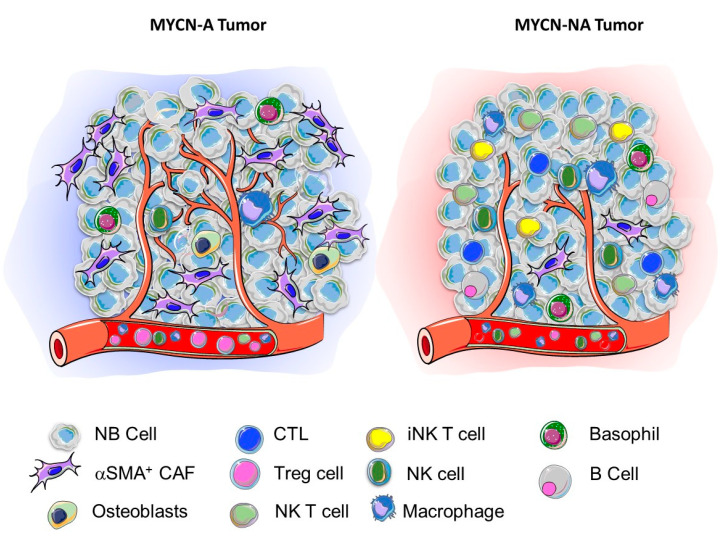
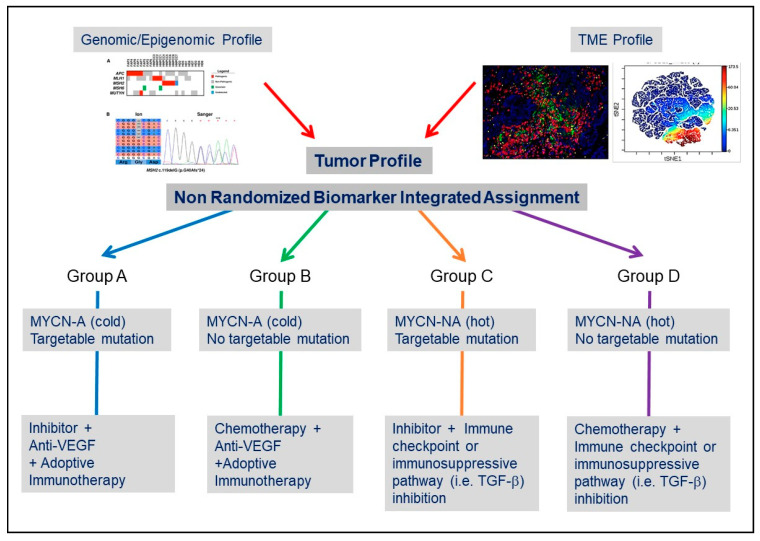
The contribution of the tumor microenvironment (TME) to cancer progression has been well recognized in recent decades. As cancer therapeutic strategies are increasingly precise and include immunotherapies, knowledge of the nature and function of the TME in a tumor becomes essential. Our understanding of the TME in neuroblastoma (NB), the second most common solid tumor in children, has significantly progressed from an initial focus on its Schwannian component to a better awareness of its complex nature, which includes not only immune but also non-immune cells such as cancer-associated fibroblasts (CAFs), the contribution of which to inflammation and interaction with tumor-associated macrophages (TAMs) is now recognized. Recent studies on the TME landscape of NB tumors also suggest significant differences between MYCN-amplified (MYCN-A) and non-amplified (MYCN-NA) tumors, in their content in stromal and inflammatory cells and their immunosuppressive activity. Extracellular vesicles (EVs) released by cells in the TME and microRNAs (miRs) present in their cargo could play important roles in the communication between NB cells and the TME. This review article discusses these new aspects of the TME in NB and the impact that information on the TME landscape in NB will have in the design of precise, biomarker-integrated clinical trials.
Keywords: MYCN; cancer-associated fibroblasts; extracellular vesicles; microRNA.; neuroblastoma; tumor microenvironment.
Conflict of interest statement
The authors acknowledge no conflict of interest.
Figures
References
-
- Taxy J.B. Electron microscopy in the diagnosis of neuroblastoma. Arch. Pathol. Lab. Med. 1980;104:355–360. - PubMed
-
- Shimada H., Ambros I.M., Dehner L.P., Hata J., Joshi V.V., Roald B., Stram D.O., Gerbing R.B., Lukens J.N., Matthay K.K., et al. The international neuroblastoma pathology classification (the Shimada system) Cancer. 1999;86:364–372. doi: 10.1002/(SICI)1097-0142(19990715)86:2<364::AID-CNCR21>3.0.CO;2-7. - DOI - PubMed
Publication types
Grants and funding
LinkOut - more resources
Full Text Sources
