


A dataset of distribution and diversity of mosquito-associated viruses and their mosquito vectors in China
- PMID: 33051449
- PMCID: PMC7555486
- DOI: 10.1038/s41597-020-00687-9
A dataset of distribution and diversity of mosquito-associated viruses and their mosquito vectors in China
Erratum in
-
Author Correction: A dataset of distribution and diversity of mosquito-associated viruses and their mosquito vectors in China.Sci Data. 2020 Nov 4;7(1):378. doi: 10.1038/s41597-020-00730-9. Sci Data. 2020. PMID: 33149135 Free PMC article.
Abstract
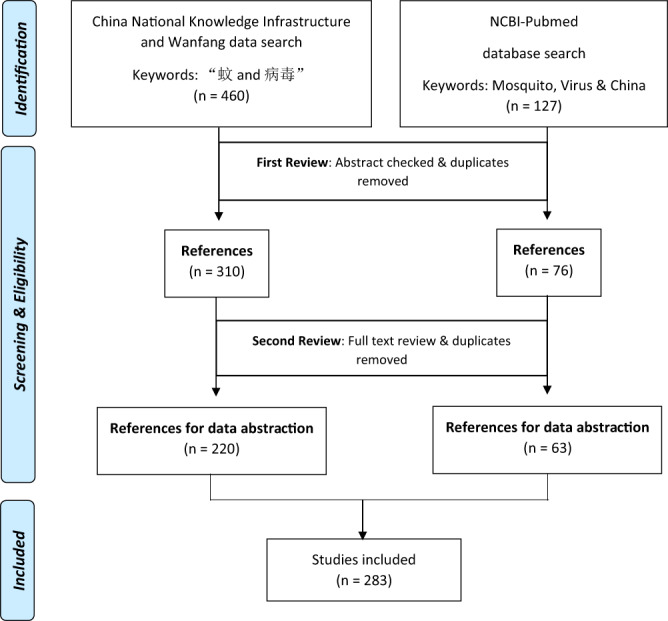
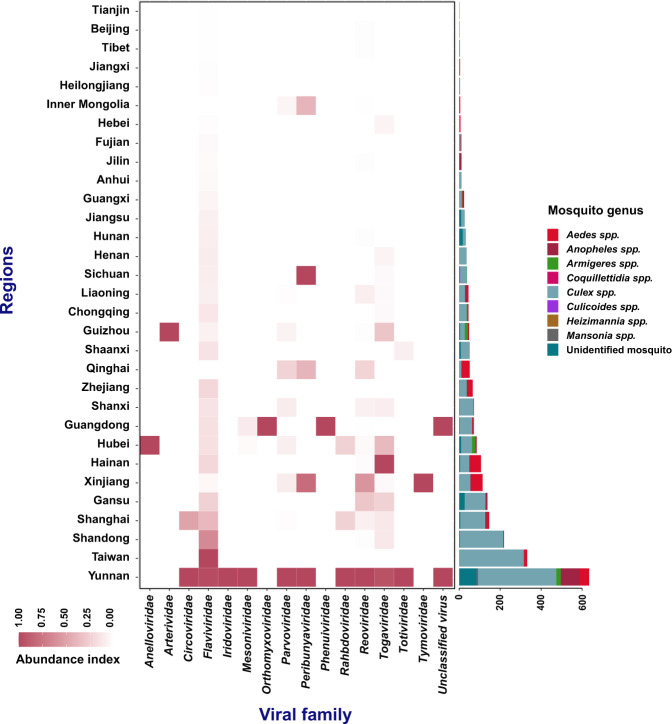
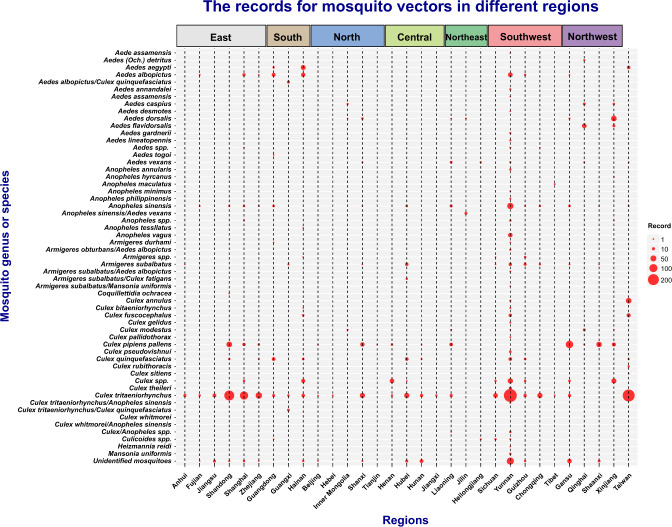
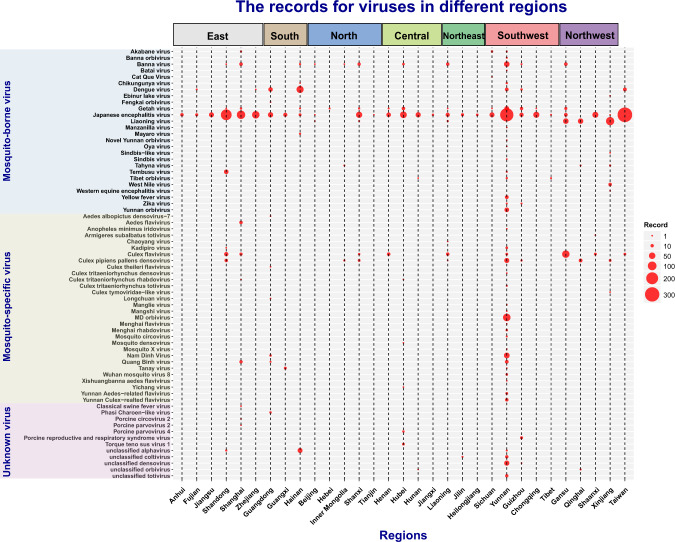
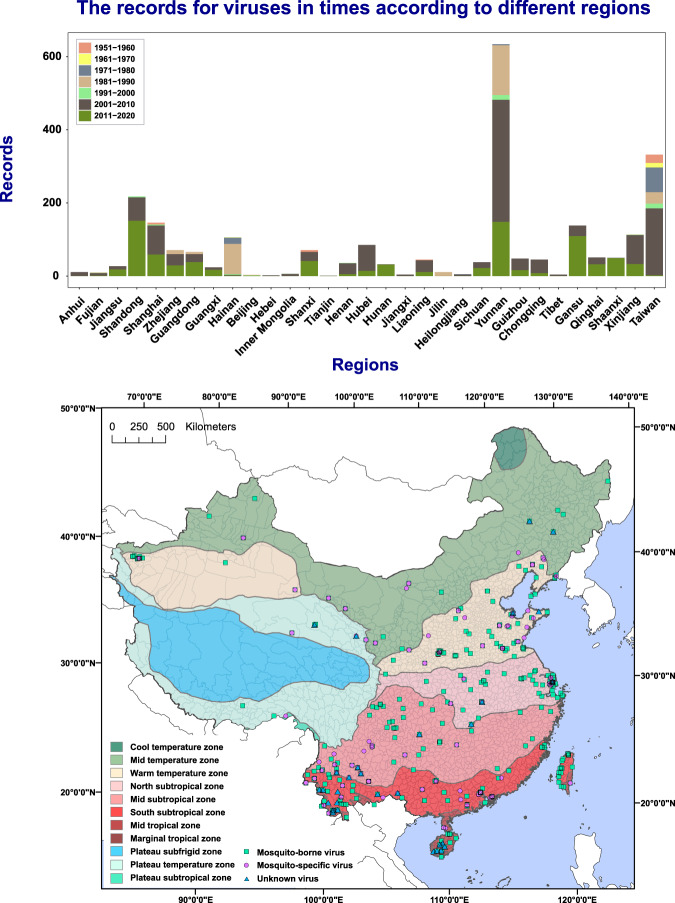
Mosquito-borne viruses such as Zika virus, Japanese Encephalitis virus and Dengue virus present an increasing global health concern. However, in-depth knowledge of the distribution and diversity of mosquito-associated viruses and their related vectors remains limited, especially for China. To promote their understanding, we present the first comprehensive dataset of the distribution and diversity of these viruses and their related vectors in China (including Taiwan, Hong Kong and Macau). Data was drawn from peer-reviewed journal articles, conference papers and thesis publications in both English and Chinese. Geographical data on mosquito-associated viruses' occurrence and related mosquito vector species was extracted, and quality-control processes employed. This dataset contains 2,428 accounts of mosquito-associated viruses' and mosquito species geo-referenced occurrences at various administrative levels in China. The prevalent mosquito-associated virus includes Japanese encephalitis virus, Dengue virus, Banna virus and Culex flavivirus, whereas the abundant mosquito vectors are Culex tritaeryohynchus, Aedes albopictus and Culex pipiens pallens. This geographical dataset delivers a distribution and diversity outline of mosquito-associated viruses in China, and also applicable in various spatial and risk-assessment analysis.
Conflict of interest statement
The authors declare no competing interests.
Figures
References
-
- Atoni, E. et al. The discovery and global distribution of novel mosquito-associated viruses in the last decade (2007–2017). Rev. Med. Virol. 29, e2079 (2019). - PubMed
-
- Xu H, Wang S, Xue D. Biodiversity conservation in China: Legislation, plans and measures. Biodivers. Conserv. 1999;8:819–837. doi: 10.1023/A:1008890112636. - DOI
Publication types
MeSH terms
LinkOut - more resources
Full Text Sources
