


Biosensing based on field-effect transistors (FET): Recent progress and challenges
- PMID: 33052154
- PMCID: PMC7545218
- DOI: 10.1016/j.trac.2020.116067
Biosensing based on field-effect transistors (FET): Recent progress and challenges
Abstract
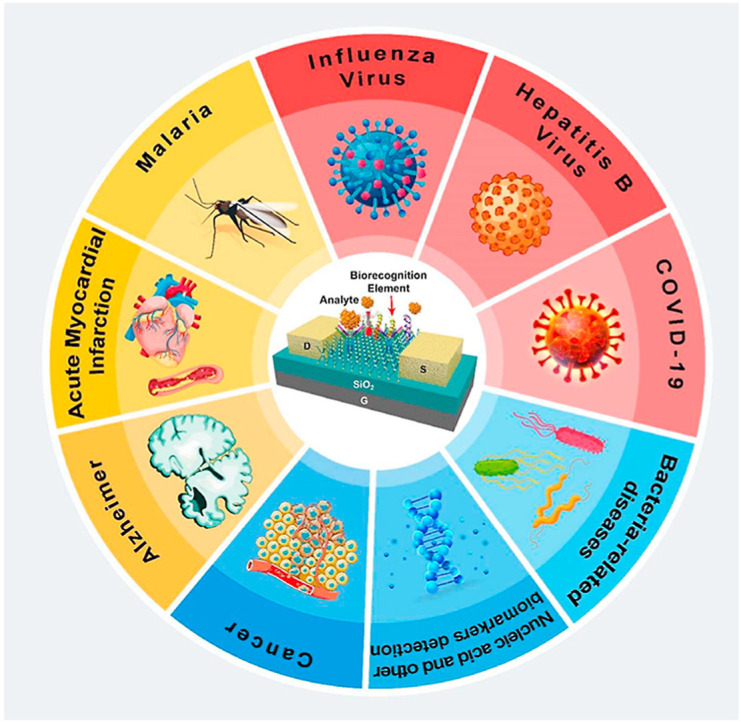
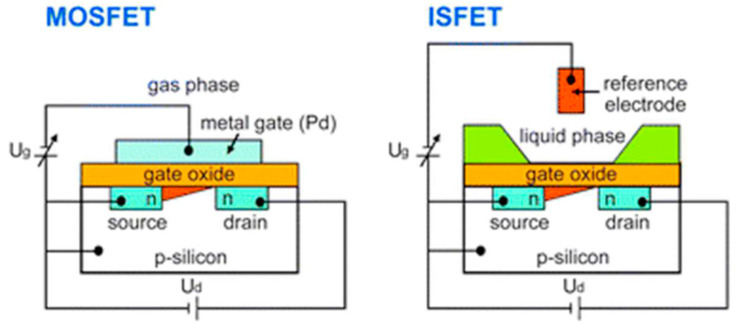
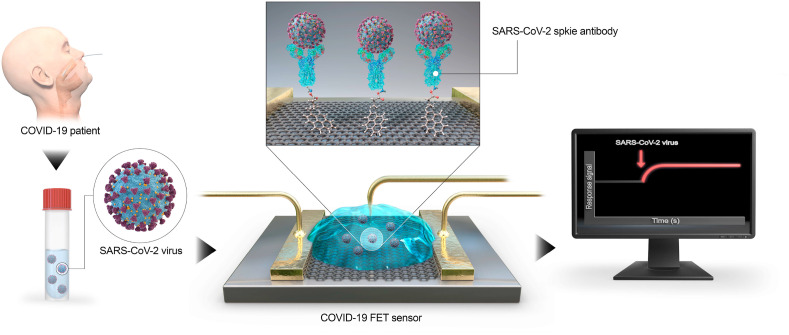
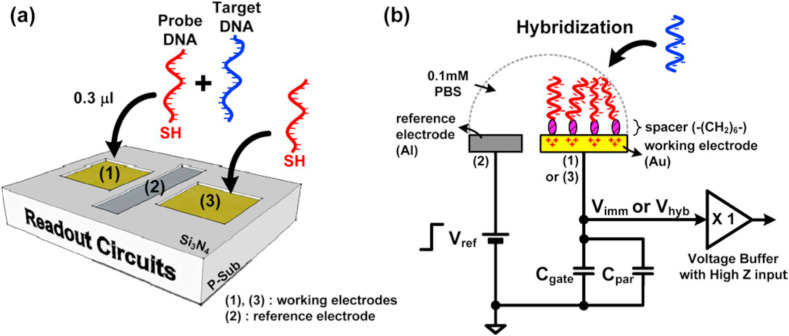
The use of field-Effect-Transistor (FET) type biosensing arrangements has been highlighted by researchers in the field of early biomarker detection and drug screening. Their non-metalized gate dielectrics that are exposed to an electrolyte solution cover the semiconductor material and actively transduce the biological changes on the surface. The efficiency of these novel devices in detecting different biomolecular analytes in a real-time, highly precise, specific, and label-free manner has been validated by numerous research studies. Considerable progress has been attained in designing FET devices, especially for biomedical diagnosis and cell-based assays in the past few decades. The exceptional electronic properties, compactness, and scalability of these novel tools are very desirable for designing rapid, label-free, and mass detection of biomolecules. With the incorporation of nanotechnology, the performance of biosensors based on FET boosts significantly, particularly, employment of nanomaterials such as graphene, metal nanoparticles, single and multi-walled carbon nanotubes, nanorods, and nanowires. Besides, their commercial availability, and high-quality production on a large-scale, turn them to be one of the most preferred sensing and screening platforms. This review presents the basic structural setup and working principle of different types of FET devices. We also focused on the latest progression regarding the use of FET biosensors for the recognition of viruses such as, recently emerged COVID-19, Influenza, Hepatitis B Virus, protein biomarkers, nucleic acids, bacteria, cells, and various ions. Additionally, an outline of the development of FET sensors for investigations related to drug development and the cellular investigation is also presented. Some technical strategies for enhancing the sensitivity and selectivity of detection in these devices are addressed as well. However, there are still certain challenges which are remained unaddressed concerning the performance and clinical use of transistor-based point-of-care (POC) instruments; accordingly, expectations about their future improvement for biosensing and cellular studies are argued at the end of this review.
Keywords: Advanced nanomaterial; Biomarkers; Biomedical analysis; Biosensor; Biotechnology; Cancer; Field-effect-transistor.
© 2020 Elsevier B.V. All rights reserved.
Conflict of interest statement
The authors declare that they have no known competing financial interests or personal relationships that could have appeared to influence the work reported in this paper.
Figures
References
-
- Syedmoradi L., Ahmadi A., Norton M.L., Omidfar K. Mikrochim. Acta. 2019;186:739. - PubMed
Publication types
LinkOut - more resources
Full Text Sources
Other Literature Sources
Miscellaneous