


The relationship between olfaction and cognitive function in the elderly
- PMID: 33054707
- PMCID: PMC10717970
- DOI: 10.1186/s12576-020-00777-8
The relationship between olfaction and cognitive function in the elderly
Abstract
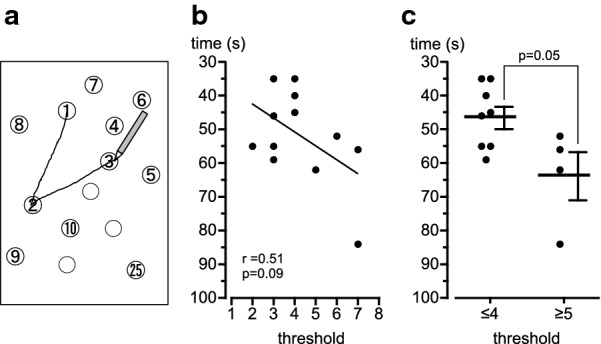
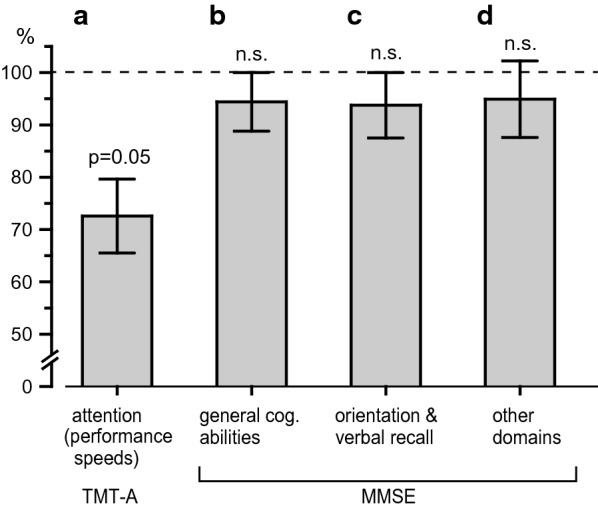
This study investigated the relationship between olfaction and cognitive function in 12 elderly people (age: 80.9 ± 1.6) living in the community. Olfactory function was assessed by the identification threshold for rose odor. Four cognitive measures consisting general cognitive ability assessed by Mini-Mental State Examination (MMSE), its sub-domains, and attentional ability assessed by drawing a line to connect the numbers consecutively (trail-making test part A; TMT-A), were assessed. Subjects with a higher olfactory threshold (≥ 5) declined more in the performance speed of TMT-A (73% ± 7%, p = 0.05) compared with those subjects with a lower threshold (≤ 4) (averaged value was set at 100%). Other cognitive statuses assessed by MMSE tended to decline in subjects with higher thresholds. Because attentional function relates to the basal forebrain cholinergic system, our results suggest that olfactory impairment links to the decline in cognitive function, particularly of attention-relating cholinergic function.
Keywords: Attention; Cognitive function; Elderly people; Odor identification threshold; Olfactory function.
Conflict of interest statement
The authors declare that they have no competing interests.
Figures
References
-
- Devanand DP, Liu X, Tabert MH, Pradhaban G, Cuasay K, Bell K, de Leon MJ, Doty RL, Stern Y, Pelton GH. Combining early markers strongly predicts conversion from mild cognitive impairment to Alzheimer's disease. Biol Psychiatry. 2008;64:871–879. doi: 10.1016/j.biopsych.2008.06.020. - DOI - PMC - PubMed
-
- Woodward MR, Hafeez MU, Qi Q, Riaz A, Benedict RHB, Yan L, Szigeti K, Texas Alzheimer's Research and Care Consortium Odorant item specific olfactory identification deficit may differentiate Alzheimer’s disease from aging. Am J Geriatr Psychiatry. 2018;26:835–846. doi: 10.1016/j.jagp.2018.02.008. - DOI - PMC - PubMed
MeSH terms
LinkOut - more resources
Full Text Sources
Medical
