


Diagnosis of hepatic glycogen storage disease patients with overlapping clinical symptoms by massively parallel sequencing: a systematic review of literature
- PMID: 33054851
- PMCID: PMC7557034
- DOI: 10.1186/s13023-020-01573-8
Diagnosis of hepatic glycogen storage disease patients with overlapping clinical symptoms by massively parallel sequencing: a systematic review of literature
Abstract
Background: Glycogen storage diseases (GSDs) with liver involvement are complex disorders with similar manifestations. Currently, the main diagnostic methods such as tissue diagnosis, either histopathology or enzyme assay, are invasive. Meanwhile, GSDs are diseases with significant genetic heterogeneity, and gene-sequencing methods can be more useful. This systematic review aims to review the literature to assess the value of massively parallel sequencing in the diagnosis of GSDs on patients with previously undiagnosed hepatic involvement.
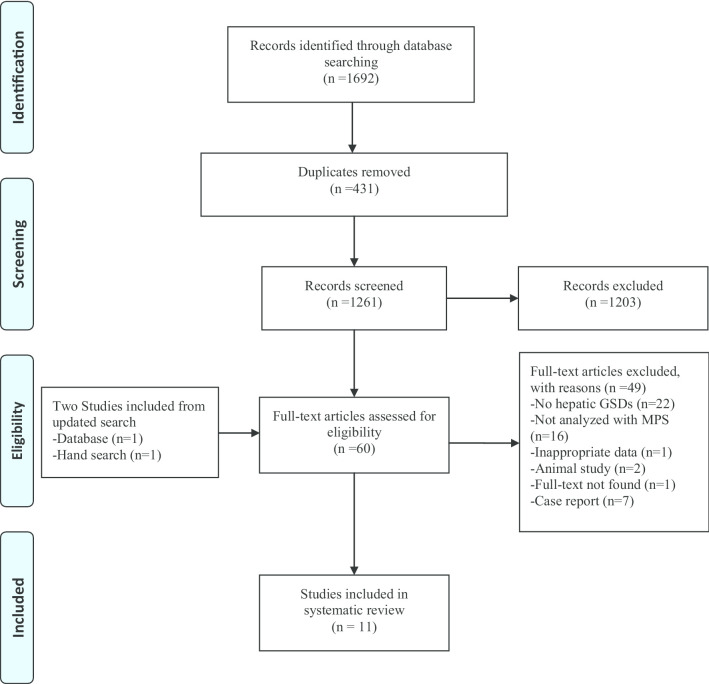
Methods: Relevant studies identified in the MEDLINE/PubMed, EMBASE, Cochrane Library, Scopus, and Web of Science Core Collection databases up to July 2019 with no time and language restrictions. Publications were included in the review if they analyzed GSDs with hepatic involvement (GSD I, GSD III, GSD IV, GSD VI, GSD IX), using targeted gene sequencing (TGS) or exome sequencing (ES).
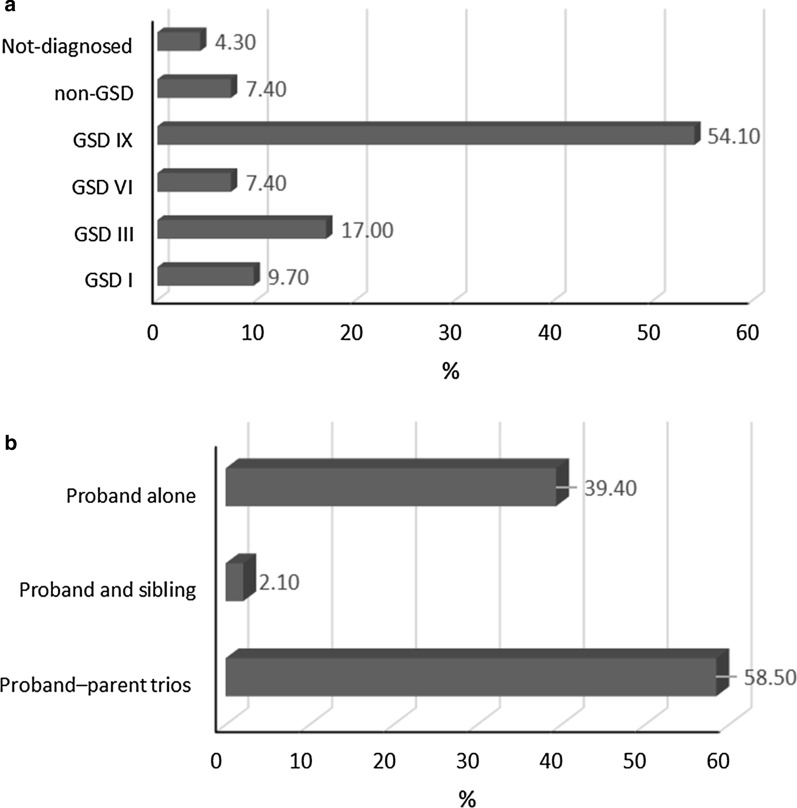
Results: Eleven studies were included in this systematic review. ES demonstrated a 93% diagnostic yield. These methods correctly distinguished all types of pathogenic variants. The diagnostic yield of the TGS method was around 79.7%.
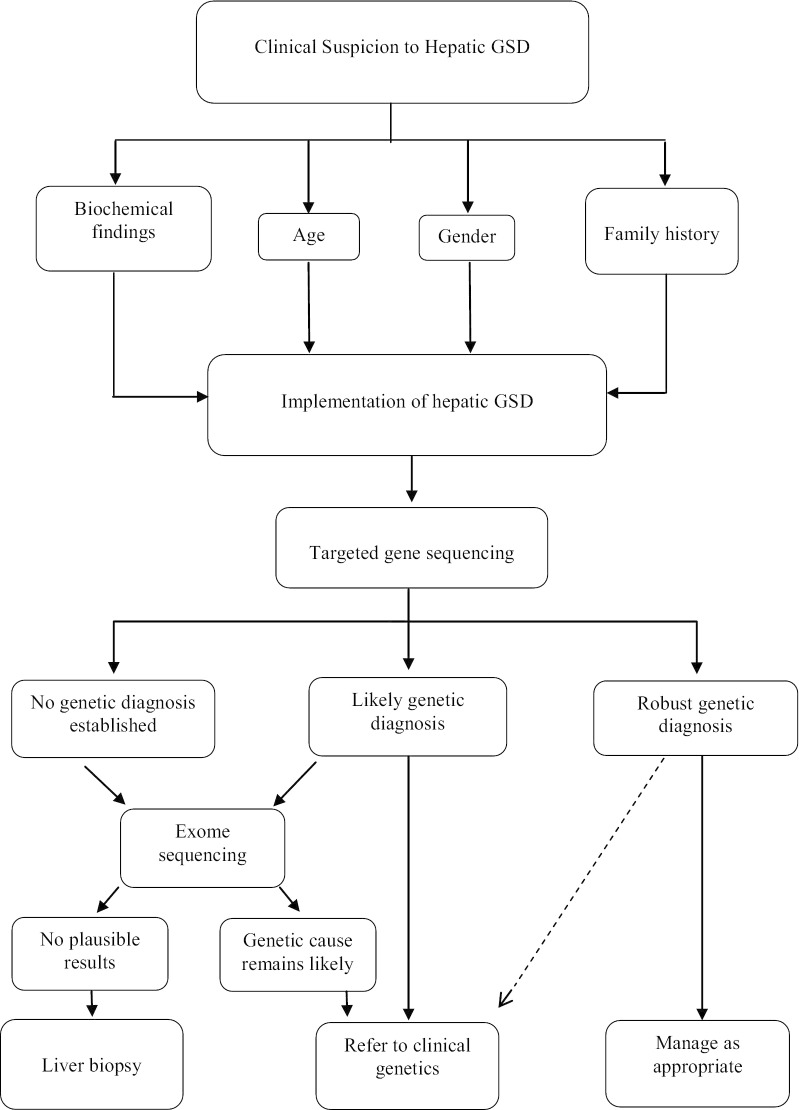
Conclusions: According to our results, TGS analysis can be considered as the first-line diagnostic method with valuable results and ES can be used to diagnose complex cases of GSD with liver involvement. Overall, these molecular methods are considered as accurate diagnostic tools, which expedite correct diagnosis and treatment with significant cost-effectiveness by reducing unnecessary and inaccurate tests.
Prospero registration: CRD42020139931. Registered 8 January 2020.
Keywords: Exome sequencing; Genetic diagnosis; Glycogen storage disease (GSD); Massively parallel sequencing; Rare disease diagnosis; Targeted gene sequencing.
Conflict of interest statement
The authors declare that they have no competing interests.
Figures
References
Publication types
MeSH terms
LinkOut - more resources
Full Text Sources
